
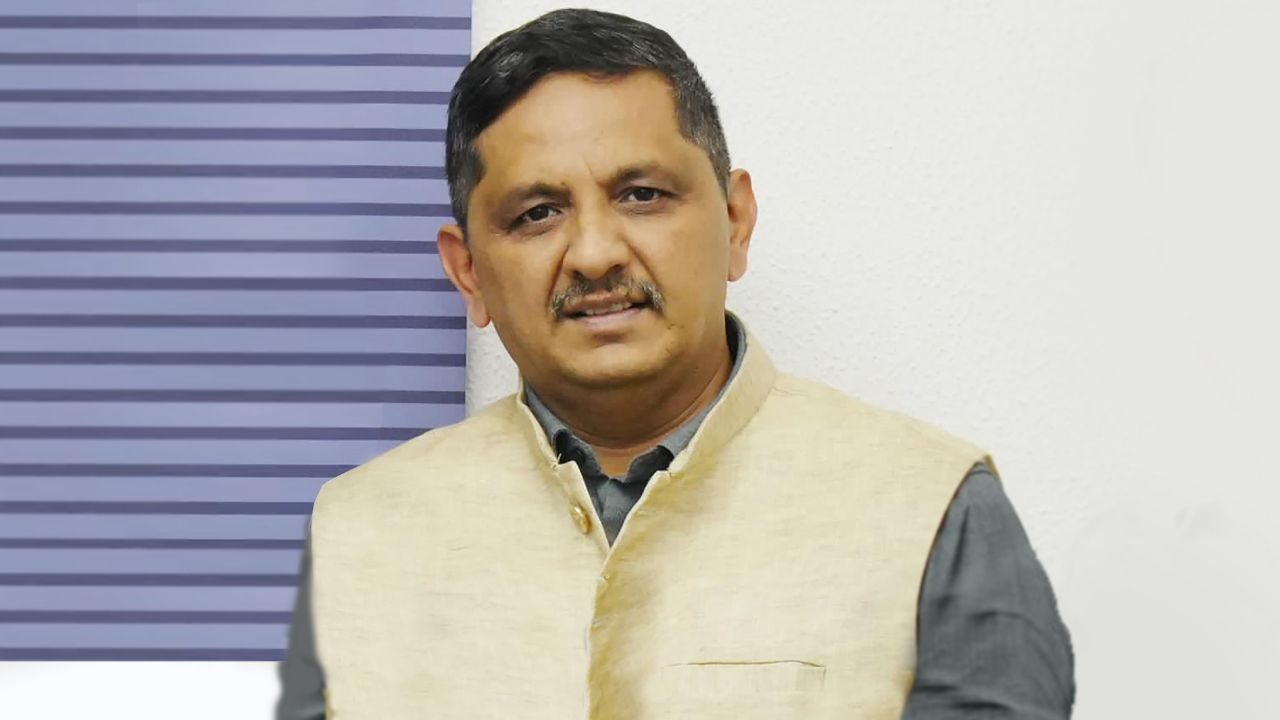
A new direction of prosperity for the Indian agricultural sector! Vinod Kulkarni, Head of CSR, Tata Motors presented the development roadmap

- A new direction of prosperity for the Indian agricultural sector!
- Vinod Kulkarni, Head of CSR, Tata Motors presented the development roadmap
Indian Agriculture Ecosystem: The agriculture sector in India is currently at a critical juncture. With more than 45% of the country’s workforce engaged in agriculture, India is poised to lead the next chapter of global agricultural progress, backed by a long agricultural heritage and diverse natural resources. Yet millions of farmers face some familiar challenges in their journey from capacity to prosperity, such as climate uncertainty, market volatility and lack of credit, technology and advisory guidance.
Government schemes like PM-Kisan, Electronic National Agriculture Market (e-NAM) and Pradhan Mantri Fasal Bima Yojana have laid a strong foundation. But to reap the full benefits of these initiatives, farmers also need good plans, along with innovation, capacity-building and direct implementation, along with guidance, that will translate government policies into developmental progress. Strong integration of community, corporate sector and government can be the catalyst to reach the next stage of development. These potential areas combined can create multi-dimensional effects, allowing farmers to easily access more information, technology, trust and greater resources to thrive. With common direction and strong collaborations, India can create a brighter future, where farmers can successfully move from uncertainty to self-reliance and from inadequate facilities to empowerment.
Why is integration important?
Each stakeholder in an agroecosystem has a specific capacity. Government initiatives create the foundation, which provides the means necessary for policy direction, scope, and end-to-end implementation. Private companies strengthen this foundation by providing technology, capital and implementation capacity, which makes measures faster and more accurate. Finally, social institutions and groups play a valuable role in building trust, helping direct implementation, and adapting measures to local needs and situations.
Individually, these efforts make little difference, but collectively they can make a big difference in the field. When these competency areas operate differently, the impact remains uneven: training does not always lead to favorable market changes, infrastructure use is not consistent, and innovations do not always reach those they are meant to serve. But, when these sectors work together, the intervention of each enhances the capacity of the other and creates an integrated ecosystem that delivers reliable and developmental outcomes.
To achieve sustainable results integration must work in three interrelated aspects, which I call the 3Rs: Restoring Capability, Restructuring Market Access, and Reinforcing Resilience.
Indian Sugar Production: Possible decline in sugar production in India; Half of 207 factories closed due to heavy rains
R1: Capacity building of farmers at grass root level
Capacity-building is the main pillar of agricultural progress. Integration strengthens this foundation by bringing together the skills, tools and infrastructure needed for modern agriculture. Access to irrigation and solar energy, digital and financial literacy, soil and water management practices, and timely availability of agricultural inputs, each of these interventions help farmers make informed decisions and improve productivity. When all these factors work together, farmers are able to confidently adopt better agricultural practices and plan for long-term growth.
R2: Changing the pattern of market entry
The capacity is properly valued only if there is favorable availability in the market. It is not because farmers produce less that they get less income, but because of the way they access markets. Consolidation helps to balance this by reshaping farmers’ sales channels The full value of capacity comes only when it is linked to markets. Often the reason why farmers get less income is not because they produce less, but because of the way they access markets. ‘Circulation’ helps balance this equation by reshaping farmers’ marketing channels. Increasing participation on platforms like e-NAM, transparent pricing mechanism, digital marketplace driven by the corporate sector and efficient logistics are giving farmers more options and more recognition for their produce.
Social organizations and groups play an important role in guiding the adoption of these measures, as well as ensuring that they are consistent with local realities. This connects farmers to more buyers, reduces dependence on middlemen, and enables more reliable and high-value results.
R: Strengthening long-term stability
Sustainable progress in agriculture is based on environmental, economic and social sustainability. Integration enables greater sustainability, where land textures promote improved soil and water conservation practices, provide diverse livelihood options rather than relying on a single crop cycle, strengthen community-led resource management, and develop financial and data systems that support planning and investment.
A good example of this is Tata Motors’ Integrated Village Development Program (IVDP). The initiative, which started with a small intervention in Maharashtra in 2018, has now grown to a community-led integration scheme spread across 16 gram panchayats in Maharashtra, Gujarat and Uttar Pradesh. Through participatory planning and capacity building, the initiative mobilized 48 government schemes to benefit nearly Rs 11 crore of government schemes in FY 2024-25. This led to an increase in annual household income of nearly 20 percent, while migration for alternative employment declined by nearly 30 percent. This model suggests that integration can enable communities to make self-directed progress without relying on others.
Reliance Industries-Jio’s AI mission; AI will set up a data center on 10 GW of green energy
Next move
India has built a strong foundation for farmer welfare through policy, investment and innovation. The next big leap will depend on making sure all efforts work in harmony with each other. A future-proofed agro-ecosystem will result in increased capacity through infrastructure, increased market availability through capacity, and fair and developmental value to the farmer in the market.
When communities, the corporate sector and government come together for a common purpose, rural areas can move from potential to performance, from incremental benefits to sustainable prosperity. Efforts are underway in this direction. These efforts need to be combined for a brighter future, where this integration should be strategic, collaborative and large-scale.

Comments are closed.