
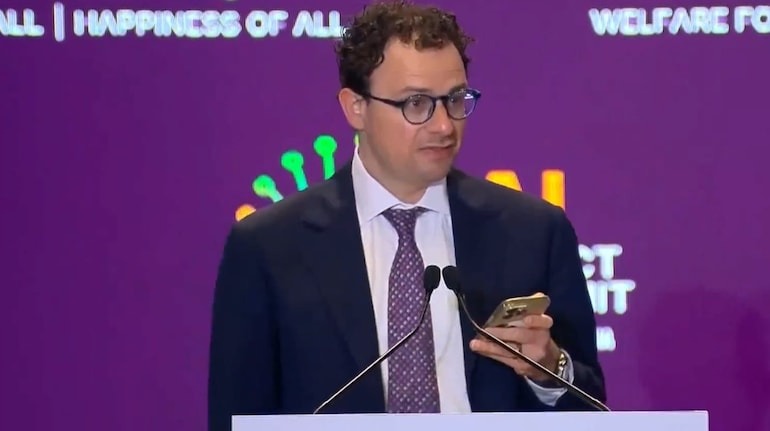
India will touch 25% growth rate with AI Anthropic CEO Dario Amodei’s big claim in India AI Impact Summit 2026 – ..

News India Live, Digital Desk: In this summit organized in Delhi, Dario Amodei described India as not only a big market but also the best place in the world for the development of AI. ‘Test Lab’ relaxed me. He said that the technical skills present in India and the eagerness to adopt new technology are not seen anywhere else in the world.
Key Highlights of Dario Amodei’s address
1. Magic figure of 25% growth: Amodei said that in developed countries AI can increase the economic growth rate by 10%, but in India ‘Catch-up growth’ (ability to catch up quickly) is so likely that this growth rate 20 to 25 percent Can reach. He called it a “bullish scenario”.
2. ‘Land of Geniuses’ in Data Centre: Describing the progress of AI as ‘Moore’s Law for Intelligence’, he said that very soon we will be at the level which he “Country of Geniuses in a Data Centre” They say. That means AI agents will be more capable than humans in most tasks.
3. Expansion and Partnership in India:
New Office: Anthropic has Bengaluru Has announced the opening of its new office.
Deal with Infosys: The company has joined hands with Indian tech giant Infosys to offer AI solutions at the enterprise level.
Emphasis on local languages: Their AI model ‘Sonnet 4.6’ now 10 Indian languages Support has been included, so that benefits reach the rural level in areas like agriculture and education.
Mention of challenges along with opportunities
Amodei not only talked about a bright future, but also highlighted some serious concerns:
Impact on Jobs: He warned that there is a possibility of major changes and displacement in white-collar jobs due to AI.
Security Risk: Misuse of AI and controlling its autonomous behavior will be a big challenge.
Solution: He called for India to take global leadership in setting AI safety standards.
Amodei’s coat: “India is the world’s largest democracy and can become a leader in addressing the global security and economic risks of AI.”

Comments are closed.