
Mysterious ‘Dead Sea’: Why does no one drown in this sea? NASA reveals the untold secrets of the Dead Sea

Dead Sea Scrolls History: There are many places on Earth that surprise scientists and tourists, but there is hardly any other unique reservoir like the Dead Sea. Located on the border of Israel and Jordan, the reservoir lies approximately 400 meters (1,300 ft) below sea level, making it the lowest point on the Earth’s surface. The American space agency NASA has discovered this ‘Dead Sea’ Has shared detailed information on its features and its history.
Why is it called ‘dead’ Sea?
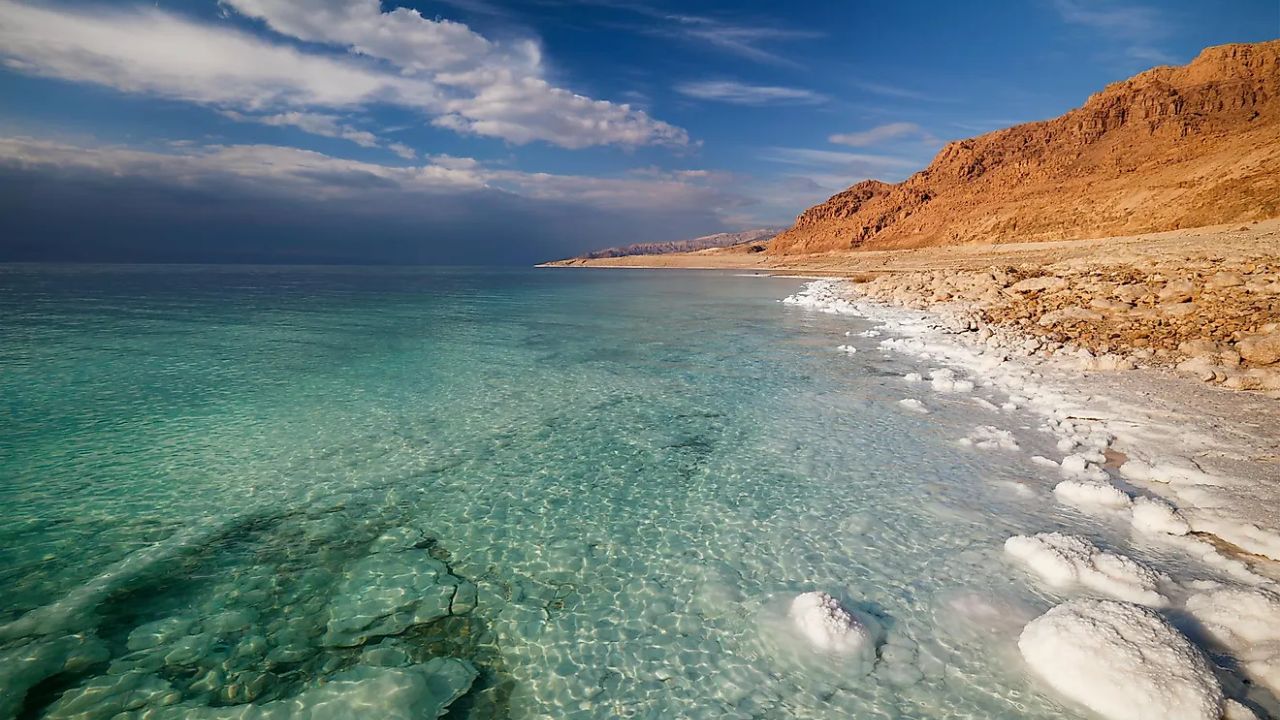
Its biggest secret is hidden in its name itself. According to NASA, the water of the Dead Sea is 8 to 10 times saltier than normal ocean water. Due to such excessive amount of salt, fish, plants and most of the animals cannot survive here. This is why it is called the ‘Dead Sea’ or ‘Dead Sea‘ Has been named.
People swim without life jackets
The most famous feature of the Dead Sea is that nothing sinks here. Due to excessive salt, the density of water increases so much that humans or any object automatically floats on the surface. Pictures taken by NASA’s Landsat satellites show that the water here appears dark blue, bright blue and sometimes light pink.
Existence and industrial importance in danger
During summer the water evaporates very rapidly, causing the water level to drop by 2-3 cm per day. There has been a huge decline in its levels in the last few decades. Historically, the ancient Egyptians used its salt to preserve mummies and to make potash. Even today, sodium chloride and potassium salt are extracted from here on a large scale which are used in water purification and making plastic.
Also read:- ‘Not allies, now friends…’, grand welcome for Brazilian President in Delhi, all eyes on investment
Religious and historical treasures
This place is priceless not only from the point of view of science but also from the point of view of religion and history. Between 1947 and 1956, the ‘Dead Sea Scrolls’ Ancient manuscripts were found. These more than 972 texts contain the oldest surviving parts of the Hebrew Bible and other Judeo-Christian texts, a major achievement for historians.

Comments are closed.