
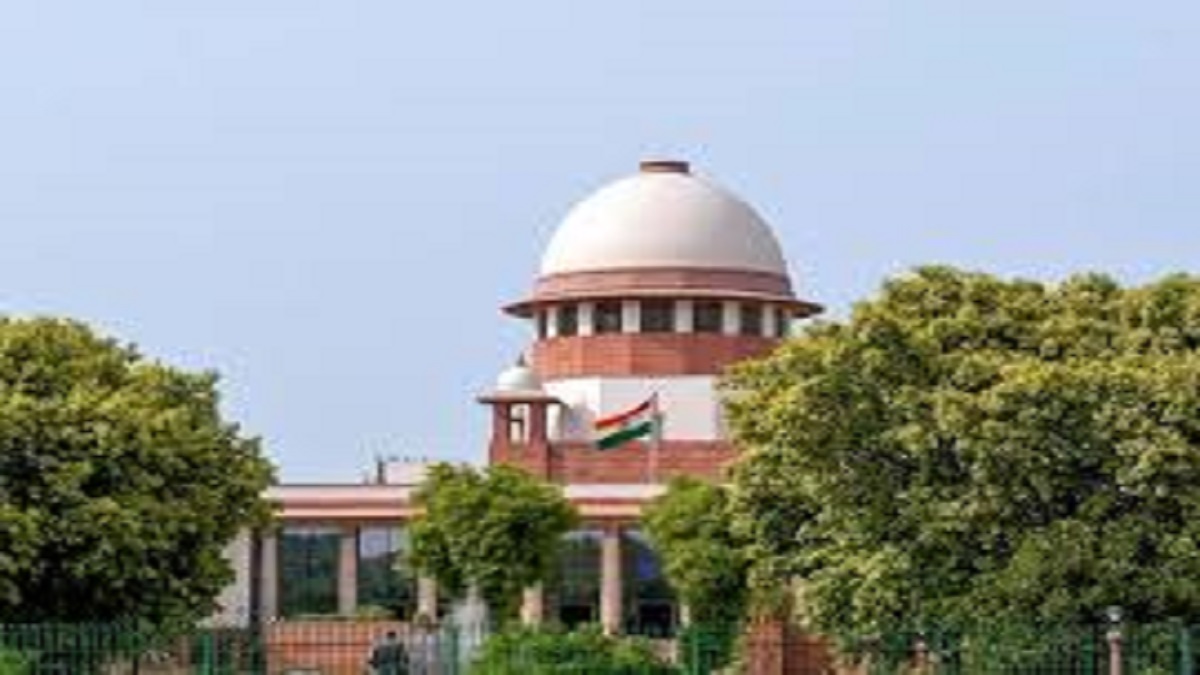
‘If not now or never’, Supreme Court’s strong message on solid waste, strict rules will be implemented from April 1

Regarding the increasing waste and its unequal management in the country. Supreme Court Adopting a tough stance, the Supreme Court has made it clear (Supreme Court Waste Management Order) that there is no scope for laxity now. The apex court has said that the right to a clean and safe environment is directly linked to the right to life of the citizens, hence the present generation cannot tolerate any further delay in this direction. The court has given instructions to strictly implement the new rules of solid waste management across the country from April 1, 2026.
The bench of Justice Pankaj Mittal and Justice SV Bhatti said in clear words during the hearing that this situation is like “now or never”. The court remarked that if segregation of waste at source and necessary infrastructure were not provided, it would be futile to expect better results (Supreme Court Waste Management Order). The court also warned that continued neglect of waste is not only a threat to public health, but can also have a negative impact on the country’s economy.
This order was passed during the hearing of appeals filed regarding environmental compliance in matters related to solid waste management. The court found that the rules are not being followed uniformly in different states and urban bodies, due to which efforts at environmental protection are being weakened. In view of this, the court has issued comprehensive and clear instructions for effective implementation of the new rules.
The Supreme Court also fixed the responsibilities of the local administration and public representatives and said that councilors, mayors and ward members will no longer be limited to only administrative roles, but they will have to play a leading role in spreading awareness about waste separation in their area (Supreme Court Waste Management Order). The court said that it would be their statutory duty to motivate every citizen to follow the rules and ensure that there is proper segregation of wet, dry and other special waste.
Along with this, district collectors have been entrusted with the responsibility of regular monitoring and audit of the waste management system. Local bodies will now have to provide physical proof, including photographs, of the condition of garbage disposal and related infrastructure to the district administration through e-mail. Through this, an effort has been made to ensure both accountability and transparency.
The court has also made it clear that ignoring the rules will no longer be considered mere administrative negligence, but will have serious legal consequences. Initial violations will attract fines, while persistent violators may face criminal action under environmental laws. Apart from this, officers dereliction of duty will also be held accountable.
Pollution control boards have been directed to develop necessary facilities for waste segregation and management as soon as possible (Supreme Court Waste Management Order). Also, the Court has indicated to consider arrangements like special monitoring system and mobile courts to ensure action on violations of rules in real time.
This strict stance of the Supreme Court is being considered as a decisive step towards strengthening the environmental protection and sanitation system in the country. After the implementation of the new rules, the role of local bodies and administration as well as common citizens will become more important than before.

Comments are closed.