
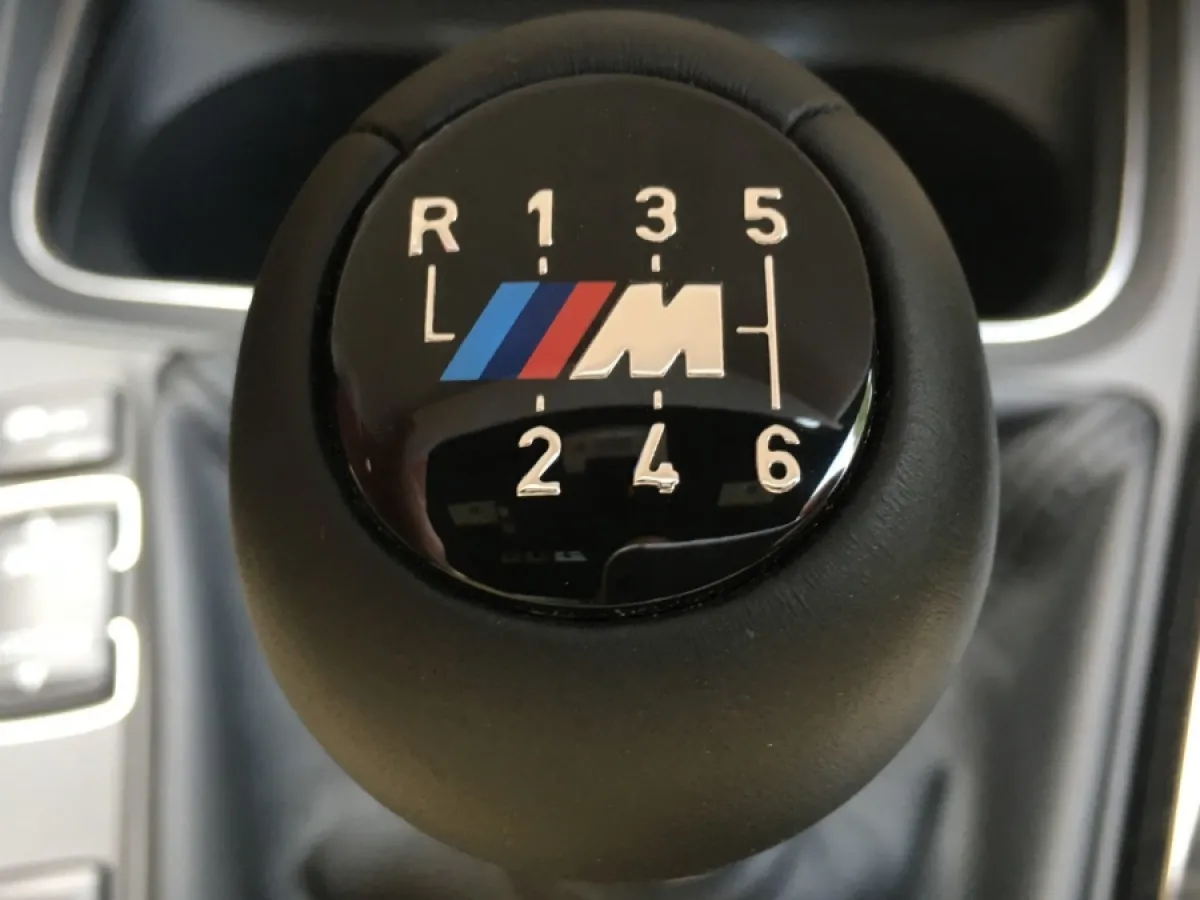

The future of manual gearboxes at BMW is no longer a question of ifbut how long. Frank van Meel, CEO of BMW’s M division, has indicated that while manuals remain part of the brand’s DNA today, their long-term viability is under serious pressure.
Speaking recently, van Meel acknowledged that BMW will continue offering manual transmissions in the near term. However, he made it clear that sustaining them over the next decade will become increasingly difficult. The reason isn’t just shifting customer preferences; it’s a mix of engineering limits and economic reality.
Performance vs Practicality
Here’s the core issue: modern performance cars are pushing boundaries that traditional manual gearboxes struggle to keep up with.
BMW’s current six-speed manual transmission is capped at handling around 440 lb-ft of torque. That limitation significantly narrows the scope of where manuals can be used. Today, they are available in just a handful of models: the M2, M3, M4, and Z4.
As BMW continues to build more powerful machines, especially high-performance variants, integrating a manual becomes far more complex. Adding a third pedal to these cars would require developing entirely new gearboxes, an investment that’s becoming harder to justify.
The Business Case Is Weakening
Beyond engineering, the bigger challenge is economic.
Manual transmissions now represent a small slice of the global performance car market. Suppliers are less willing to invest in developing new manual gearboxes when demand is limited. For automakers like BMW, that creates a ripple effect—higher costs, longer development cycles, and diminishing returns.
In simple terms, the business case for manuals is shrinking fast.
Emotional Value Still Matters
Despite the challenges, BMW isn’t ready to walk away just yet.
Manual transmissions still carry strong emotional appeal, especially among driving enthusiasts. They represent engagement, control, and a purist connection to the car—qualities that automated systems, no matter how advanced, struggle to replicate.
Van Meel emphasized that this emotional connection is precisely why BMW continues to offer manuals today. As long as there’s a passionate audience willing to choose them, the brand intends to keep them alive.
The Road Ahead
What this really means is that manual transmissions are entering their final chapter—not disappearing overnight, but gradually fading as technology and market forces evolve.
Electrification, hybrid systems, and ever-increasing performance benchmarks are reshaping what performance driving looks like. In that landscape, traditional manuals face an uphill battle.
For now, enthusiasts can still enjoy BMW’s manual offerings but the clock is ticking. The next decade will likely determine whether the manual gearbox becomes a nostalgic relic or manages to hold on in niche corners of the performance world.

Comments are closed.