
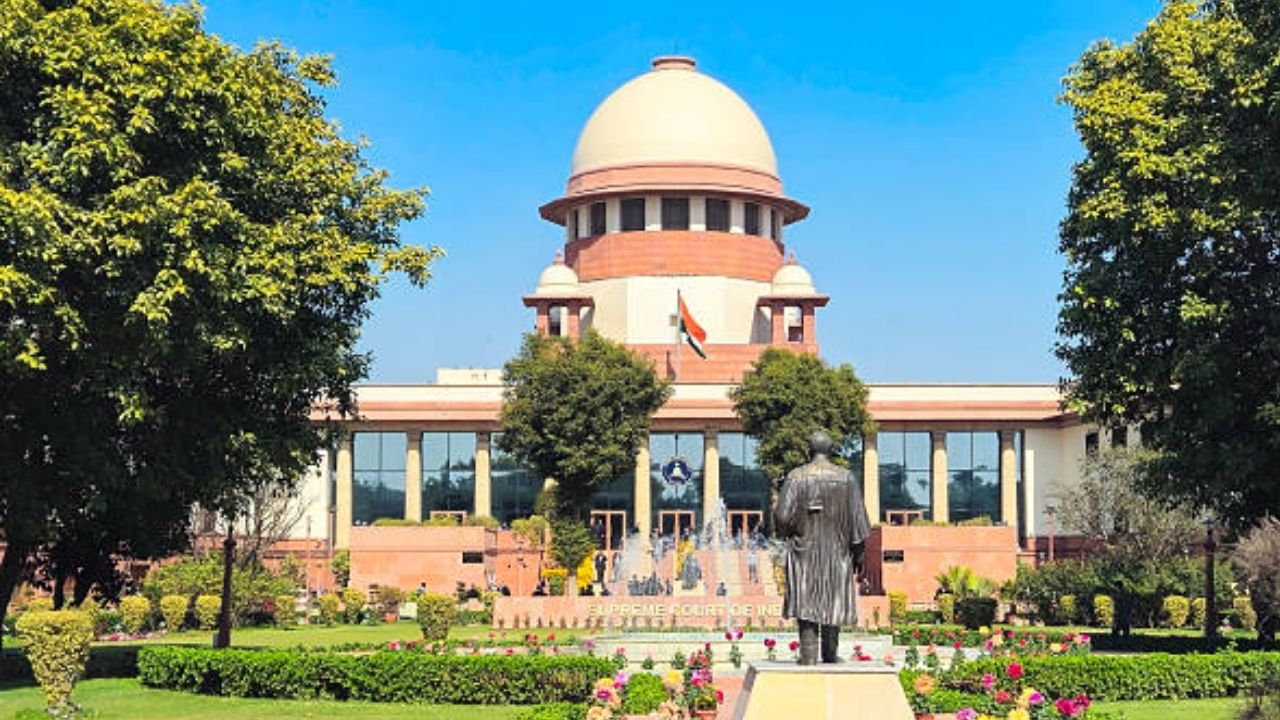
Magistrate has no power to order deletion of text; Bombay High Court’s decision upheld by the Supreme Court

- The right to order the deletion of any content on social media or the Internet ‘Magistrate’ (Inferior Court Judge) Not to them
- Dhyan Foundation had appealed to the Mumbai Metropolitan Magistrate to remove five defamatory videos from YouTube.
- Section 69-A Only the central government has the power to block internal information and it has to follow specific rules of 2009.
New Delhi : The Supreme Court has upheld a Bombay High Court ruling that a ‘Magistrate’ (lower court judge) has no power to order the removal of a post/video (content) on social media or the Internet. The Supreme Court has dismissed a plea against the Bombay High Court’s preliminary observation that magistrates have no power to order the deletion or blocking of online content under Section 69-A of the Information Technology Act, 2000.
Todays Gold-Silver Price: Gold prices rise, silver prices also rise… Read today’s latest prices before buying
According to a report by Live Law, Dhyan Foundation, an NGO working for animal welfare, had filed a complaint with the Municipal Magistrate at Ballard Pier in Mumbai. He alleged that five videos defaming the organization were being circulated on YouTube. During the hearing, on March 31, 2023, the magistrate ordered Google to delete the video.
Rights only for a specific reason
The High Court had clarified that Section 69-A of the IT Act empowers the central government to block information on specific grounds. The 2009 Rules apply to this procedure, which does not empower magistrates to make such orders independently.
Trump showed Inga again! A 15% tariff on the world is announced, showing a basket case to the court decision
A bench of Chief Justice Suryakant, Justice Joymalya Bagchi and Justice Vipul Pancholi upheld the decision of the Bombay High Court. However, the court ruled that the petitioner was free to appeal in the civil court.
The Supreme Court said that we see no reason to interfere with the order of the High Court. However, this decision will not prevent the petitioners from approaching civil courts as per law.
Google had asked for it
Google appealed to the Sessions Court against this order of the District Collector, the Sessions Court stayed the Magistrate’s order. The Dhyan Foundation moved the Bombay High Court against the stay, in which Google argued that under Section 69-A of the IT Act and the 2009 rules, only authorities authorized by the central government have the power to block text, not magistrates. The Bombay High Court prima facie accepted Google’s contention and refused to interfere with the stay order of the Sessions Court.

Comments are closed.