
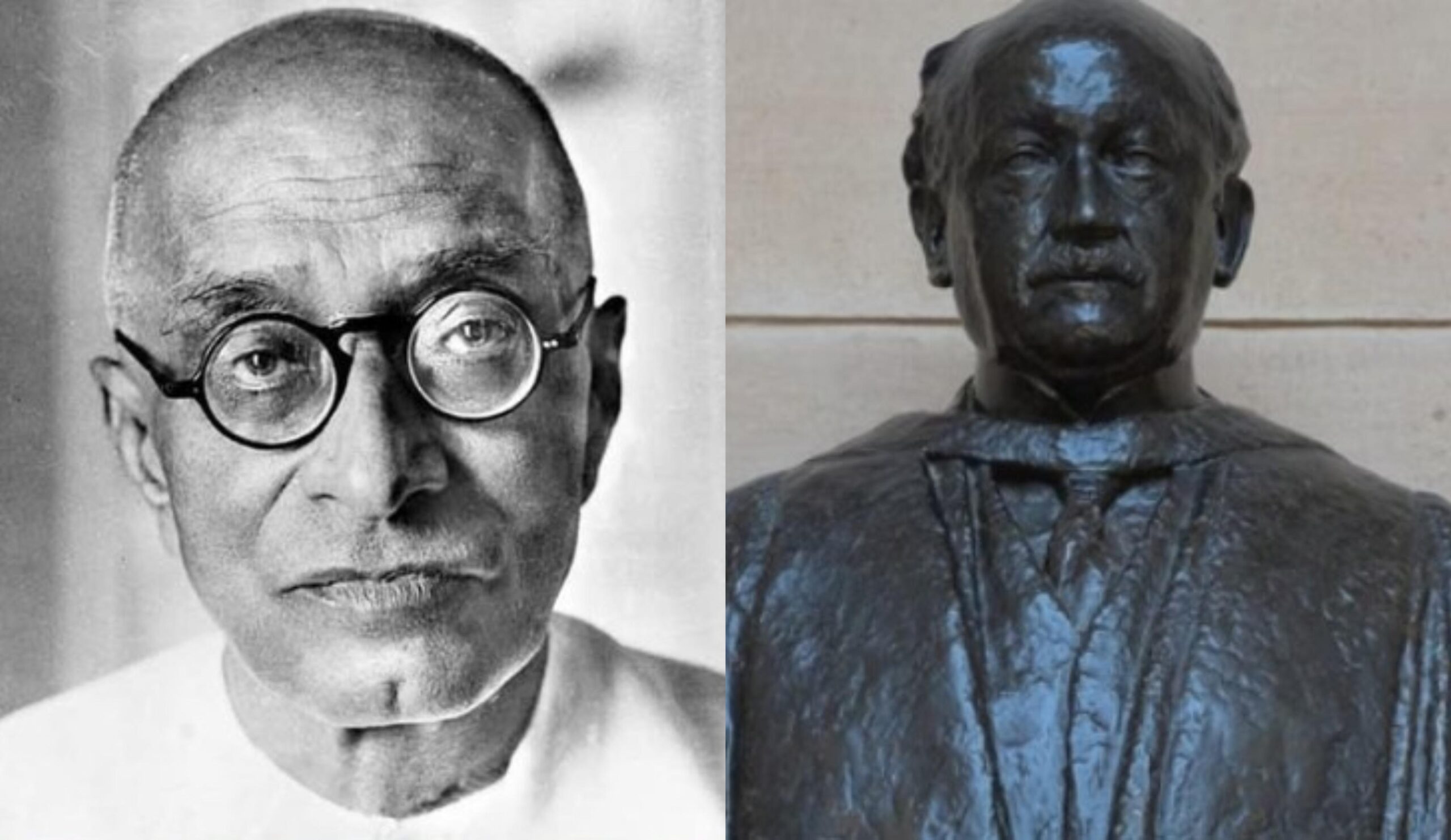

In yet another move towards abandoning India’s colonial past, Prime Minister Narendra Modi on Sunday (February 22) said the statue of British architect Sir Edwin Lutyens (1869-1944) at the Rashtrapati Bhavan will be replaced by a statue of Chakravarti Rajagopalachari (1878-1972), the only Indian-born governor-general of the country who was also the last to hold the post, between 1948 and 1950 when India became a republic.
Also read: Beating Retreat 2026 ditches colonial past, takes Swadeshi turn
The prime minister made the announcement during the latest episode of his popular ‘Mann Ki Baat’ radio programme, where he said the statue of the Indian leader would be unveiled during the ‘Rajaji Utsav’ at the Rashtrapati Bhavan on Monday (February 23). The statue will be located at the central courtyard of the presidential residence, which was also designed by Lutyens and Sir Herbert Baker, also a British architect.
Statue to be unveiled during ‘Rajaji Utsav’
Announcing the celebration, Modi said, “Tomorrow, i.e. the 23rd of February, ‘Rajaji Utsav’ will be celebrated at Rashtrapati Bhavan. On this occasion, a statue of C Rajagopalachari ji will be unveiled in the Central Courtyard of Rashtrapati Bhavan. He was the first Indian Governor General of Independent India.”
“A statue of British architect Edwin Lutyens also stood in Rashtrapati Bhavan. Now, this statue will be replaced by a statue of Rajaji (C Rajagopalachari),” he announced.
Also read: Kartavya Path parades duties-first diktat, U-turns on rights
The prime minister recalled his prescription of ‘Panch Pran’ (five pledges) uttered in his Independence Day speech in 2022, saying one of them is erasing all traces of servitude.
“During the Azadi Ka Amrit Mahotsav, I spoke of the ‘Panch-Pran’ from the Red Fort. One of them is freedom from the mentality of slavery. Today, the country is leaving behind the symbols of slavery and has begun to value symbols related to Indian culture. Our Rashtrapati Bhavan has also taken an important step in this direction,” Modi said, linking the statue replacement in the Rashtrapati Bhavan’s premises with India’s departure from the colonial past.
Modi says Indian heroes didn’t get their dues
Modi rued that statues of British administrators remained in Rashtrapati Bhavan even before the country won independence and the nation’s own heroes were allegedly denied space. He also recalled the legacy of Rajagopalachari, saying the latter was among those personalities who viewed power not as a position but as service.
Also read: MGNREGA renaming row: Why dropping Gandhi is more than a name change
“His conduct, self-restraint, and independent thinking in public life inspire us even today,” the PM said.
The decision to replace the statue of Lutyens with Rajagopalachari comes amid an ongoing push by Modi’s ruling Bharatiya Janata Party government to ‘Indianise’ public spaces in the country, including renaming roads, railway stations and even cities to reflect indigenous heritage and identity rather than Mughal-era or colonial nomenclature.
Even the old Parliament House, which was also designed by Lutyens, no longer houses the legislative proceedings, as Modi built a new state-of-the-art building next to it. In September 2022, the government also renamed the historic Rajpath or King’s Way in New Delhi to Kartavya Path (path of duty).
Also Read: Architecture as Modi’s political assertion in remaking of Lutyens’ Delhi
This year, the Beating Retreat Ceremony, held three days after the Republic Day on January 26, saw a profound manifestation of the ‘indegenisation’ as many Indian or predominantly Hindi identities, such as language and culture, were displayed.
As part of the ‘Rajaji Utsav’ celebrations, an exhibition dedicated to the leader’s life and contributions will run between February 24 and March 1. Modi urged the people to visit the exhibition and learn about Rajagopalachari.
Who was C Rajagopalachari
Rajagopalachari, commonly known as Rajaji, was a prominent Indian statesman, independence activist, writer and the only Indian to serve as governor-general of India after independence, a role which was abolished when India became a republic in 1950.
Also Read: Hyderabad road to be renamed ‘Donald Trump Avenue’
He was also the chief minister of the former Madras State and founder of the Swatantra Party, known for his contributions to governance and public life. Rajagopalachari also served as the Union home minister and the governor of West Bengal.
Lutyens and modern political discourse
Lutyens, along with Sir Baker, designed many of colonial Delhi’s iconic structures, including the Rashtrapati Bhavan, North Block, South Block and the India Gate area, all of which come under what is called Lutyens’ Delhi.
In recent years, references to Lutyens and Lutyens’ Delhi have been used in political debates by right-wing commentators to critique what they describe as elite liberal dominance of Indian cultural and political narratives, arguing that power structures shaped during colonial times persist in contemporary governance discourse.
(With agency inputs)

Comments are closed.