
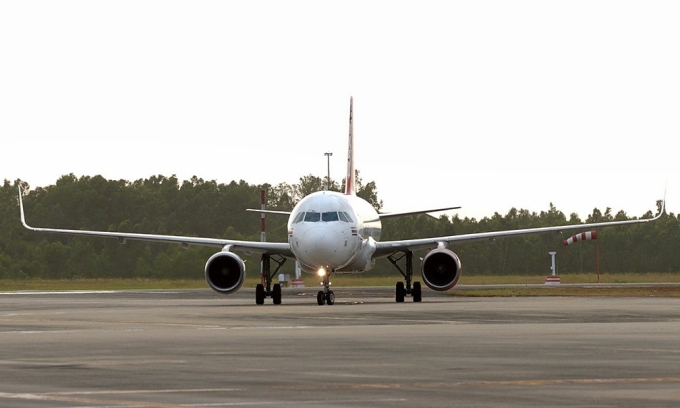

The first series of incidents occurred on Feb. 17, the first day of the Lunar New Year. At 9:16 a.m., authorities detected a drone flying approximately 1,158 m above an aircraft.
While that flight landed safely, the intrusion delayed eight departing flights by 20 to 30 minutes and affected 10 arriving flights.
Later that afternoon, another drone was spotted at an altitude of roughly 366 m, flying to the left of an aircraft. This led to further disruptions: seven departing flights were delayed for up to 100 minutes, two aircraft on the runway were ordered to stop, and eight incoming flights were forced to circle.
In total, 35 flights were affected on the holiday’s first day.
A second major disruption occurred on Sunday, the sixth day of the new lunar year. At 11:07 a.m., a drone was detected flying at an altitude of 518 m, just four minutes after an aircraft had taken off.
While the departing plane continued its journey, air traffic controllers grounded seven other flights for up to 57 minutes and suspended takeoff for two others. Simultaneously, 10 incoming flights were forced to adjust their approach paths, resulting in landing delays of 30 to 45 minutes.
Upon detecting the drones, the duty team immediately coordinated with relevant units, instructing approaching aircraft to enter holding patterns and temporarily suspending departures to ensure safety.
Da Nang International Airport is the largest aviation gateway in Vietnam’s central and Central Highlands regions, handling an average of 310 to 340 flights daily during the peak Tet period.
Under Vietnam’s Law on People’s Air Defense, operating unmanned aerial vehicles, releasing balloons or kites, shining laser lights, or using high-intensity lighting within airport safety corridors is strictly prohibited.
Authorities have urged the public to strictly comply with restricted airspace regulations, warning that unauthorized flying objects pose a severe risk to aviation safety and cause significant financial losses for airlines and passengers.

Comments are closed.