
By including women in the definition of “farmer”…; Expert recommendation at AI Agri 2026 conference

In the age of modern technology, artificial intelligence is becoming effective
Vote for recognition as an equal partner in agricultural innovation
Opinion on providing favorable credit and extension services
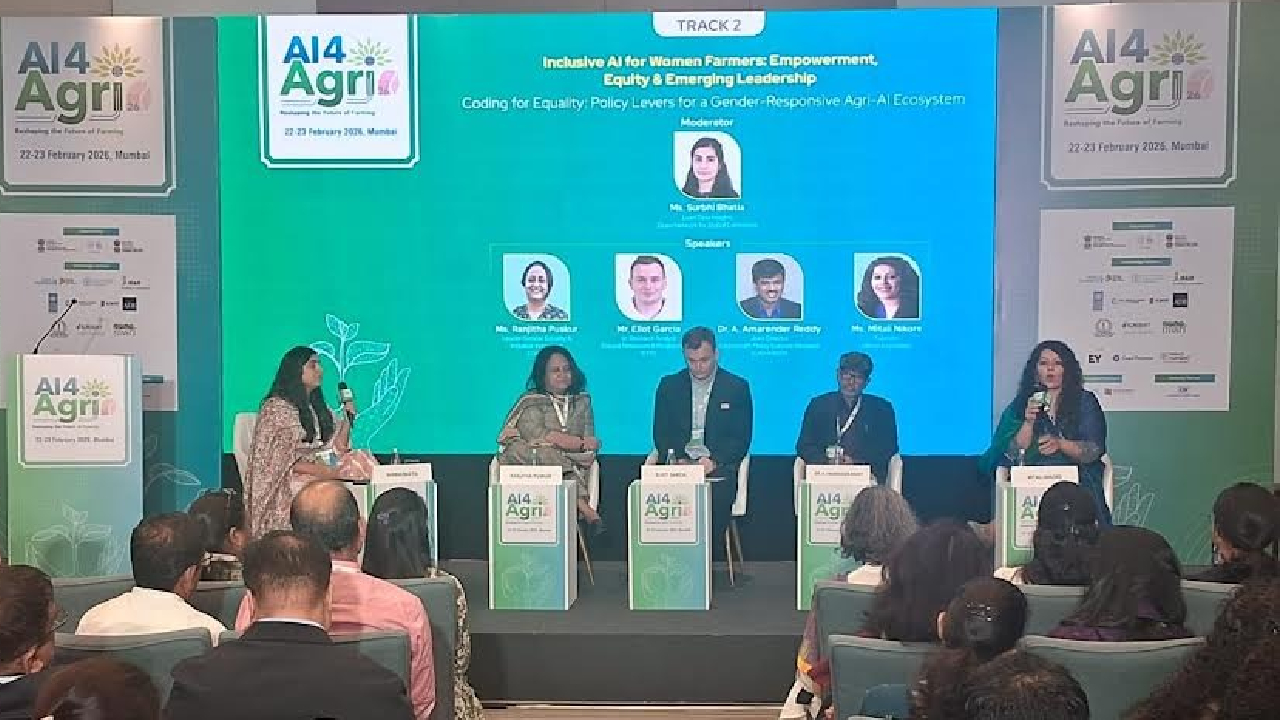
Mumbai: In the age of sustainable agriculture and modern technology artificial intelligence While being effective, it is imperative to maintain gender-sensitivity in this technology. Women should be recognized as equal partners in agricultural innovation. Digital literacy of women should be enhanced. “farmerEminent experts opined that inclusion of women in this definition, ensuring equal pay and providing women-friendly credit and extension services should be recommended.
On the second day of the AI Agri 2026 conference, a parallel session on ‘Coding for Equity: Policy Solutions for a Gender-Sensitive Agri-AI Ecosystem’ was held. Surbhi Bhatia, Head of Data Insights coordinated the session. Summarizing the session, Surbhi Bhatia narrated the story of Sangeeta Jadhav, a woman farmer from Nimbut, Baramati. Sangeeta Jadhav sprays fertilizer on an acre of sugarcane field in just seven minutes using a drone. She is fondly known as “Drone Didi” in the village. Sangeeta Jadhav is a living example of how technology can make a big difference if it reaches women in the right way.
Ranjita Puskur, Head, Consultative Group for International Agricultural Research (CGIAR), Elliott Garcia, Senior Research Analyst, International Food Policy Research Institute (IFPRI), Joint Director, Crop Health Policy Support Research Institute, Dr. A. Amarendra Reddy, Mithali Nikore, founder of Nikore Associates participated in the seminar.
AI-Human Intelligence: Jobs Will Go, But Opportunities Will Grow; Cisco’s clear warning about AI
The session called for a ‘gender-responsive’ (gender-sensitive) approach rather than a ‘gender-neutral’ one, from technology coders to policy makers. The participants expressed the belief that the digital divide in the agriculture sector will be reduced only if there are numerous ‘drone didis’ like Sangeeta Jadhav.
Ranjitha Puskur emphasized the importance of gender-based data and inclusion of local languages in AI models. Many AI tools are based on English and Western data, leaving local subjects neglected. He opined that gender-based data collection should be made mandatory rather than voluntary, so as to ensure women’s participation and accountability in agricultural programmes.
Eliot Garcia focused on responsible AI strategies. He clearly stated that AI is never neutral,” because data-based tools have social and political implications. He advocated rigorous risk assessments and building trust in local social structures. As an example, he cited the Maori data sovereignty model, where communities co-own data and consent to its use.
Dr. A. Amarendra Reddy highlighted the long-standing, but often overlooked contribution of women in agriculture. He cites the “agricultural encyclopedias” compiled by women in medieval Maharashtra as a historical example. They pointed to inequalities that still exist today — women farmers generally receive lower wages and own less land than men. He called for a redefinition of the concept of “farmer” to clearly include women who are key agricultural decision-makers in the household.
AI Impact Expo 2026: The dream of a developed India will come true! World GDP will increase due to AI… Kristalina Georgieva claims
Mithali Nikore commented on the digital gender gap in rural areas. He said that among rural women, very few women have digital literacy, the figure is much lower than that of men. They recommended using women’s self-help groups and local organizations to provide digital training and tools to women. Technology can become more inclusive by strengthening women-centric digital hubs and including women in the agri-tech design process. He cited pilot projects such as village-level data centers, which showed that women can lead the agricultural sector if given the right tools and support. Agriculture Department Commissioner Suraj Mandhare thanked the participants.

Comments are closed.