
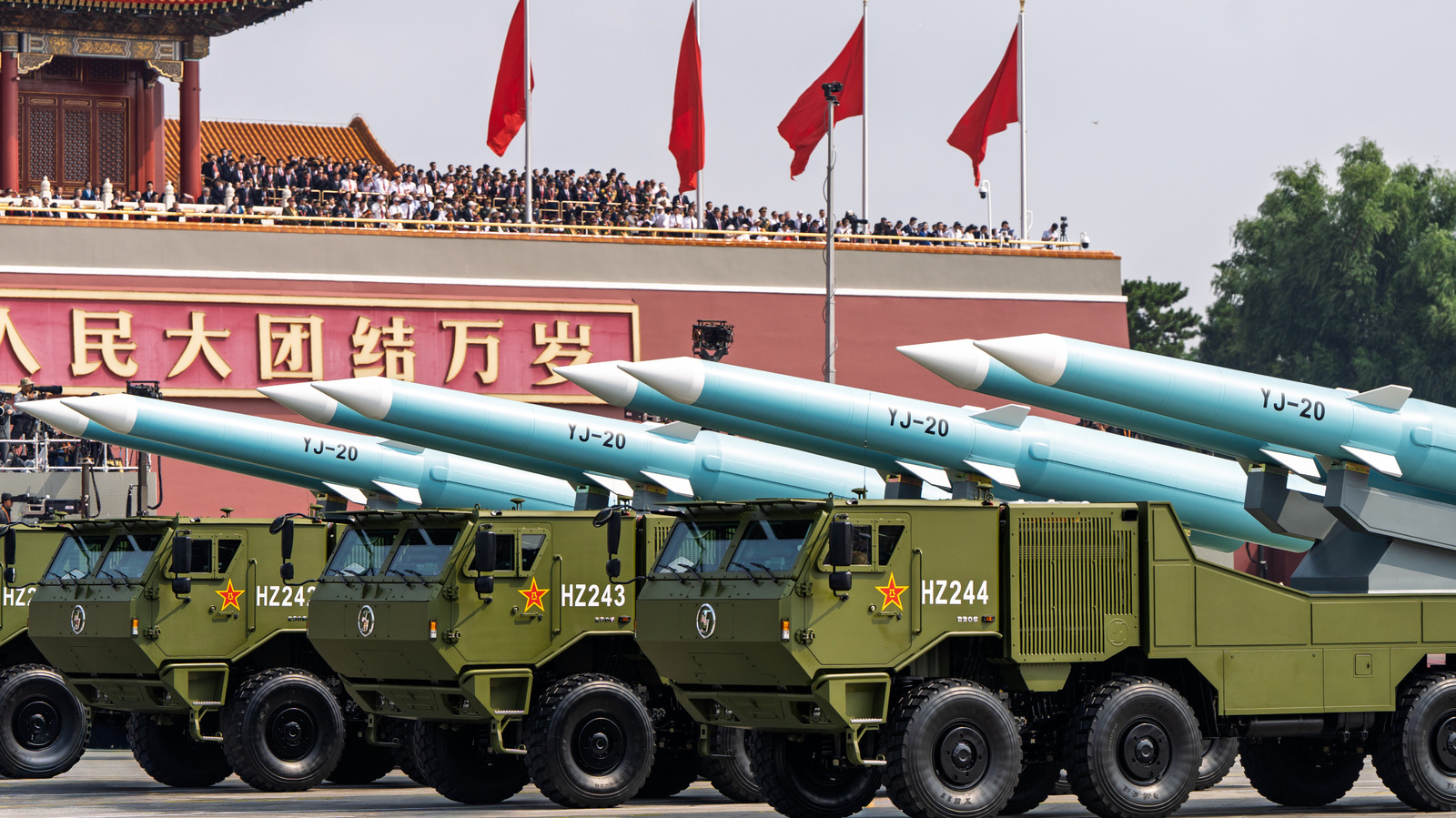

China has made tremendous advancements in its military capability in the past few years. Despite trailing the U.S. in terms of capability, technology, and combat experience, the country has been on a relentless mission to modernize its military. This is evident from China’s ever-increasing defense budget, which, as of 2026, is second only to the U.S. This massive budget has enabled China to develop and amass a wide array of military technology, ranging from stealth fighter jets designed to rival the F-35 and ballistic missiles to aircraft carriers and rocket artillery systems.
A closer look at China’s military hardware reveals that it now also possesses weapons and military technologies that even the U.S. military does not have. While this might sound alarming to someone in the U.S., what is pertinent here is that these differences in equipment (rather, the complete lack of them on the U.S. side) were born out of the differences in the military ambitions of these two nations, and not because the U.S. is incapable of making them.
While the U.S. sees itself as a global power, wanting to project its power around the globe, China’s military goals — at least as of now — are to become a regional power. China’s current focus is to establish dominance over a vast swathe of area ranging from the East and South China Sea to the sparsely populated Tibetan plateau, which has a long and highly contested border with another regional power: India.
Preparing for potential conflicts along these regions has pushed China to invest in some very specific weapon types, tailored to suit China’s military interests. Notable among these weapon systems are anti-ship ballistic missiles (ASBMs), a massive land-based missile force, and a mature land-based coastal missile network; all capabilities that the U.S. does not currently possess.
China has anti-ship ballistic missiles, while the U.S. does not
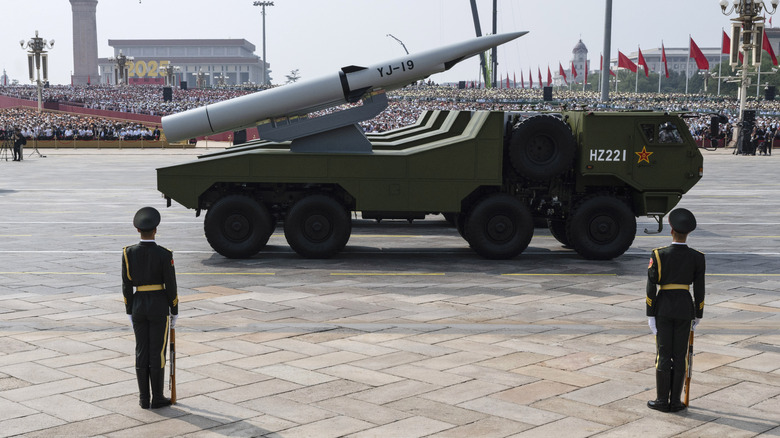
China is among the handful of countries that have developed anti-ship ballistic missiles (ASBMs). These missiles are specifically designed to target moving warships from long distances. In the case of China, this gives its military the ability to strike U.S. aircraft carriers by launching them from deep within the country (although some of its ASBMs can also be launched via air or ship).
The ASBMs currently operational in China include the YJ-21with a 1,500 km range (~900 miles), the DF-21D — a land-based ASBM with a range of around 2,150 km (~1,300 miles), the DF-17; another land-based, road-mobile ASBM with a range of up to 2,000 km (1,300 miles), and the DF-26D with a maximum range of 4,000 km (2,500 miles). The ASBM with the longest range currently operated by the Chinese military is the ASBM variant of the DF-27. This missile can strike targets up to 8,000 km (5,000 miles) away from the Chinese mainland, which puts U.S. vessels stationed as far as Guam, Alaska, and even Hawaii within Chinese missile range.
The U.S. does not currently have a single ASBM in its arsenal because it has historically not needed them. This is evident from the fact that, unlike China, which faces constant pressure from the U.S. due to the latter’s presence in the Pacific Ocean as well as the East and South China Sea, the U.S. is not threatened by a sizable adversary in its neighborhood. In simpler words, while America is certainly capable of developing and deploying ASBMs, its strategic location and military needs do not make them essential.
Do note that the U.S. does possess non-ballistic anti-ship missiles like the Tomahawk (anti-ship variant) and the Lockheed Martin AGM-158C Long-Range Anti-Ship Missile (LRASM).
China has land-based Intermediate Range Ballistic Missiles (IRBMs), which the U.S. does not
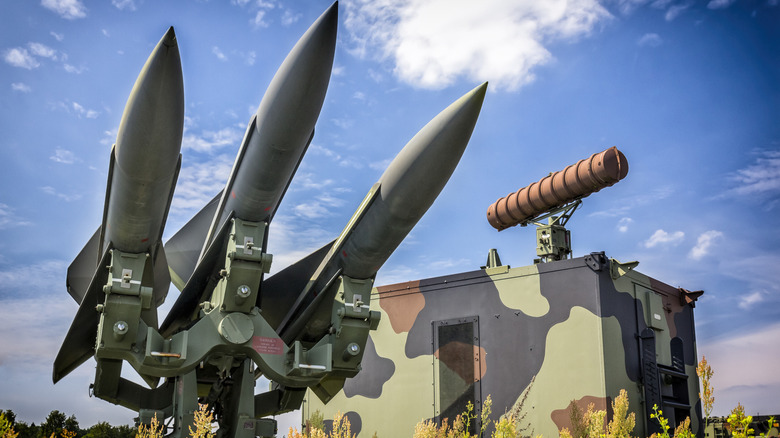
The missile with the longest range in the U.S. is the land-based LGM-30 Minuteman III ICBM . However, the country’s shorter-range ground-based ballistic missile arsenal is non-existent. Again, there is a reason why this gap exists in the U.S. For over three decades, the U.S. was a signatory to the Intermediate-Range Nuclear Forces (INF) Treaty with the Soviet Union (and later Russia) which prohibited it from developing and deploying ground-based ballistic and cruise missiles that had ranges between 500 and 5,500 km. This led to the U.S. making up for this gap in capability by strengthening its submarine-launched missiles, short-range systems and long-range hypersonic weapons.
In contrast, China, thanks to having nothing to do with this treaty, ended up developing a wide array of ground-based short and intermediate-range missiles. DoD 2024 report lists the wide range of Chinese ground missiles, which include the DF-21 (MRBM), DF-26 (IRBM with a range of up to 4,000 km), DF-17 (MRBM), and the CJ-10/CJ-100 (land-attack cruise missiles). These systems cover a range between 1,500 km and 4,000 km, giving China the ability to hit regional targets quickly from land launchers.
It is also pertinent to note that these missiles aren’t as critical to the U.S. as they are to China. Unlike China, which has to contend with several regional adversaries in its immediate vicinity, the U.S. faces no such major threat for it to invest in short or intermediate-range missiles. Nevertheless, the U.S. eventually withdrew from the treaty in 2019, paving the way for the development of short- to medium-range ground-based missiles. Despite this, the U.S. remains several years away from possessing this specific capability.
China possesses a land-based coastal anti-ship missile network that the U.S. lacks
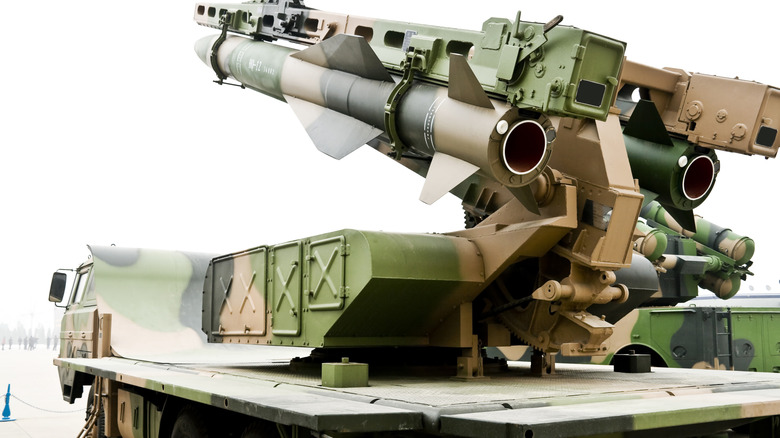
While we have discussed China’s anti-ship ballistic missile systems earlier in this article, those alone do not constitute the country’s coastal defense system. In addition to its dedicated ASBMs, China has further fortified its coastal defense system using a dedicated land-based coastal missile network. Unlike anti-ship ballistic missiles discussed earlier, this missile network primarily uses ASCMs (Anti-Ship Cruise Missiles) that are typically truck-mounted, making them highly mobile. While these missiles do not have the massive range of ASBMs, they are good enough to strike targets that are several hundred miles away from China’s coast.
These coastal units use missiles such as the YJ-62 and YJ-12B, which can be fired from mobile trucks positioned along the coast or on island outposts. Exercises in China’s Northern Theater Command have shown the 333rd Coastal Defense Brigade operating YJ-62 coastal batteries in real deployments. This is in complete contrast to the U.S., which does not possess a single nationwide coastal anti-ship missile network. That being said, it is not as though the U.S. has experimented with this idea. The U.S. Marine Corps has recently experimented with small, deployable Naval Strike Missile truck units, these were always meant for overseas use and were never intended to be part of a coastal defense grid.
Once again, the reason for the U.S. not being keen on possessing these specific military capabilities is mainly due to the fact that its geostrategic location and military goals do not mandate the need for these capabilities. However, the knowledge and experience the Chinese military has gained from the development of these weapons systems will make the country a very formidable adversary for the U.S. in the coming decades.

Comments are closed.