
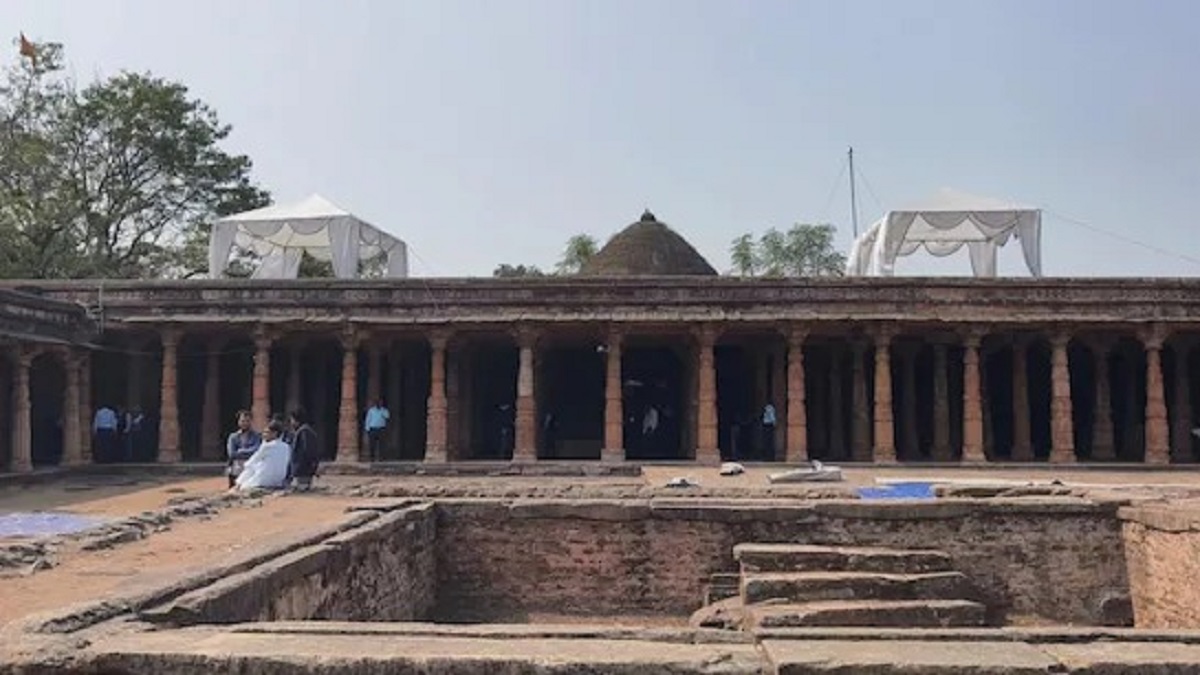

In the Bhojshala dispute, the Indore bench of Madhya Pradesh High Court has directed both the parties to file objections to the report of Archaeological Survey of India (ASI) within two weeks. The Archaeological Survey of India has submitted a report of 2089 pages in 10 volumes prepared after 98 days of survey. The report mentions many archaeological and religious evidences.
The survey report has revealed that many old idols and artefacts including those of Lord Shiva, Vishnu, Vasuki Nag and Ganesha have been found in the area, which have been chemically processed and presented as scientific evidence. Apart from this, the survey has also found evidence that the old remains of Bhojshala were used in building Kamal Maula Masjid.
According to reports, the Archaeological Survey of India has found several archaeological remains, including mythological sculptures of Lord Shiva and ‘seven-headed Vasuki Naga’. More than 1,700 artefacts have been found during the survey, including numerous sculptures, structures, pillars, walls and murals. Excavations, archaeological exercises and examination of inscriptions have yielded a large number of inscriptions in Sanskrit, Devanagari and Nagari scripts, verses inscribed on pillars, remains of sculptures of deities, parts of temple architecture and archaeological material found in and around the complex. Many inscriptions are from the 11th-12th century, which belong to the Parmar period. Some of the inscriptions contain Sanskrit verses and praises of Goddess Saraswati.
There are remains of artistic carvings of flowers, kirtimukhas, lotus designs and sculptures of gods and goddesses on the pillars, beams and foundation stones of the Bhojshala. Some pillars are carved with human figures, dance postures and mythological symbols. The report said that remains of its foundation stone wall row, base of pillars and stone floor were found, whose orientation and structure matches the traditional temple architecture. Structures like sacrificial pits have also been found at some places.
Persian and Arabic writings have also been recorded in Bhojshala, which indicates that it was used as a mosque or dargah in later times. There are mentions of Sufi tradition in the writings and inscriptions associated with the Kamal Maula structure. ASI says that elements of Islamic architecture are also present in the existing structure, which include arches, mihrab arches and some Persian inscriptions.
Also read:
Will ‘Kerala’ become ‘Keralaam’ before 2026 elections?
Supreme Court instructions on voter list revision in West Bengal!
“Will attack India like 26/11!” Pahalgam attack mastermind took oath in the name of Allah

Comments are closed.