
Canada Moves to Revoke Citizenship of Alleged 2008 Mumbai Attack Facilitator as Carney Heads to India

Ottawa Seeks to Strip Citizenship Over Alleged Misrepresentation
The Canadian government is pursuing the revocation of citizenship for Tahawwur Rana Hussain, a Pakistan born businessman accused by Indian authorities of playing a key role in the 2008 Mumbai terrorist attacks that killed 166 people.
According to documents obtained by Global News, Immigration, Refugees and Citizenship Canada has notified Hussain that it intends to revoke the Canadian citizenship he acquired in 2001. Officials state the action is based not on terrorism allegations directly, but on claims that he misrepresented his residency history when applying for citizenship.
Hussain, 65, immigrated to Canada in 1997 and became a citizen four years later. He is currently in custody in India awaiting trial on charges alleging he facilitated the Mumbai attack carried out by the Pakistan based group Lashkar e Tayyiba.
Allegations of Residency Fraud
In revocation documents, Canadian officials allege Hussain falsely claimed to have lived continuously in Ottawa and Toronto for four years before applying for citizenship, reporting only a six day absence from the country.

However, an investigation by the Royal Canadian Mounted Police concluded he had spent most of that period in Chicago, where he owned properties and operated businesses including a grocery store and immigration firm.
Immigration officials described the case as involving serious and deliberate deception, arguing that decision makers granted citizenship under the mistaken belief that residency requirements had been met.
The matter has been referred to the Federal Court, which must determine whether his citizenship was obtained through false representation or fraud.
A Politically Charged Issue in Canada
Revoking citizenship from individuals implicated in terrorism has been a contentious issue in Canadian politics for more than a decade.
Under former prime minister Stephen Harper, legislation allowed Ottawa to revoke citizenship from dual nationals convicted of terrorism. During the 2015 federal election, the Liberals criticized the law as creating two tiered citizenship, using the slogan a Canadian is a Canadian.
After taking office, the government of Justin Trudeau repealed the law. However, Ottawa has continued to pursue revocation cases where citizenship was allegedly obtained through misrepresentation rather than criminal conviction alone.
An immigration spokesperson stated that revocation remains an important tool to protect the integrity of Canadian citizenship, adding that the government does not take such measures lightly.
Trial in India and Diplomatic Sensitivities
Hussain faces trial in India in connection with the 2008 siege, which targeted the Taj Mahal Palace Hotel, a Jewish community centre and other sites in Mumbai. The attack remains one of the deadliest terrorist incidents in modern history and continues to influence India Pakistan relations.


India’s National Investigation Agency has described him as a key facilitator and Canadian national. He was extradited from the United States to India in April 2025 after serving time related to a separate plot involving a Danish newspaper.
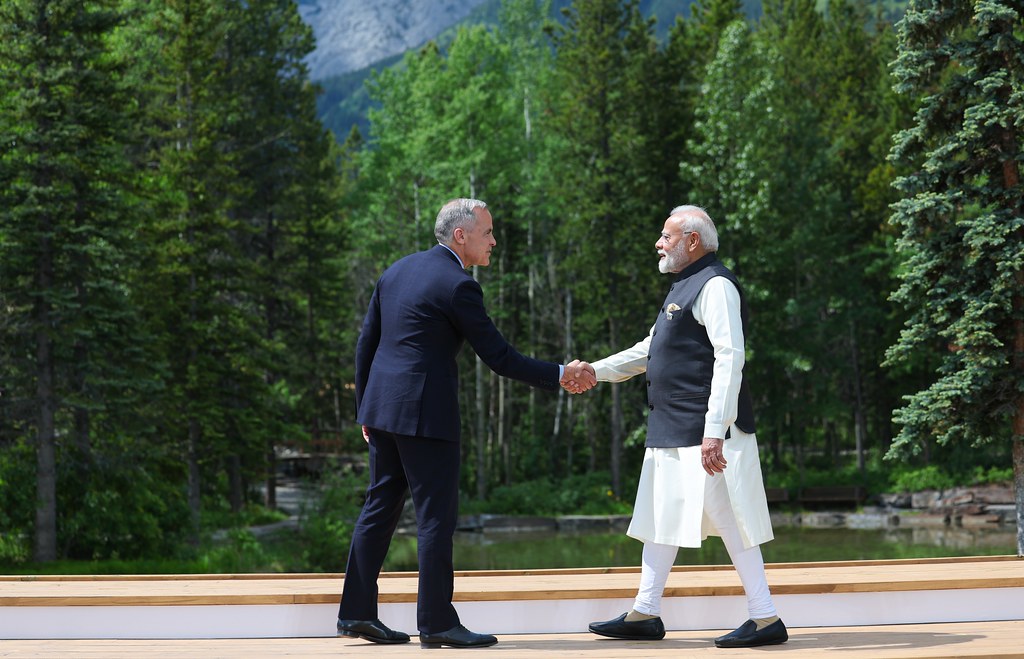
The revocation case is unfolding as Prime Minister Mark Carney prepares for a diplomatic visit to India, Australia and Japan from February 26 to March 7. In India, Carney is expected to pursue discussions around trade and bilateral relations with Prime Minister Narendra Modi.
Relations between Ottawa and New Delhi have been strained in recent years over allegations involving foreign interference and security concerns.
What Happens Next
If the Federal Court rules in favour of revocation, Hussain would lose his Canadian citizenship but retain permanent resident status. That would allow him to reapply for citizenship after ten years, provided he meets eligibility criteria.
His lawyer has appealed the decision, arguing that the revocation is unfair and violates his rights. In correspondence to immigration officials, Hussain stated he believed he had maintained a primary residence in Canada and did not knowingly conceal material facts.
The case now rests with the Federal Court, which will determine whether the evidence supports Ottawa’s claim that citizenship was obtained through misrepresentation.
As diplomatic efforts continue between Canada and India, the legal proceedings against Hussain add another complex dimension to an already sensitive bilateral relationship.

Comments are closed.