
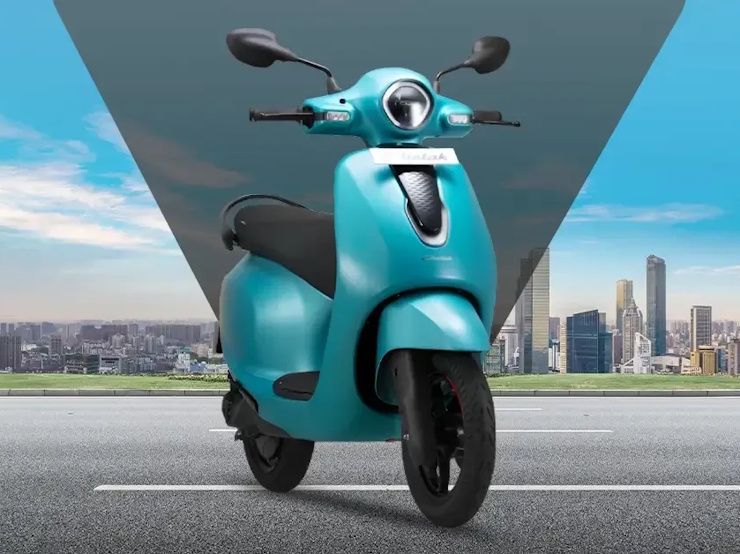

Bajaj Auto Managing Director Rajiv Bajaj has openly criticized the Maharashtra government regarding its electric vehicle policy. He stated that the framework is turning into a severe failure due to massively delayed and unpaid subsidies. He noted that in his 36 years in the automotive industry, he has never witnessed a policy breakdown of this scale.
The company has received only a tiny fraction of its promised dues, and Bajaj believes the state might never pay the remaining balance. This creates a highly challenging situation for manufacturers who calculate their final vehicle pricing based on these promised state government incentives.
The hidden cost of financial crutches
Despite the missing funds from the state, Bajaj holds a surprisingly critical view of the overall electric vehicle subsidy model. He argues that financial crutches ultimately slow down innovation and protect inefficient manufacturers from failing.
When companies rely on government money rather than product excellence to drive sales, the entire industry suffers from a lack of genuine technological progress. He is publicly supporting the complete removal of these financial benefits. Subsidies for electric three wheelers have already ended, and Bajaj hopes the government will pull the plug on electric two-wheeler subsidies entirely by March.
This push for a completely subsidy free market comes as the electric two-wheeler space undergoes rapid consolidation. The market is no longer crowded with dozens of smaller startups fighting for tiny pieces of the pie.
The top five electric two-wheeler manufacturers now control a massive 80 percent of the overall sales volume. Companies with deep pockets, vast research budgets, and established manufacturing capabilities are actively pushing out smaller players who relied heavily on government handouts to survive.
Scaling up production and cashing in on PLI
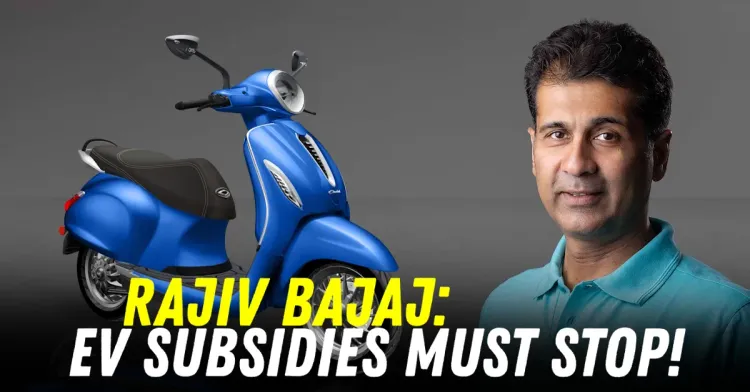
Bajaj Auto is backing its strong anti-subsidy stance with solid production numbers and factory output. The company has currently stabilized its electric two-wheeler production at a steady 30,000 units per month. They are now gearing up the supply chain to increase this monthly output to 40,000 units by April.
While state level subsidies have proven completely unreliable, the central government Production Linked Incentive scheme is working heavily in their favor. Bajaj Auto expects its total claims under this manufacturing reward scheme to hit Rs 1,000 crore, with over Rs 642 crore already granted and secured.
Combustion engine growth and export hurdles
The company is also actively navigating complex changes in the traditional combustion engine market. Regarding upcoming safety regulations, Bajaj pointed out that mandating Anti-lock Braking Systems will only impact about 25 percent of the two wheeler industry.
He firmly believes this specific rule alone will not solve the larger issue of road fatalities. Meanwhile, in the highly profitable premium commuter space, the company has successfully grown its market share in the 125cc and above segment to between 22 and 24 percent. This marks a clear 2 percent jump over the last two months alone.
International trade presents another immediate challenge for the manufacturer. The government has recently slashed Remission of Duties and Taxes on Exported Products benefits by 50 percent. This is a move that will negatively impact profit margins on shipped vehicles.
Despite this financial setback, Bajaj Auto expects its overall export performance in the fourth quarter to mirror the third quarter at roughly 600,000 units. The company is actively working to increase its overall monthly export volume from 200,000 units to 250,000 units in the coming months. This push is being bolstered by steady demand in recovering markets like Sri Lanka, which currently absorbs 10,000 Bajaj units every single month.
Via CNBC

Comments are closed.