
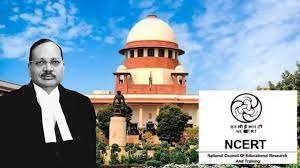

News India Live, Digital Desk: The Chief Justice of India (CJI) has raised a serious issue regarding the image of the judiciary in school books. Expressing strong objection to the mention of ‘corruption in judiciary’ in NCERT books, the CJI has termed it a ‘planned attack’ on the institution. He stressed that such things can create distrust in the minds of the young generation towards the most trusted pillar of the country. The main reason for the displeasure of the CJI: During a recent program, the CJI mentioned some passages included in the textbooks of NCERT (National Council of Educational Research and Training). Negative portrayal: He said that it is wrong to call the judiciary corrupt without any concrete data or reference. Dignity of the institution: According to the CJI, corruption can happen in individual cases. But portraying the entire institution in this way is an attack on the independence and integrity of the judiciary. NCERT’s stand: Although NCERT had termed these changes as ‘factual’, the CJI has termed it as a ‘calculated attack’. Why has this controversy heated up? The root of the controversy is some changes made in the Political Science books of NCERT. Reference to old chapters: Examples of court delays and corruption in the books State of confusion: Law experts believe that students are being focused on the shortcomings of the law rather than its nuances. Demand for reform: There have been indications from the judiciary that there is a need to improve the educational material so that it remains fair and balanced. Judiciary vs Executive? This is not the first time that there has been disagreement on any issue between the judiciary and the government (under which NCERT works). Collegium System: Earlier also regarding the appointment of judges. There has been a tussle between both sides. Politicization of the curriculum: One section of experts is seeing this as politicization of education, while the other considers it necessary for the transparency of the system. What solution did the CJI suggest? The CJI made it clear that the judiciary is not against criticism, but criticism should be based on facts. He suggested that: Students should be taught how the judiciary works. Isolated cases of corruption should not be shown as failure of the entire system. Court reforms and landmark judgments should also get equal importance.

Comments are closed.