
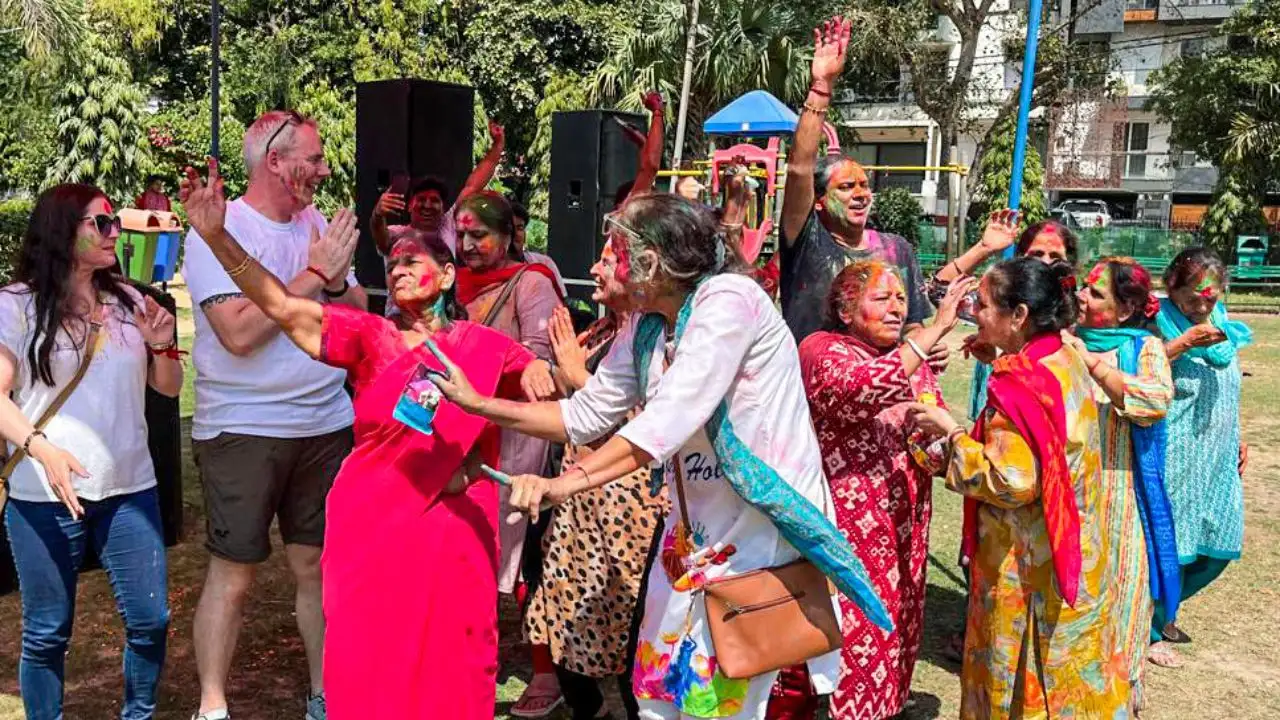

Holi: Festival of colors and cultural gathering
Holi is not just a festival of colors, but it is a symbol of the cultural diversity of India. It is a celebration of the victory of good over evil, to which every region has added its own speciality. At some places sticks are fired, at some places flowers are showered, at some places songs are heard. This year, the festival of Holi will be celebrated as Holika Dahan on March 3 and Dhulandi on March 4. Let us take a journey through the unique forms of Holi in different parts of India, which showcase the diversity of this festival.
Braj’s Lathmar and flowery Holi: The magic of Uttar Pradesh
Braj region of Uttar Pradesh is the most vibrant place of Holi. Lathmar Holi is celebrated here in Barsana and Nandgaon, where women jokingly use sticks at men. It is associated with the pastimes of Krishna and Radha. Holi of flowers is played in Vrindavan, where flower petals are scattered instead of colours. Laddu Holi is also special in the Shreeji temple of Barsana, where sweets are thrown, which reminds of the mischiefs of Krishna.
Dhulandi and Hola Mohalla of North India: From joke to martial art
In Haryana, Holi is called Dhulandi, where there is an atmosphere of laughter and fun between sister-in-law and sister-in-law. This tradition strengthens family relationships. The Sikh community in Punjab celebrates Hola Mohalla, which is accompanied by colors and displays of fencing, horse riding and martial arts. Baithiki and Khaadi Holi is held in Kumaon, Uttarakhand, where people sing folk songs in traditional clothes. In Himachal it is known as Phag. All these forms provide energy and variety to the festival.
Dol and Fagua of Eastern India: From calm to enthusiastic forms
Holi is celebrated as Dol Jatra or spring festival in West Bengal. Inspired by Rabindranath Tagore, it is celebrated with music, dance and the journey of Radha-Krishna at Shantiniketan. Dola Purnima in Orissa is known as Fagua in Bihar-Jharkhand. In Assam it is called Fakuwa or Daul, while in Manipur the six-day long Yaosang festival is celebrated. These regions provide cultural depth to Holi.
Unique Traditions of the West and South: From Rang Panchami to Manjal Kuli
Holi in Maharashtra is celebrated till Rang Panchami, which is the fifth day after the main day. In Goa there are large processions and folk dances called Shigmo, which welcome spring. Dhuleti is celebrated after Holika Dahan in Gujarat. The Konkani community of Kerala celebrates Manjal Kuli or Ukuli, where turmeric water is used in place of colours. These traditions show that Holi has its own identity in the South too.
Essence of Holi: Color of diversity in unity
Be it Lathmar or Phoolwali, Fagua or Shigmo, Holi gives the message of happiness and love everywhere. The various names and ways reflect the cultural richness of India. Understand and adopt these traditions before you drench in colors on March 4 this year. Celebrate together with family and friends, because the true color of Holi lies in relationships.

Comments are closed.