
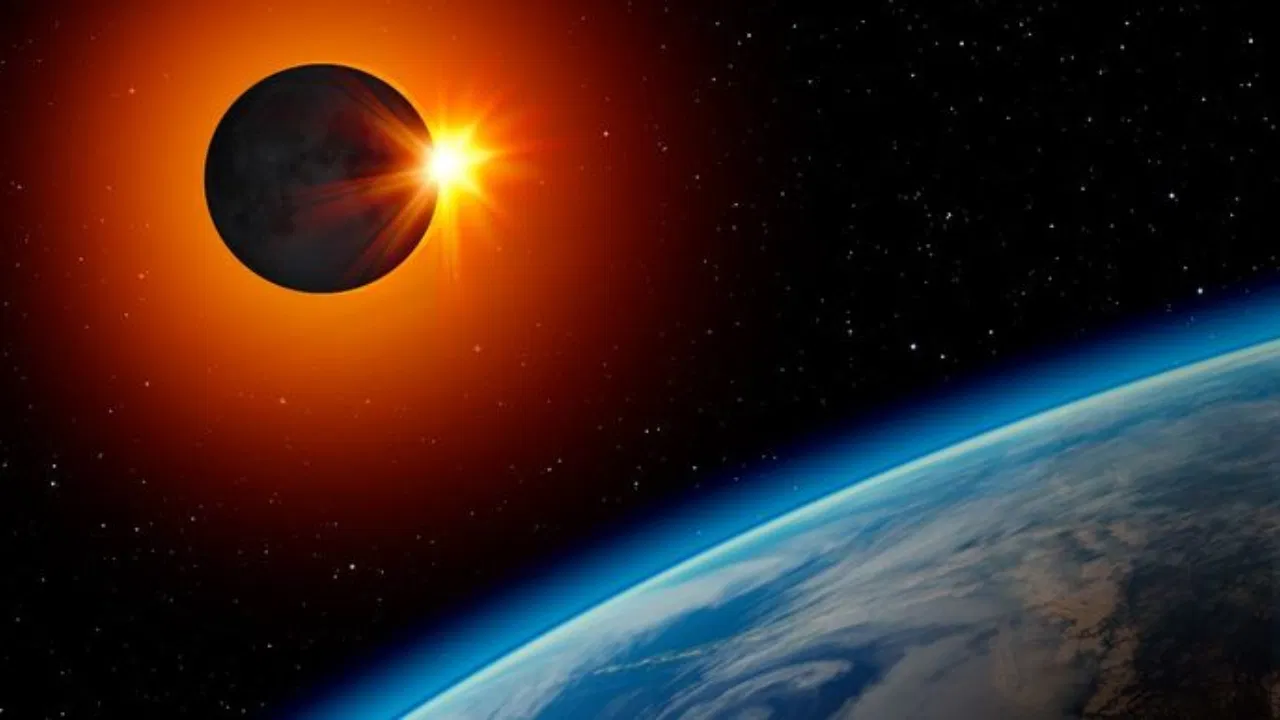

New Delhi: Chandra Grahan 2026 will take place on 3 March 2026, just before the festival of Holi. This timing has drawn attention across India because Holi falls on Phalguna Purnima, the full moon day. A lunar eclipse always occurs on a full moon, when the Earth comes between the Sun and the Moon and casts its shadow on the Moon.
From a scientific point of view, this is a natural astronomical event. From a traditional Indian perspective, it also carries spiritual meaning. Many families observe Sutak, follow certain precautions, and perform prayers during this period.
Here is everything you need to know about the lunar eclipse on March 3, 2026, including exact timings in India, Sutak rules, and zodiac-wise guidance.
Chandra Grahan 2026: Date and time in India
According to astronomical calculations, the lunar eclipse on Tuesday, 3 March 2026, will be visible in many parts of India.
Eclipse Timings (IST)
- Penumbral eclipse begins: 3:20 PM
- Partial eclipse begins: 4:35 PM
- Maximum eclipse: 6:10 PM
- Partial eclipse ends: 7:45 PM
- Penumbral eclipse ends: 9:00 PM
The visibility may vary slightly depending on your city and local moonrise time. In most Indian cities, the eclipse will be seen during the evening hours.
Unlike a solar eclipse, a lunar eclipse is safe to watch with the naked eye.
What is Sutak during Chandra Grahan?
In Hindu tradition, Sutak is a period considered spiritually sensitive. It begins some hours before the eclipse and ends after the eclipse is over.
For a lunar eclipse, Sutak usually starts 9 hours before the eclipse begins. However, if the eclipse is not visible in a particular region, some traditions do not observe Sutak there.
Sutak Timings (IST)
- Sutak Begins: 09:39 AM
- Sutak Ends: 06:46 PM
Sutak for kids, elderly and sick people
- Begins: 03:28 PM
- Ends: 06:46 PM
In many traditions, young children, elderly people, and those who are unwell are given relaxation in strict observance. Customs may vary by region and family practice.
During Sutak, people may:
- Avoid cooking and eating
- Avoid starting new work
- Postpone auspicious rituals
- Focus on prayer and silence
Temples in many regions remain closed during the eclipse and reopen after purification rituals.
It is important to understand that these practices are based on belief and tradition, not medical or scientific rules.
Religious importance of Lunar Eclipse near Holi
Holi represents joy, colour, renewal, and the victory of good over evil. When a lunar eclipse occurs close to Holi, many people feel it adds spiritual depth to the festival.
The Moon in Vedic astrology represents:
- Mind
- Emotions
- Inner peace
- Motherly energy
During an eclipse, some believe emotional balance may feel disturbed. That is why prayer, mantra chanting, and meditation are advised.
Many families wait until the eclipse ends and then take a bath before participating fully in Holi rituals.
Zodiac sign effects and remedies
Astrology suggests that a lunar eclipse may heighten emotions. Here is simple guidance for each zodiac sign.
Aries
You may feel restless or easily irritated. Avoid arguments.
Remedy: Offer water mixed with milk to the Moon and chant “Om Chandraya Namah.”
Taurus
Money or family matters may worry you.
Remedy: Donate rice or white sweets.
Gemini
Communication may create confusion.
Remedy: Spend time in silence and avoid harsh words.
Cancer
As the Moon rules your sign, mood changes are possible.
Remedy: Offer milk to Lord Shiva and meditate.
Leo
Overthinking may disturb your peace.
Remedy: Perform small acts of charity.
Virgo
Work plans may shift.
Remedy: Chant “Om Soumaya Namah.”
Libra
Relationships need patience.
Remedy: Pray calmly and avoid quick reactions.
Scorpio
Hidden emotions may surface.
Remedy: Offer white flowers during prayer.
Sagittarius
Travel or study plans may fluctuate.
Remedy: Read spiritual texts.
Capricorn
Responsibilities may feel heavy.
Remedy: Help someone in need.
Aquarius
Creative ideas may arise, but avoid quick decisions.
Remedy: Practice meditation.
Fish
You may feel more emotional than usual.
Remedy: Donate milk or rice.
Scientific meaning of Lunar Eclipse
A lunar eclipse happens when:
- The Sun, Earth, and Moon align.
- The Earth blocks sunlight from reaching the Moon.
- The Moon appears darker or reddish.
This reddish colour is often called a “Blood Moon.” It happens because sunlight bends through the Earth’s atmosphere.
There is no harmful radiation during a lunar eclipse.
Chandra Grahan on 3 March 2026 is both an astronomical event and a culturally significant occasion in India. Falling close to Holi, it carries emotional and spiritual meaning for many families.
Whether you observe Sutak or simply watch the eclipse in the evening sky, this event offers a moment to pause and reflect.
Stay calm, avoid unnecessary stress, and focus on positive thoughts. With awareness and balance, this lunar eclipse can become a peaceful and meaningful experience.
Written by: Anand Sagar Pathak, Astropatri.com. For feedback, please write to hello@astropatri.com.

Comments are closed.