
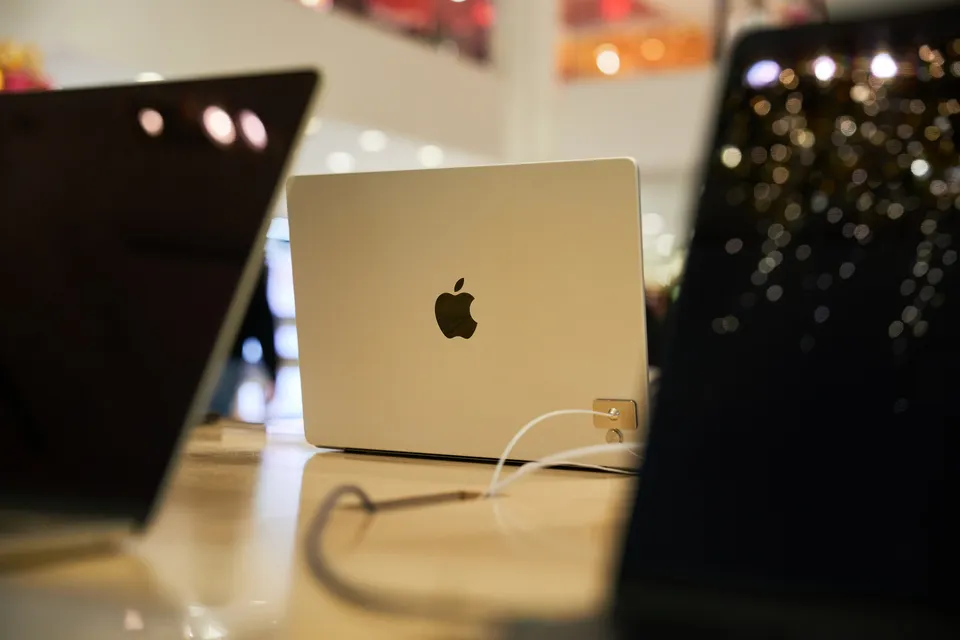

For over a decade, the “touch-screen Mac” was the tech world’s most persistent unicorn, a product Apple executives famously derided as “ergonomically terrible.” However, a bombshell report confirms that the walls have finally come down. Apple is reportedly in the advanced stages of developing a revolutionary touch-screen MacBook Pro slated for a late 2026 release. This isn’t just a minor hardware tweak; it represents a fundamental philosophical shift, bringing the Dynamic Island to the laptop for the first time and introducing a “chameleon-like” interface that bridges the gap between the iPad and the Mac.
The Hardware: OLED Brilliance and the Death of the Notch
The core of this new MacBook Pro (codenamed K114 for the 14-inch and K116 for the 16-inch) is a transition to OLED display technology. While the current mini-LED panels are industry-leading, the shift to OLED allows for a thinner lid, deeper blacks, and the precise touch-sensitivity required for Apple’s new vision.
The most striking visual change, however, is at the top of the display. Apple is finally retiring the much-maligned notch in favor of the Dynamic Island. Built around a smaller, hole-punch camera cutout, the MacBook’s Dynamic Island will function almost exactly like its iPhone counterpart. It will contextually expand to show Live Activitiessuch as timers, sports scores, music playback, and AirDrop status, effectively reclaiming the “dead space” at the top of the screen for active, touchable utility.
The “Dynamic” Interface: A New Way to macOS
The true “secret sauce” revealed in the Bloomberg report is a refreshed, dynamic user interface. Apple is not simply slapping a touch-sensitive layer onto the existing macOS; it is teaching the OS to adapt.
According to sources, the system will operate in two distinct modes:
Touch-Optimized Interaction: When a user’s finger approaches the screen or taps a control, the interface will “shift.” For instance, tapping a menu bar item will cause the selections to automatically enlarge and gain more padding, making them easier to target with a finger.
Contextual Menus: In a move that mirrors the iPad’s hover functionality but goes further, touching a button or complex control will trigger a floating pop-up menu that surrounds the user’s finger. This menu will provide relevant touch commands based on the user’s prior interactions, effectively acting as a digital “Touch Bar” that exists anywhere on the screen.
Silicon Power: The M6 Pro and the 2nm Era
While the entry-level “March Blitz” products will focus on the M5 series, this late-2026 flagship is designed to debut with the M6 Pro and M6 Max chips. These will be Apple’s first laptop processors built on the 2-nanometer process.
The jump to 2nm isn’t just about speed; it’s about thermals. A touch-screen device encourages closer proximity and more frequent interaction with the display, and the efficiency of the M6 architecture is critical for keeping the device cool and the battery life consistent with Apple’s legendary Pro standards. Furthermore, the M6’s enhanced Neural Engine will power the “Visual Intelligence” features that allow the OS to predict whether you’re about to reach for the screen or stick to the trackpad.
The question on every analyst’s mind is why. For years, Apple argued that vertical touch surfaces caused “gorilla arm” fatigue. The shift appears to be driven by two factors: consumer expectations and ecosystem unity.
As more users enter the Mac ecosystem from touch-first platforms like the iPhone, iPad, and even Chromebooks, the “dead display” has become a point of friction. Moreover, with the convergence of apps across visionOS, iPadOS, and macOS, having a non-touch screen has become an artificial barrier for developers. Apple isn’t positioning this as an “iPad replacement”, in fact, they are doubling down on the Mac as a “blend” of input methods, where touch is a supplemental aid rather than the primary driver.
Release Timeline: The Two-Step Refresh
If you were hoping for a touch-screen Mac in the upcoming March 4 “Experience” event, you’ll need to wait. Bloomberg confirms that the March event will focus on the M5 MacBook Pro and the new budget $599 MacBook.
The OLED, touch-capable M6 MacBook Pro is strictly a “Fall 2026” affair. This staggered release allows Apple to clear current inventory of mini-LED parts while ensuring the software for the new “Dynamic Interface” is polished for a grand unveiling alongside the iPhone 18 series.

Comments are closed.