

Thailand’s rice exports fell sharply in January, raising concerns that the country’s total exports for the year could hit a five-year low due to the appreciating baht and intensifying global competition.
Chookiat Ophaswongse, honorary president of the Thai Rice Exporters Association, said total exports in January reached only 530,000 tonnes, down 17.5% from the same period last year, while export value plummeted 30.7% to THB9.7 billion (about US$312 million).
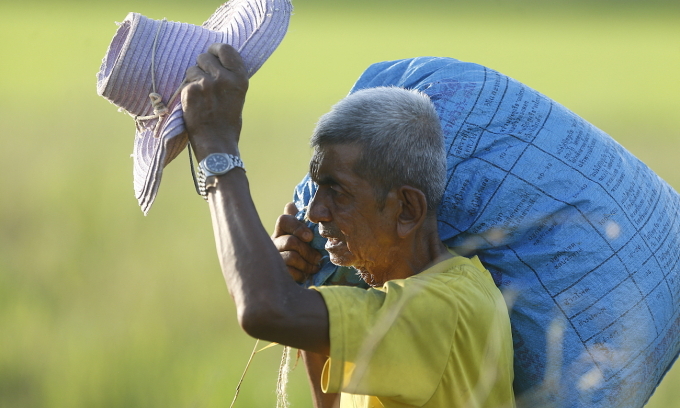
A farmer harvests in his rice field during sunrise in Nakhon Sawan province, north of Bangkok, on October 19, 2025. Photo by NurPhoto via AFP |
Average monthly exports are expected to remain at around 500,000 tonnes until mid-year due to various challenges.
The association projects rice exports of 7.03 million tonnes this year, down 11% year-on-year, with export value forecast to fall 12.3% to THB130 billion.
Exporters say one of the main risk factors is the strengthening baht (currently fluctuating around THB31 to the U.S. dollar), which makes Thai rice more expensive than that of its competitors.
Thai fragrant rice is currently priced at around $1,200 per tonne, the highest in the world. Thai 5% broken white rice is also more expensive than that of other countries.
In addition, the temporary U.S. import tariff of 15% for 150 days could reduce Thai fragrant rice exports to the U.S. by 15–20%. The U.S. is currently Thailand’s largest market for fragrant rice, accounting for about half of its total fragrant rice exports.
Furthermore, global oversupply, including record production in India, import restrictions imposed by major buyers such as Indonesia, and food security policies encouraging self-sufficiency, is also putting pressure on demand for Thai rice.
Thai exporters are urging the swift formation of a new government and the implementation of urgent measures to address the strengthening currency, develop new rice varieties suited to global demand, and reduce production costs to prevent Thailand from losing further market share to regional competitors.

Comments are closed.