
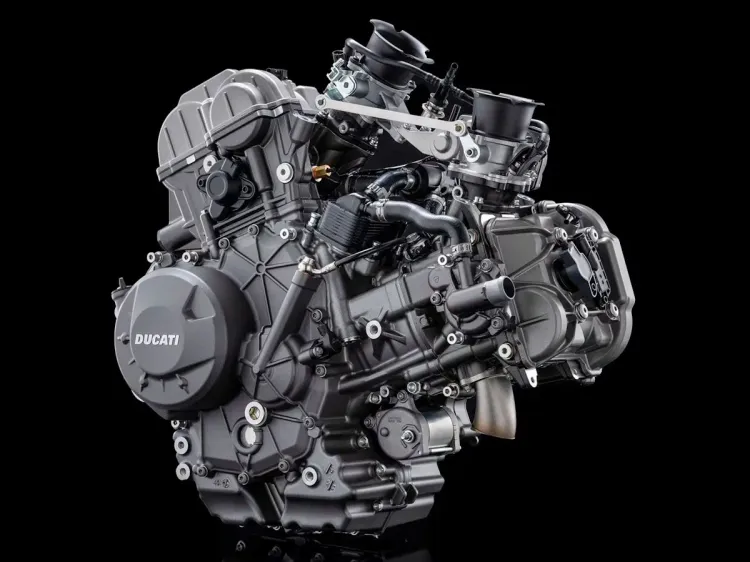

Ducati has officially taken the wraps off the highly anticipated second generation of the DesertX adventure motorcycle. Completely redesigned from the ground up for the 2026 model year, the updated premium off-roader ditches its traditional, older powerplant for an entirely new, lightweight engine architecture and a drastically revised chassis.
This extensive mechanical overhaul aims to cement the motorcycle as the ultimate heavyweight off-road machine in a highly competitive global segment.
The Brand New 890cc Heart
The biggest and most significant technical shift lies right in the middle of the frame. The older, heavier 937cc Testastretta engine has been completely retired. In its place sits a brand new 890cc, 90-degree V2 liquid-cooled engine.
Despite the noticeable drop in overall engine displacement, the new motor is highly advanced, featuring a 96 mm bore and a 61.5 mm stroke with a high 13.1:1 compression ratio. It produces a very strong 110.3 horsepower at 9,000 rpm and 92 Nm of peak torque at 7,000 rpm.
The engine now utilizes an Intake Variable Valve Timing system, ensuring that power delivery remains incredibly smooth across the entire rev range. The six-speed transmission has also been fundamentally reworked. The manufacturer has installed significantly shorter ratios for the first four gears, allowing for far better slow-speed clutch control on tough, technical dirt trails. Conversely, the sixth gear has been made significantly taller to ensure highway cruising remains relaxed and highly fuel-efficient.
Chassis And Hardware Upgrades
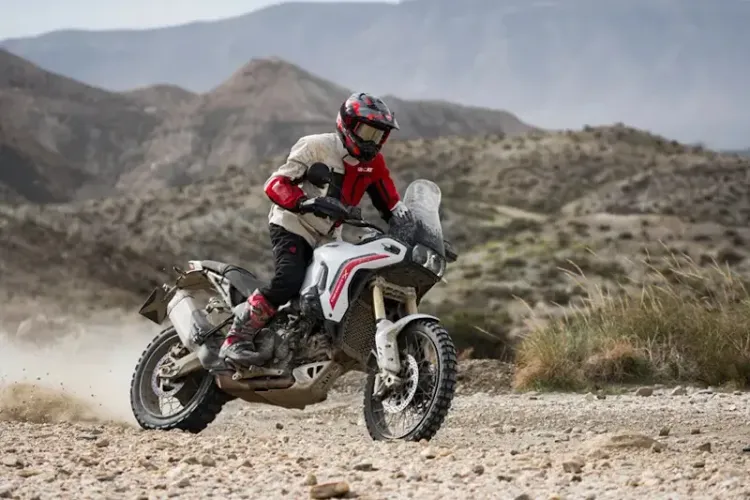
Moving away from its traditional steel trellis roots, the 2026 DesertX now utilizes an advanced aluminium monocoque frame where the new V2 engine acts as a fully stressed member of the chassis. This architectural change, combined with the inherently lighter engine block, drastically reduces the overall mass.
The motorcycle now tips the scales at a highly competitive 209 kg wet weight without fuel. The suspension system features fully adjustable high-performance KYB units, delivering a massive 230 mm of suspension travel at the front and 220 mm at the rear.
Stopping power is confidently handled by top-tier Brembo four-piston radial monobloc calipers clamping down on dual 305 mm front discs. It continues to ride on a true off-road wheel setup, featuring a 21-inch front and an 18-inch rear cross-spoked wheel, both wrapped in aggressive Pirelli Scorpion Rally STR rubber.
Revised Ergonomics And Electronics
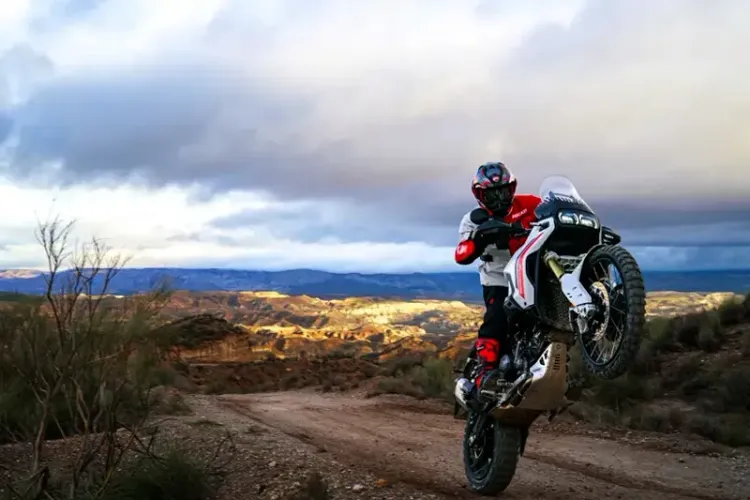
The engineering team paid massive attention to rider ergonomics. The footpegs have been moved slightly backward, while the seat and handlebars have been shifted forward. This creates a much more neutral rider triangle, severely improving control and balance when the rider is standing up over rough terrain.
The motorcycle also features a newly designed 18-litre polymer fuel tank. This new tank is noticeably slimmer between the knees and carries its fuel mass much lower in the chassis to reduce the center of gravity, making the bike feel significantly less top-heavy during slow manoeuvres. The standard seat height sits at 880 mm, though it can be lowered to an accessible 840 mm using an optional low seat and suspension kit.
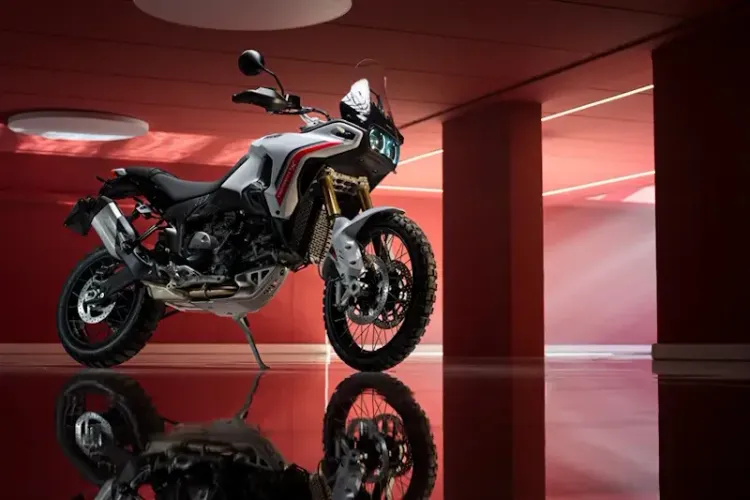
The electronics suite remains absolutely state-of-the-art. Managed by a sophisticated Bosch inertial measurement unit, the motorcycle features a crisp five-inch TFT color display. Riders get access to multiple power modes, cornering ABS, Ducati Traction Control, wheelie control, and highly adjustable engine brake control.
While the current generation model retails between Rs 18.33 lakh and Rs 23.71 lakh ex-showroom, buyers should expect this heavily upgraded 2026 version to carry a noticeable premium when it eventually hits local dealership floors later this year.

Comments are closed.