
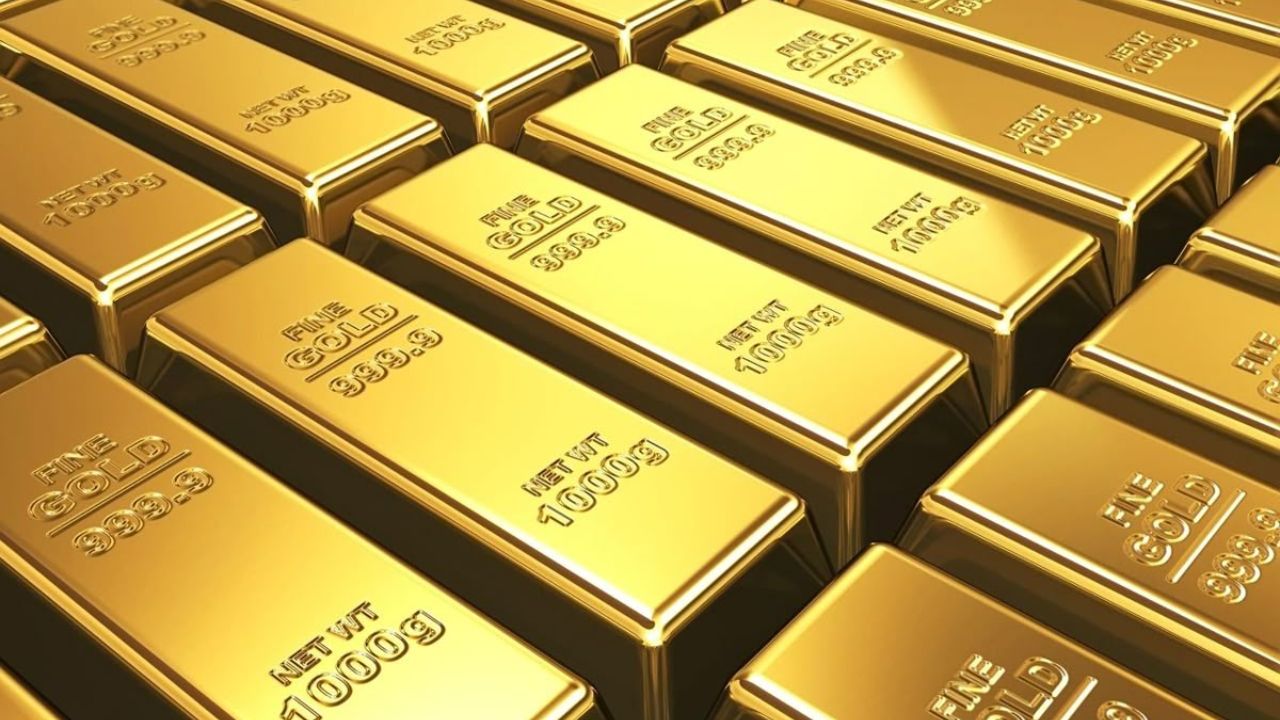
Bank Of England: London Underground ‘City Within City’; World’s Largest Gold Reserve Revealed

Bank Of England: There is a place in central London, where the subway tunnel makes a sudden turn instead of going straight. The reason for this is the huge underground vault of the Bank of England. Also known as ‘city within a city’. Almost 40% of the bank’s total floor space is underground and at the center of this network is claimed to be Europe’s largest gold vault. The underground vaults of the Bank of England in London hold over 5,000 tonnes of gold from more than 60 countries. This vault has the largest storage space in Europe. Which is second only to the Federal Reserve Bank of New York.
PM Narendra Modi: Big deal between India and Israel, Prime Minister Narendra Modi’s big announcement from abroad
The Bank of England has a total of 12 massive vaults, each containing thousands of gold bars. A total of more than 5,000 tonnes of gold is stored here. By comparison, this amount is said to be more than Fort Knox in the US, while the New York Fed holds approximately 1,000 tons more in reserves. Each gold bar stored here weighs 400 troy ounces (about 12-13 kilograms). Each bar has a serial number or barcode. When gold is bought or sold, the bar remains unchanged in most cases. Only its code is transferred to the new owner.
Interestingly, the Bank of England does not hold most of this entire reserve. The bank itself has only two gold bars on display. The British government keeps approximately 300 tons of gold here. Central banks of more than 60 countries store their gold here. This treasury is the center of government treasuries in the world. The underground vaults of the Bank of England are not just a storehouse of gold, but a symbol of global economic and political power.
Home Credit India’s musical campaign! Debt hesitation will disappear, #KahoEMIKoHaan
In the late 1990s, then Finance Minister Gordon Brown decided to sell more than half of Britain’s gold reserves. At that time the price of gold was about 275 dollars per tola. Today, the price has reached almost 5,000 dollars per tola. According to one analysis, those sales cost Britain an estimated $47 billion (roughly Rs. 4,27,437 lakh crore). Bank of England Governor Adubelli says that at the time, there was a debate about making reserves more useful, as gold remained in the treasury and did not provide income.

Comments are closed.