
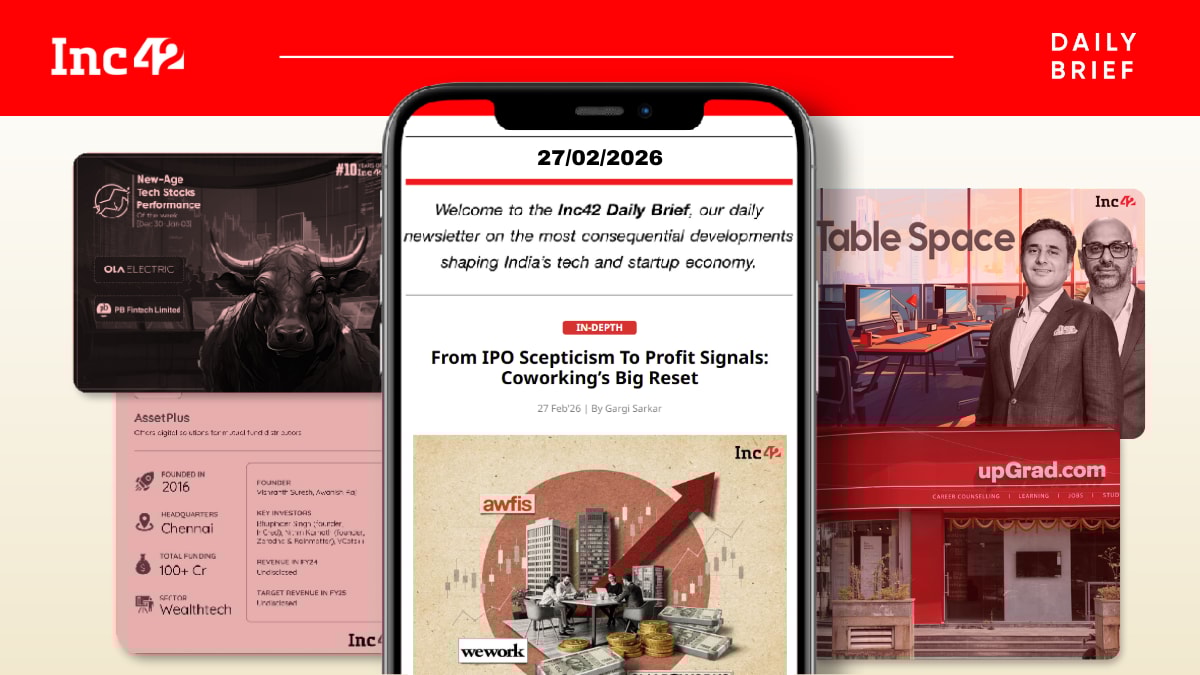

Inside India’s Coworking Reset
India’s listed coworking giants are defying pre-IPO scepticism. Following a stellar Q3 FY26, many of these startups are reporting soaring profits and robust occupancy, shedding their disruptor image to become more stable, disciplined operators. So, what’s their secret sauce?
The Q3 Turnaround: The December 2026 quarter provided a definitive answer to investors worried about the coworking industry’s lease-heavy model. While WeWork India and Smartworks swung back in the black, Awfis reported a 43% YoY surge in profits.
This across-the-board profitable performance signals that the industry has reached an inflexion point, where scale, operational leverage and high occupancy are finally translating into a durable bottom line.
The Enterprise Moat: As per industry insiders, coworking is no longer a haven for startups, but a strategic tool for the Fortune 500. While large enterprises contributed 75% of WeWork India’s revenue in Q3, the number stood at 90% for rival Smartworks. With average enterprise lock-ins stretching beyond 30 months, these coworking giants have now replaced “churn-heavy” freelancers with structurally sticky corporate cash flows.
Operational Maturity: The sector is demonstrating a newfound financial discipline. The growth-at-all-costs era has given way to institutional consolidation. Operators like Awfis are leaning into managed aggregation models to scale, without bloating their balance sheets. Simultaneously, cash conversion has become the new stabilising factor, signalling that these businesses are now generating internal capital to fund their own expansion.
As the coworking market consolidates around four or five dominant leaders, the battle is now shifting from a price war to a test of operating models and effective diversification. With plans to double down on premium metro centres and diversify into tier II cities, here’s how listed coworking giants have started to flip the script.
From The Editor’s Desk
🏢 Table Space Gears Up For IPO
- The managed office space provider has received board approval to raise pre-IPO funding of ₹200 Cr. The fundraise will be 20% of the total fresh issue, pegging the cumulative primary issue at ₹1,000 Cr.
- Table Space has been on track to list on the bourses since at least late 2024. However, the roadmap was jolted by founder Amit Banerji’s sudden demise in January 2025, forcing a leadership reset in the middle of listing plans.
- Founded in 2017, Table Space offers managed workspace solutions to 315+ enterprise clients across seven Indian cities. The company’s losses ballooned to ₹1,561 Cr in FY25 due to one-time expenses, while operating revenue surged 51% YoY to ₹1,360 Cr.
📚 upGrad Acquires Internshala
- The edtech major has picked up a 90% stake in the internship marketplace for an undisclosed amount in a stock-swap deal. The deal valued Internshala at a nifty ₹100 Cr.
- With this, upGrad will transition into a full-stack career-focussed platform, offering everything from upskilling to job search. However, Internshala will operate independently and continue to chase B2B and B2C models.
- The deal comes after a year of upGrad chasing multiple acquisitions. Last year, the edtech major explored talks to acquire rival Unacademy, but the deal failed to materialise over valuation concerns. It is also bidding to acquire BYJU’S.
🚕 Uber Doubles Down On India
- The ride-hailing major has infused nearly ₹3,000 Cr into its Indian unit in the past four months amid intensifying competition in the sector.
- This comes as the company continues to juggle heavy losses, waning market share, flat commissions from rides in FY25 and aggressive expansion. Last year, CEO Dara Khosrowshahi acknowledged that Rapido is now the company’s biggest rival in India.
- Uber’s war chest arrives as India’s ride-hailing market is morphing from price wars to retention economics, where Rapido’s driver-centric subscription model is exploiting Uber’s legacy commission model and friction with drivers.
💰Prayaan Capital Bags ₹110 Cr
- The Chennai-based NBFC has raised ₹110 Cr in a Pre-Series A round led by Peak XV Partners to build its lending platform, deepen its footprint, and shore up hiring.
- Founded in 2018, Prayaan Capital offers small business loans to MSMEs in manufacturing, trading and services sectors, along with loans secured against commercial and residential properties.
- India’s MSME sector continues to be credit-starved, with less than 20% of small businesses having access to formal lending. Players like Prayaan are solving this problem with AI-driven underwriting, digital workflows and quick disbursals.
📲 Apple Pay’s India Debut Soon
- The iPhone maker is in talks with card networks Visa and Mastercard, as well as lenders including ICICI, HDFC and Axis to launch Apple Pay in the country by late-2026.
- Initially, Apple is only expected to offer card-based contactless payments. UPI integration will likely happen in the later stages of the rollout, which is a more complicated process that requires multiple regulatory approvals.
- The move comes three months after the company rolled out Apple Fitness+ in the country. With this, the OEM aims to capitalise on its 10% market share in the smartphone segment and create alternate revenue streams.
Inc42 Markets
Inc42 Startup Spotlight
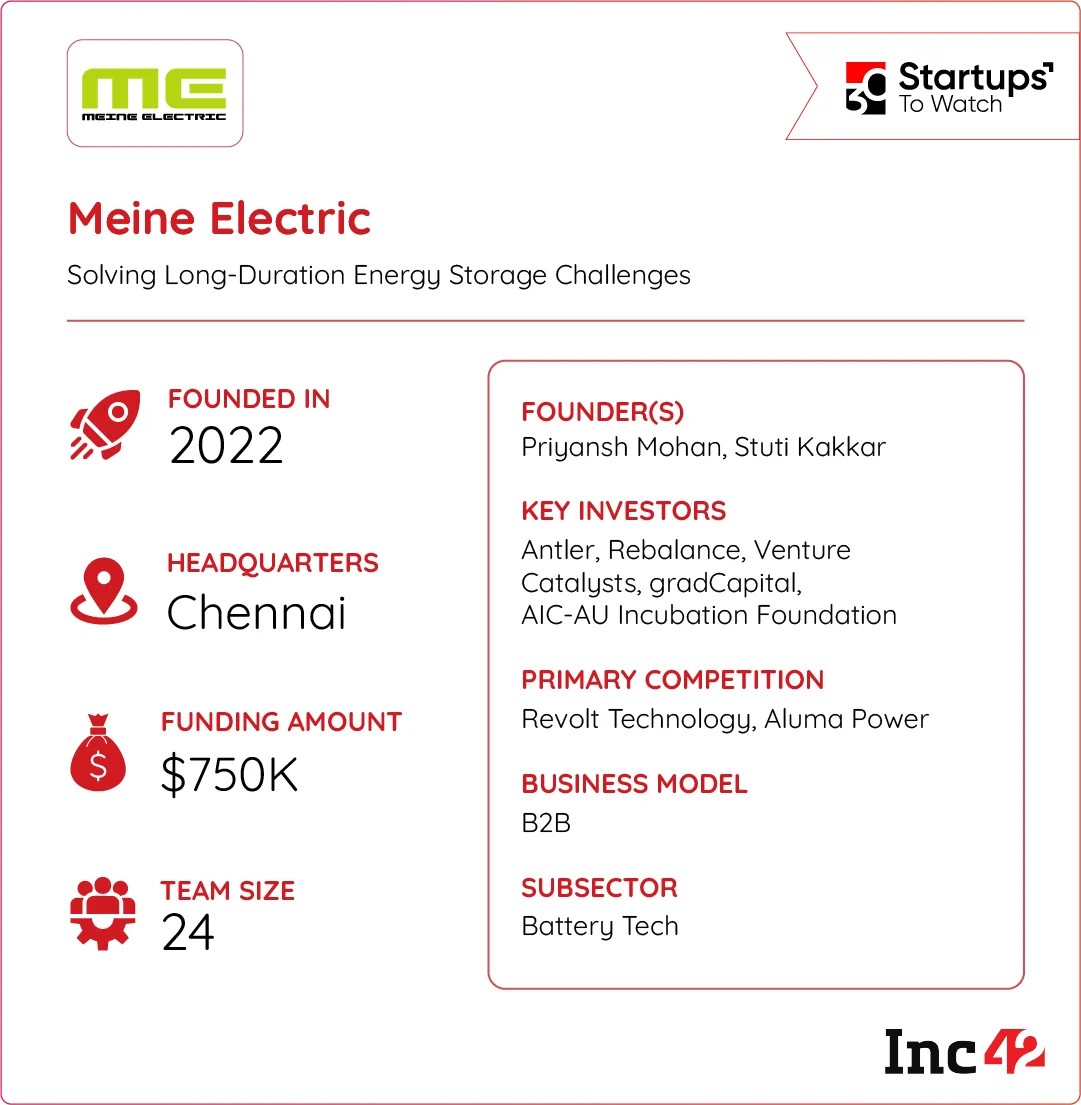
Can Meine Solve India’s Energy Woes?
India’s renewable revolution faces a critical challenge. While lithium-ion batteries work for short bursts, they fail to economically store solar power for 16-24 hours. This leaves grids vulnerable to intermittency and baseload shortages. Meine Electric is trying to solve this problem with its novel approach.
Iron-Air Breakthrough: Founded in 2023, Chennai-based Meine Electric is building iron-air long-duration energy storage (LDES) systems designed for affordable, multi-hour storage. The startup claims that its batteries can be fully charged in eight hours and discharge 16–24 hours at a levelised cost of under $0.05/kWh.
My Grid Fit: Tailored for Asia Pacific’s solar-dominated grids, commercial and industrial projects, and off-grid needs, Meine aims to counter lithium scarcity and price volatility with sustainable materials. On top of this, the startup’s scalable design integrates seamlessly with existing infrastructure, skipping the need for ripping out existing deployments.
Operating out of Chennai, Meine claims to have four granted patents and seven international filings under its kitty. With its prototypes now advancing toward pilots, can Meine Electric carve a niche in the globally competitive LDES race?
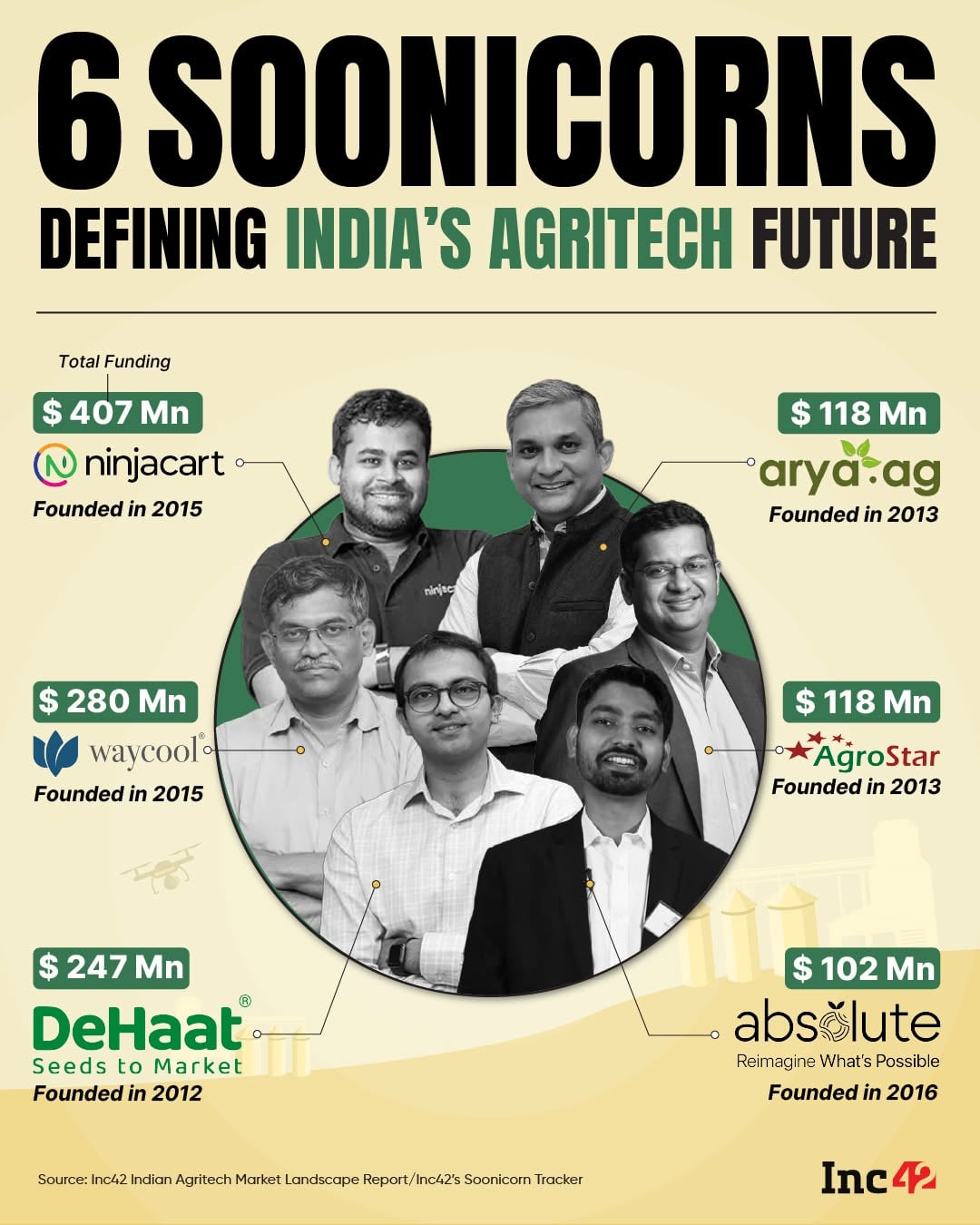
Infographic Of The Day
Having raised $1.2 Bn+ to transform how food is grown, financed, stored and distributed, here are the soonicorns shaping the future of Indian agriculture.

Comments are closed.