
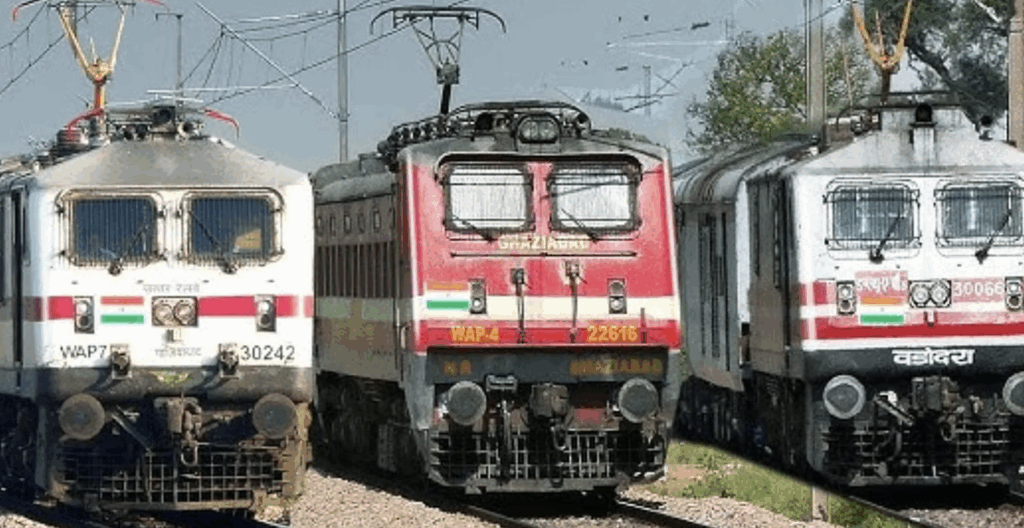

The Union cabinet has approved three railway multitracking projects worth Rs 9,072 crore to enhance network capacity and reduce congestion in Maharashtra, Madhya Pradesh, Bihar, and Jharkhand.
The projects include: Gondia–Jabalpur doubling, Punarakh–Kiul third and fourth lines, and Gamharia–Chandil third and fourth lines. Together, these will add around 307 km to the existing railway network and are expected to be completed by 2030-31.
Union Cabinet Approves Rs 9,072 Crore for Three Major Railway Multitracking Projects Across Four States
These initiatives will impact eight districts and provide better connectivity to approximately 5,407 villages, which collectively house a population of nearly 98 lakh.
The multitracking projects are designed to improve operational efficiency, increase line capacity, and enhance service reliability by reducing congestion on essential freight and passenger routes.
The projects are part of the PM-Gati Shakti National Master Plan, focusing on coordinated infrastructure development and improving multimodal logistics connectivity.
The cabinet statement highlighted that the expanded line capacity will boost mobility, enhance operational performance, and improve service dependability for Indian Railways.
Upgraded Railway Routes to Improve Access to Major Tourist Destinations Across India
The upgraded routes are also expected to provide better access to several tourist spots, such as Kachnar Shiv Temple, Kanha and Pench national parks, Dhuandhar waterfall, Bargi Dam, Chandil Dam, and Dalma Wildlife Sanctuary.
These routes are crucial for freight transport, handling commodities like coal, steel, iron ore, cement, fertilizers, limestone, foodgrains, and petroleum products. The capacity increase will facilitate an additional freight movement of about 52 million tonnes per annum.
Rail expansion is also expected to contribute to environmental and logistics objectives by reducing reliance on road transport. It is projected to save approximately 6 crore litres of oil and cut down carbon emissions by nearly 30 crore kg, which is equivalent to planting about one crore trees.
Improved connectivity and logistics efficiency are anticipated to create new employment and self-employment opportunities, driving regional development and supporting the goal of a self-reliant India.
Image Source

Comments are closed.