
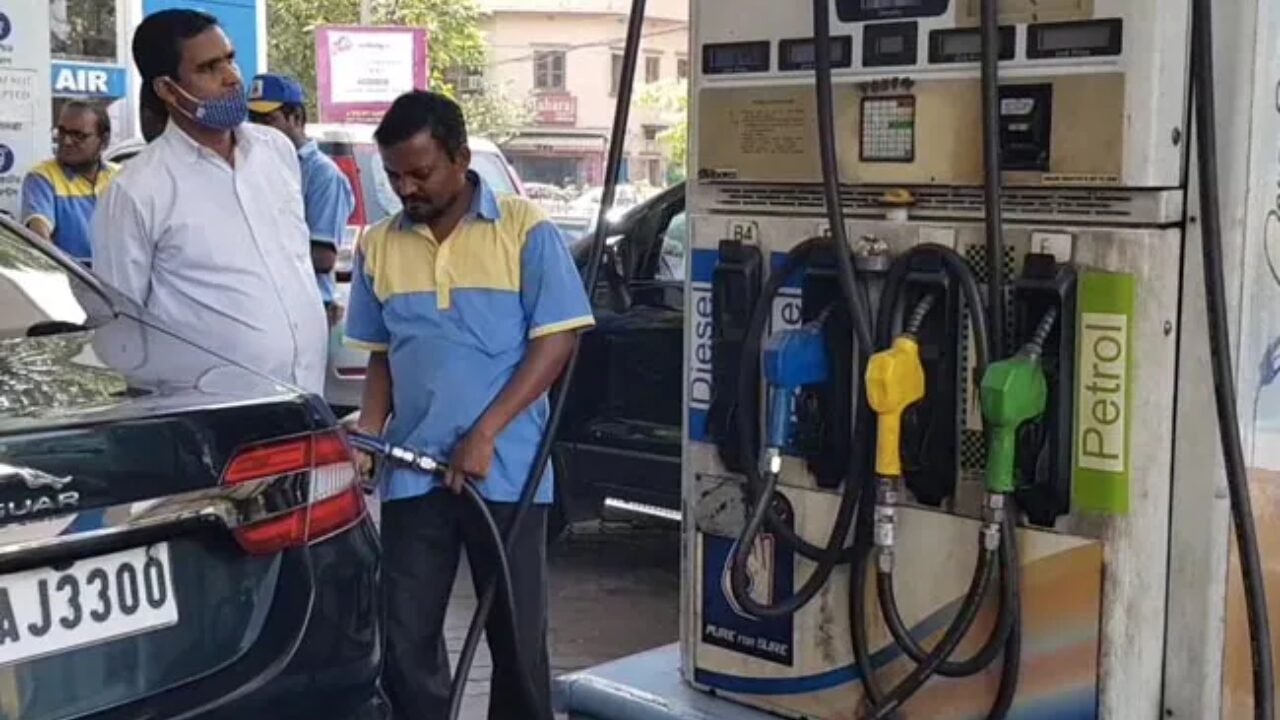
Government’s big decision regarding petrol!! Effective April 1, the automobile sector will be affected

E20 Petrol | The central government has taken an important decision regarding petrol and this will have a direct impact on the general public and the automobile sector. From April 1, 2026, the sale of maximum 20% ethanol blended E20 petrol will be mandatory across the country. That is, now it has been made mandatory to mix up to 20 percent ethanol in petrol. The Ministry of Petroleum and Natural Gas has issued a notification in this regard and after this notification, it will be mandatory for this petrol to have a minimum research octane number (RON) of 95.
The central government has directed oil marketing companies in all states and union territories of the country to supply ‘E20’ petrol. In a notification issued on February 17, the ministry said oil companies should supply only petrol that meets E20 standards. This petrol should conform to the standards set by the Bureau of Indian Standards (BIS) and should be made available with uniform quality throughout the country. E20 is fuel mixed with 20% ethanol (made from sugarcane/corn) in petrol. Since the octane number of ethanol is around 108, the knock-resistance of the fuel increases after blending. E20 Petrol
Petrol Diesel Prices
Why is RON 95 necessary? E20 Petrol
RON (Research Octane Number) is the ability of a fuel to prevent “knocking” or premature detonation in the engine. This increases engine life as ethanol has an octane number of 108, making the engine more stable when mixed with petrol. Also improves performance. A high RON rating helps maintain power and smooth performance. Engine components are not damaged. E20 Petrol
The Centre’s decision to mix up to 20 per cent ethanol in petrol will save foreign exchange. Since ethanol is produced from sugarcane and corn, these farmers will obviously benefit. E20 fuel emits significantly less carbon than pure gasoline, thus reducing pollution. But with all these benefits on the one hand, it is also said that using E20 fuel can cause a slight reduction in mileage of 3% to 7%.

Comments are closed.