
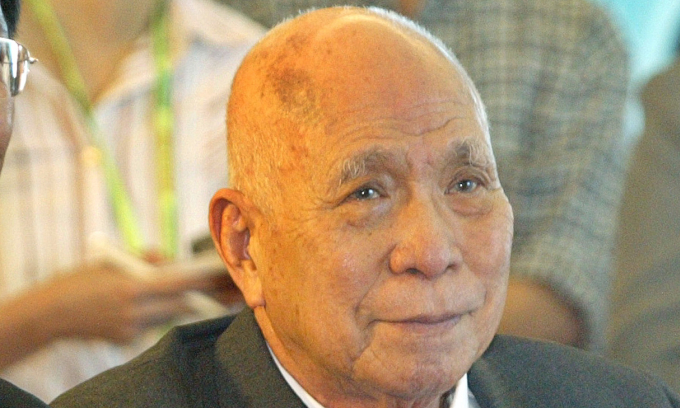
What to know about the $410M inheritance battle involving late Malaysian casino billionaire Lim Goh Tong’s granddaughters

The trial for the lawsuit, filed by 48-year-old Chan T’shiao Li and 45-year-old Kimberley Chan T’shiao Min, opened on Monday and has drawn fresh attention to the family behind the Genting gaming empire, one of Malaysia’s best-known business dynasties.
Resorts World Genting, Malaysia. Photo from the company’s website |
Here’s what to know about the inheritance battle.
Unequal inheritance
Siew Kim passed away in July 2022. Her final will, dated April 28, 2022, gave the two daughters who initiated the lawsuit RM900,000 and RM100,000 respectively—a modest share of her RM1.6 billion estate.
In contrast, a much larger portion went to their brother, Marcus Chan, who received Kuala Lumpur properties, shares in a company, the contents of safe deposit boxes and 30% of the residuary estate.
Their other sister, Cressa Chan, was granted RM10 million along with a Kuala Lumpur property and company shares. Cressa’s daughter was also provided a monthly allowance of RM50,000.
Most notably, 70% of the residuary estate went to the Dikim Foundation, a charity established by Siew Kim and her late husband.
Who are the defendants?
The lawsuit names Marcus as a defendant, along with the estate’s executors, Malcolm Fernandez and Chan Mei Yee. Also listed is lawyer Low Beng Choo, who drafted and witnessed the signing of the will at the heart of the dispute.
‘Suspicious circumstances’
The plaintiffs discovered in 2023 that there were two earlier wills, dated Nov 2, 2021, and Apr 11, 2022, that outlined markedly different distributions of the estate, according to Malay Mail.
They contended that the multiple wills made within a matter of months indicate “suspicious circumstances” and that the substantial change in allocation did not reflect their mother’s true intentions or sound judgment at the time.
They also sought the return of all title documents to their mother’s properties that are currently held by Fernandez and Mei Yee.
Testifying at Monday’s trial, Low confirmed that Siew Kim had personally signed the final will.
She told the court that Siew Kim appeared “alert and aware.”
“She did not have any tubes sticking out of her body when she sat up on her bed and signed the will page by page,” she said, as quoted by the New Straits Times.
The plaintiffs’ lawyer argued that certain parts of Low’s testimony constituted “hearsay” and requested that they be expunged.
The plaintiffs further alleged that Low has a personal interest in the estate due to her association with the Dikim Foundation, which she denied.
According to an earlier report by The Edge MalaysiaLow was appointed a director of the foundation in 2023.
The billionaire family
Goh Tong was a prominent tycoon known for turning a remote hilltop into Genting Highlands, Malaysia’s only casino resort, which would later become a sprawling conglomerate.
Born in China, he moved to Malaysia in the 1930s without much money or formal education and became the country’s third richest individual with a net worth estimated at US$4.3 billion by the time of his death in October 2007. Forbes once called him Malaysia’s “Casino King.”
He had six children: sons Lim Tee Keong, Lim Kok Thay and Lim Chee Wah; and daughters Lim Siew Lay, Lim Siew Lian and Lim Siew Kim.
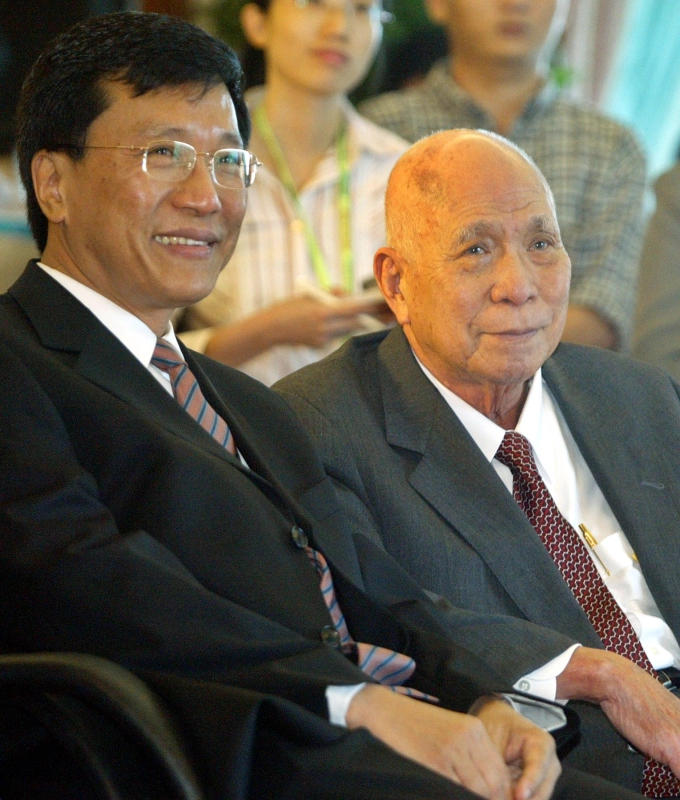 |
Malaysian rags-to-riches tycoon Lim Goh Tong (R) smiles as he sits next to his second son, Kok Thay, at their office in Kuala Lumpur on Dec. 31, 2003. Photo by Reuters |
Most of his children, including Siew Kim, did not assume active leadership roles in the group, according to The Business Times.
Kok Thay later took the helm of Genting, steering its expansion into markets including Singapore, the U.S. and the U.K. His son, Lim Keong Hui, currently serves as deputy chief executive officer and is widely seen as the heir apparent.
What are the implications?
The court has fixed March 2 for a ruling on the admissibility of the disputed testimony, which will determine whether the trial proceeds or shifts toward settlement.
Its final verdict will decide how Siew Kim’s assets are ultimately distributed and could shape how Malaysian courts approach allegations of mental incapacity and undue influence in high‑value estates.
The dispute also draws attention to the complex overlap between private wealth, charities and trust law.

Comments are closed.