

Chantop, the chef-owner of Akkee in Thailand and winner of the 2025 Michelin Young Chef Award, has been integrating insects into his menus for over six years.
“I was always interested in them because their flavor and aroma are so different from the normal food chain,” he explained to National Geographic.
He believes they are the food of the future: nutritionally dense, sustainable and fast-growing. This vision is already taking hold in Thailand, where insect farms are becoming common.
His connection with insects began long ago. Growing up in Ubon Ratchathani, he ate them as a child since his family cooked them for him because he could not yet handle spicy food.
He told Michelin: “There were silkworm pupae, ants, queen ants, and red ant eggs. Over time they simply became something I loved.”
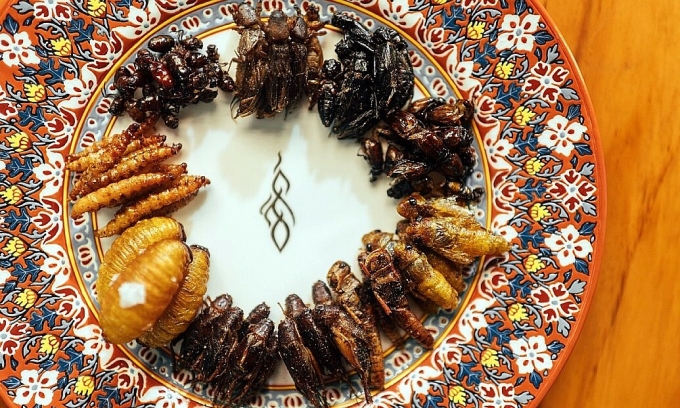
Insect dishes served at Chantop’s restaurant. Photo courtesy of Michelin |
At Akkee, guests are greeted by an insect-rearing room.
Because many species are only available during a one-month window annually, Chantop plans to breed everything he serves right on-site. He focuses on four kinds: queen ants, sago beetle larvae, cicadas, and crickets.
His innovation lies in the insects’ diet. By repurposing kitchen scraps, Chantop discovered that diets affect their flavor. For example, feeding crickets pumpkin results in a lighter taste, while sago beetle larvae, denizens of coconut trees, develop a richer profile when fed coconut pulp.
For those hesitant to take the first bite, Chantop’s advice is simple: “Begin with whatever you feel comfortable with.”
So far no diner has ever stopped mid-meal, he says. In fact, many, surprised by the taste, ask for more.
To help new diners, he suggests starting with these five selections:
Beetle larvae: Often the first choice. Rich and fatty, and with a potato-like flavor, they are fried until crisp and seasoned with salt, similar to potato chips, and served with a chili dip.
Queen ants: When fried, they release a fragrant aroma similar to Parmesan cheese. Naturally oily, they can be dry-roasted and eaten with salt or mixed into the chili dip.
Cicadas: Farmed in northern Thailand, cicadas can be eaten at all five stages of development. Their eggs are rare and expensive, and their flavor changes as they grow, with one stage tasting like peanuts.
Ground beetles: Known for their earthy flavor from living underground, they are Chantop’s favorite, especially with beer. They can be boiled, fried or dry-roasted.
Field crickets: Similar to common crickets, with females being smaller than males. They are often pounded into chili dips or ground into other dishes, and served with or without eggs.
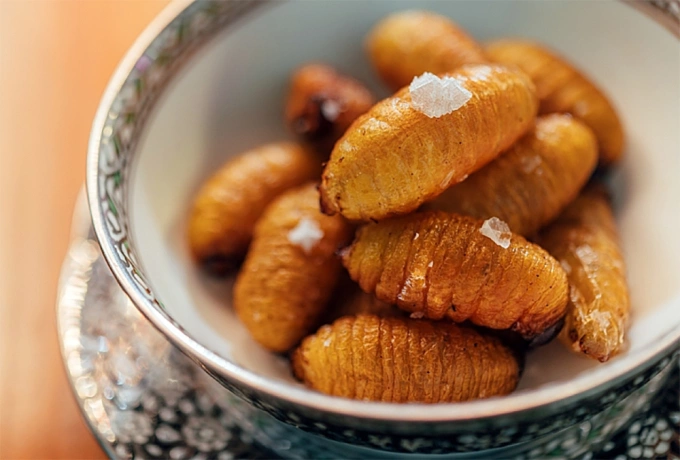 |
When fried, beetle larvae take on a golden hue and look like a snack. Photo courtesy of Michelin |
Chantop’s favorites include queen ant salad (yam mae peng) and red ants, especially when eaten with sour kradon leaves. He is also fond of red ant salad with ant eggs, noting that queen ants are rich and creamy while red ants have a sour taste.
Beyond farming his own insects, Chantop also hopes to support farmers by sourcing both produce and insects locally.

Comments are closed.