
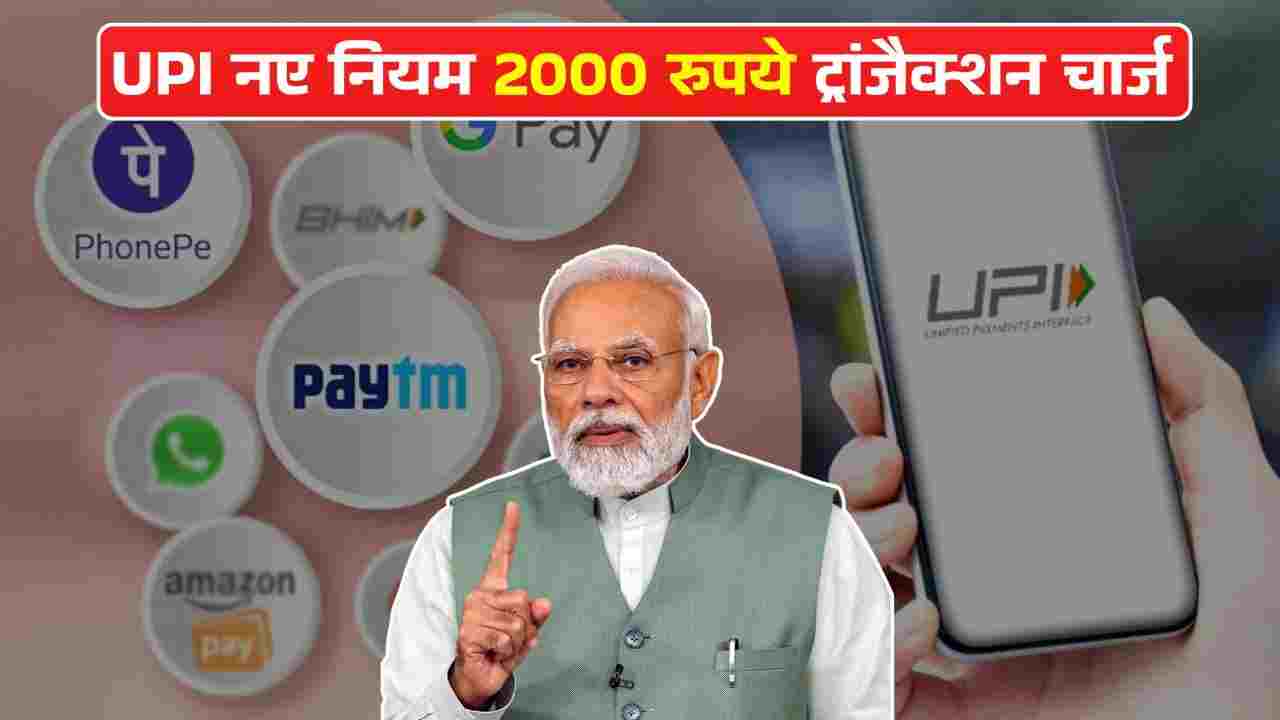
UPI Payment Rules 2026: Will there be a charge on transactions above ₹ 2000? Know the new rules of UPI and its impact on your pocket

New Delhi. UPI (Unified Payments Interface), which has become the face of digital revolution in India, is now entering a new phase. Recent changes in the rules related to UPI payments have sparked a new debate among the general public. The most talked about issue is the possible charge on transactions above ₹2000. Amidst the rumors spreading on social media, consumers are confused about whether they will now have to shell out extra money for every small and big payment. In this special report of Amar Ujala, we will tell you the real truth about these rules and also why you do not need to panic. ₹ 2000 rule: Who will have to pay the charge and who will not? First of all, it is important to understand that the new rules of UPI do not apply to every transaction. As per National Payments Corporation of India (NPCI) guidelines, charges can be levied only on transactions that are done through Prepaid Payment Instruments (PPI) such as digital wallets (PhonePe Wallet, Paytm Wallet etc.). P2P (Person to Person): If you send ₹2000 or more to any of your friends or relatives, it will be completely free. If you pay more than ₹2000 to a merchant through your wallet, ‘interchange fees’ may be applicable. But, this fee will have to be paid by the shopkeeper, not the customer. What will be the impact on shopkeepers and merchants? The most direct impact of these changes is likely to be on those merchants who largely accept payments through wallets. Interchange charges on wallet transactions above ₹2000 may increase costs for merchants. However, there are still no charges on UPI payments made directly from bank account to bank account. In such a situation, small shopkeepers can motivate customers for direct bank transfer. Experts believe that this arrangement has been made to compensate for the technical expenses required to maintain the digital ecosystem. Caution is security: Keep these in mind while using UPI. To keep digital payments safe, consumers should keep some basic things in mind: Method of payment: Try to make big payments directly from your linked bank account, so that the rules of wallet transaction do not affect you. PIN Security: Never share your UPI PIN with anyone. Do not share with. Remember, there is no need to enter a PIN to receive money. Official Apps: Always use recognized and official UPI apps and keep changing your PIN from time to time. Transaction Limit: For security, set a daily transaction limit in your app so that in case of any untoward incident, there is no huge loss. Future of Digital Payments and Changing Economy This change in the rules is a sign that India’s digital payment system is now maturing. The government aims to take the country towards a completely transparent and cashless economy by 2026. In the coming time, features like ‘auto-pay’ and international payments are going to become even simpler in UPI. Although the new fee arrangement may cause initial hesitation, in the long run it will make the system more sustainable and secure.

Comments are closed.