
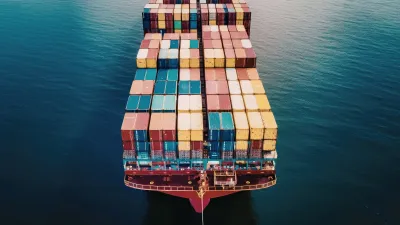

The increasing tension in the Middle East has increased India’s concern. The situation has deteriorated rapidly after the attacks on Iran by Israel and America. Iran’s retaliatory attacks have increased instability across West Asia. The place where this conflict could have a direct impact is the Strait of Hormuz—a sea route through which billions of dollars of India’s trade passes. If there is disruption here, Indian business may suffer a major setback.
How big a risk for India?
According to statistics, every year India sends non-oil goods worth about $ 47.6 billion (about Rs 4.33 lakh crore) to Gulf countries through this route. This is about 13% of the country’s total non-oil exports. That is, if tension or obstruction increases on this sea route, it will have a direct impact on India’s trade balance, industries and exporters.
Not just oil, there is more at stake
The Strait of Hormuz is usually discussed in the context of oil supply, because India’s three major crude oil suppliers send oil through this route. But in the current situation the concern is not limited to energy security only. Non-oil exports, which are a vital part of India’s economic strength, are also at risk. If there is even the slightest disruption in shipping, freight will be expensive and delivery delays are inevitable.
To which countries does most goods go?
UAE is India’s largest export market, where goods worth about $28.5 billion are sent. After this come countries like Saudi Arabia ($11.7 billion), Iraq, Kuwait, Qatar and Iran. All these markets are heavily dependent on the maritime supply chain.
Which sectors will be affected?
These sectors may be most impacted: Engineering Goods, Gems and Jewellery, Food Products, Chemicals, Construction Materials. These sectors depend on continuous maritime logistics. If tensions increase, trade routes between Asia and Europe may change, which may slow down the pace of Indian exports.
Why is the Strait of Hormuz so important?
This sea route located between Iran and Oman is one of the busiest trade corridors in the world. A huge amount of oil, gas and other goods move through here every day. This is the reason why the increasing tension here is not only a regional issue but has also become a big concern for the global economy. Overall, the ongoing conflict in the Middle East is not only a diplomatic challenge for India, but also a big economic risk. If the situation is not resolved soon, the impact can be directly visible on Indian industry, exports and market.

Comments are closed.