
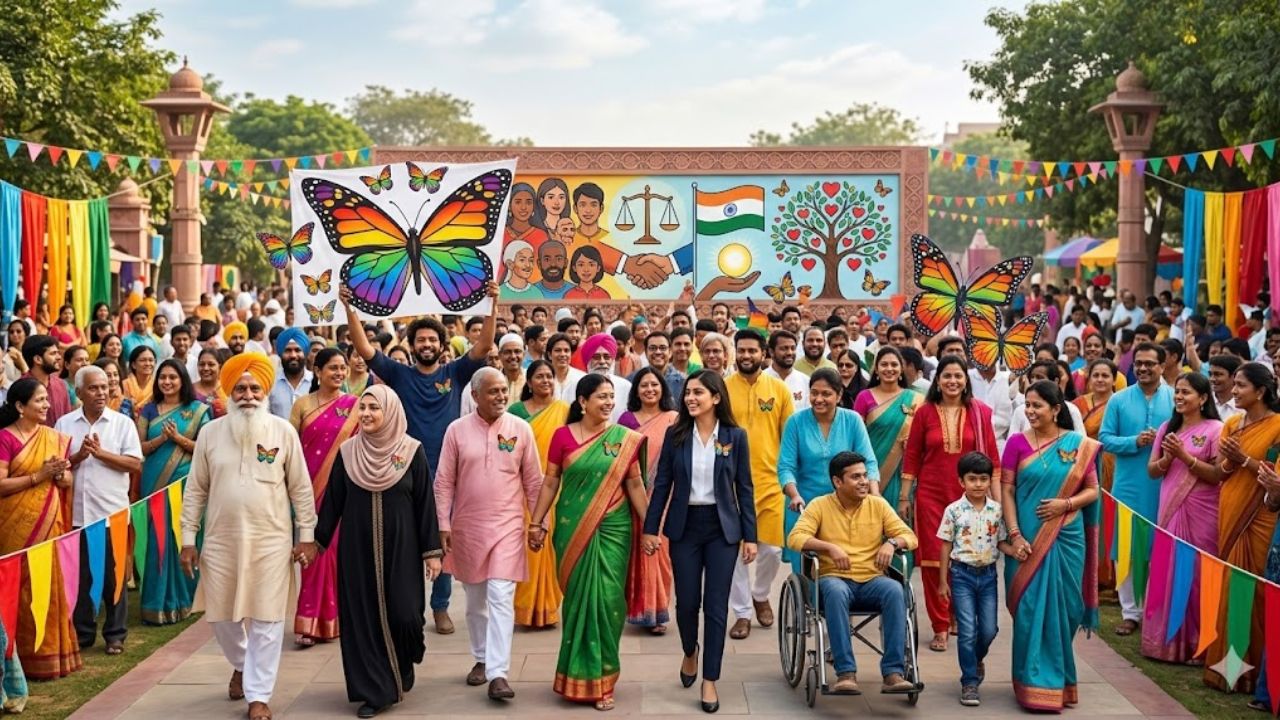
Equality on paper or justice in reality? On Zero Discrimination Day, know the rights that the protective shield gives.

Zero Discrimination Day: The foundation of democracy is based on equality but on the ground of reality even today the walls of discrimination on the basis of colour, caste, gender and health status are high. On Zero Discrimination Day, let us analyze what rights the law books give you and where the real change is stuck.
Zero Discrimination Day is celebrated across the world on 1 March every year. It was started by the United Nations (UN) in 2014 with the main objective of preventing discrimination against people affected by AIDS (HIV). But today this day has become the voice of every person who is pushed back in the society because of his identity, physical condition or background.
The question is whether the slogan of ‘everyone is equal’ is limited to files only. In a country like India, where diversity is beauty, our Constitution provides the strongest safeguard against discrimination.
constitution is the biggest power
Equality is mentioned in the Preamble of the Indian Constitution itself. Mainly these three articles make every citizen feel equal.
Article 14
This ensures that both a common citizen and a powerful person are equal in the eyes of law. Special exemption cannot be given to anyone.
Also read:- Before summer arrives, make space in your wardrobe for these lightweight fabrics, you will get the combo of comfort with style.
Symbolic photo (Ms. Freepik)
Article 15
It gives strict instructions to the state that no citizen shall be discriminated against on the basis of religion, race, caste, sex or place of birth.
Article 17
It eliminates untouchability from its roots. Its conduct in any form is a serious legal offence.
Zero tolerance in the workplace and society
Not only the Constitution but laws like the Sexual Harassment of Women at Workplace (POSH) Act and the Rights of Persons with Disabilities Act 2016 specifically provide protection to vulnerable sections. Despite this, micro-aggressive discrimination on the basis of mental health or gender is still a big challenge.
Change of thinking is more than law
Zero discrimination does not just mean fear of law but creating an inclusive mindset where a person is evaluated by his character and ability and not by his identity. Real justice will happen when even the last person in the society can exercise his rights without any hesitation. On this 1st March, take a pledge that we will not only know our rights but will also have a respectful attitude towards others.

Comments are closed.