
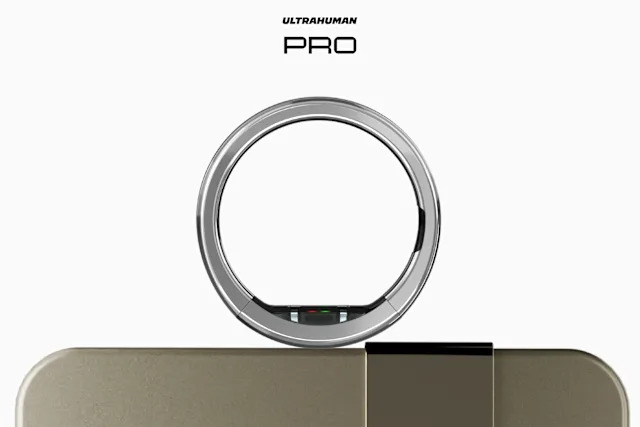

In the high-stakes world of wearable tech, 2025 was a bruising year for Ultrahuman. After the U.S. International Trade Commission (ITC) handed a decisive patent victory to industry titan Oura, Ultrahuman’s flagship Ring Air was effectively exiled from American shelves. But as of February 27, 2026, the Bengaluru-based startup isn’t just licking its wounds, it’s throwing a high-tech haymaker.
Unveiled ahead of MWC 2026, the Ultrahuman Ring Pro is a defiant, redesigned piece of hardware that aims to outpace Oura’s specs while threading the needle of U.S. customs law. With a battery life that doubles the industry standard and an AI assistant that wants to manage your life, Ultrahuman is betting that a “redesign from the ground up” is the key to reclaiming its biggest market.
The headline-grabbing feature of the Ring Pro is its 15-day battery life. In a category where “one week” is considered the gold standard, Ultrahuman has essentially shifted the goalposts. According to CEO Mohit Kumar, achieving this required a complete overhaul of the internal architecture, moving to a high-efficiency dual-core processor and a revamped sensor array.
But the power story doesn’t end at the finger. The Ring Pro ships with a Pro Charging Casea clamshell-style accessory that looks more like a luxury jewelry box than a tech peripheral. The case offers:
Extended Range: An additional 45 days of portable power.
Dual Functionality: It doubles as a smart alarm clock for your nightstand.
Connectivity: Qi wireless charging and USB-C support.
For the user, this means the “charging anxiety” that plagues most wearables, the fear of a dead battery mid-sleep cycle is virtually eliminated.
‘Jade’: The AI That Orders Your Dinner
Hardware is only half the battle in 2026; the real war is in the “intelligence.” Ultrahuman used the launch to debut Jadewhich they are calling the world’s first real-time biointelligence AI
Unlike the static “readiness scores” of previous years, Jade is designed to be an agentic LLM. It doesn’t just tell you that you slept poorly; it understands the why. More importantly, Kumar teased that Jade will soon be able to take real-world actions. Imagine a scenario where your ring detects a significant caloric deficit and a dip in glucose, prompting Jade to autonomously suggest (or even place) a DoorDash order for a specific, nutrient-dense meal tailored to your recovery. It’s a bold, if slightly dystopian leap from “tracking” to “doing.
Despite the global reveal, there is a massive, Oura-sized asterisk on the launch: The Ring Pro is not yet for sale in the United States. The shadow of the October 2025 ITC ban looms large. To circumvent the patents Oura successfully defended, Ultrahuman claims the Ring Pro uses a “fundamentally new architecture” that avoids the specific form-factor and sensor-layout claims of its rival. The new design has been submitted to U.S. Customs and Border Protection for clearance.
While the legal battle continues to simmer with Ultrahuman countersuing Oura in India, the company is playing a calculated game of “compliance-first.” Kumar expressed confidence that the ring will be cleared for U.S. import within a “few weeks,” potentially resuming the 45% of revenue that once came from American shores.
ProRelease and Safety Tech
In a nod to the more practical (and painful) side of smart rings, the Pro introduces ProRelease Technology. One of the recurring complaints about metal rings is the risk of “ring avulsion” or the need to saw off a ring if a finger swells due to injury. The Ring Pro features a specialized internal structure that allows it to be cut apart more safely and easily in emergencies without damaging the wearer’s finger, a grim but thoughtful addition to the “Pro” moniker.
The $479 Gamble
Priced at $479the Ring Pro sits at the top of the market, significantly more expensive than the Oura Ring 4’s $349 starting price. However, Ultrahuman is leaning into its “No Subscription” philosophy. While Oura users pay a monthly fee to see their own data, Ultrahuman remains committed to a one-time purchase model. For long-term users, the math may still favor the newcomer, provided the U.S. government allows them to buy it.
Ultrahuman isn’t just trying to avoid a lawsuit; they are trying to out-innovate a ban. By focusing on battery life that actually lasts a vacation and AI that manages more than just charts, the Ring Pro is a statement that Ultrahuman is ready to compete on merit, not just as a “subscription-free alternative.”

Comments are closed.