
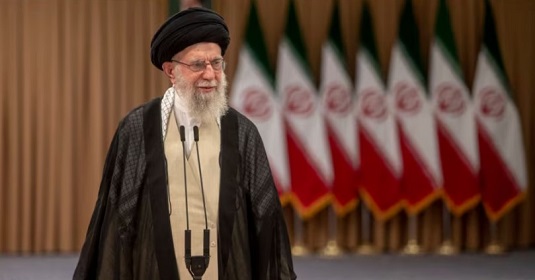
Mourning in Iran, turmoil in the world: Ali Khamenei died in attacks, 40 days of national mourning declared, know complete updates

Tehran/Washington. Iranian state media has claimed official confirmation of the death of Iran’s supreme leader Ayatollah Ali Khamenei. According to reports, 86-year-old Khamenei was killed in a joint strike by the US and Israel on Saturday. This development has not only shaken the power structure of Iran, but has also brought the entire Middle East to the brink of instability.
US President Donald Trump, reacting on social media, called it a “new possibility for the people of Iran” and said that now Iran can reclaim its country. However, different claims are emerging regarding the nature and circumstances of the attack.
Uncertainty after the attack and warning of revenge-
Iranian state television and news agency IRNA confirmed Khamenei’s death, but did not specify the detailed cause. Some reports claim that several of his family members were also killed in the attack.
Iran has termed this action as an aggressive step and warned of a strong reaction. According to state media, the country’s military and political leadership have vowed to give an “appropriate response.”
Trump’s statement and ongoing attacks-
US President Donald Trump wrote in a social media post that “Khamenei, one of the worst people in history, is now dead.” He justified ongoing military action to disable Iran’s nuclear program and indicated that the campaign could continue.
Meanwhile, there are reports of intensified military activities in the region, raising fears of a wider conflict.
Who was Ayatollah Ali Khamenei?
Ali Khamenei was the Supreme Leader of Iran since 1989. He assumed this position after the death of Ruhollah Khomeini, the founder of the Islamic Republic.
In the system established after the Islamic Revolution of 1979, the Supreme Leader is the highest religious and political authority in the country. Khamenei had ultimate authority over the government, military, and judiciary, making him the major determinant of Iran’s policies and regional strategy.
Mixed picture of protest and support in Iran-
Following Khamenei’s death, there have been varying reactions within Iran. While there is an atmosphere of mourning and anger at the government level, there have also been reports of celebration from some parts.
Iranian activist Masih Alinejad shared the video on social media, calling it a “new dawn.” His posts quickly went viral, with some people seen celebrating in the streets.
Result of increasing tension-
In recent months, America and Israel had taken a tough stance on Iran’s nuclear program. According to reports, Iran had also strengthened its nuclear capabilities and developed advanced centrifuge technology.
Following the joint attack, Iran has reportedly tried to respond with missile and drone attacks. This has deepened the fear of the regional conflict turning into a widespread war.
What next?
Experts believe that Khamenei’s death (as claimed in reports) could bring about major changes in Iran’s power structure. Succession, internal stability and external pressure—these three factors will determine the direction of Iran and the entire Middle East in the days to come.
At present, the eyes of the whole world are fixed on Tehran, Washington and Tel Aviv, because this development can deeply affect the global politics and security balance.

Comments are closed.