
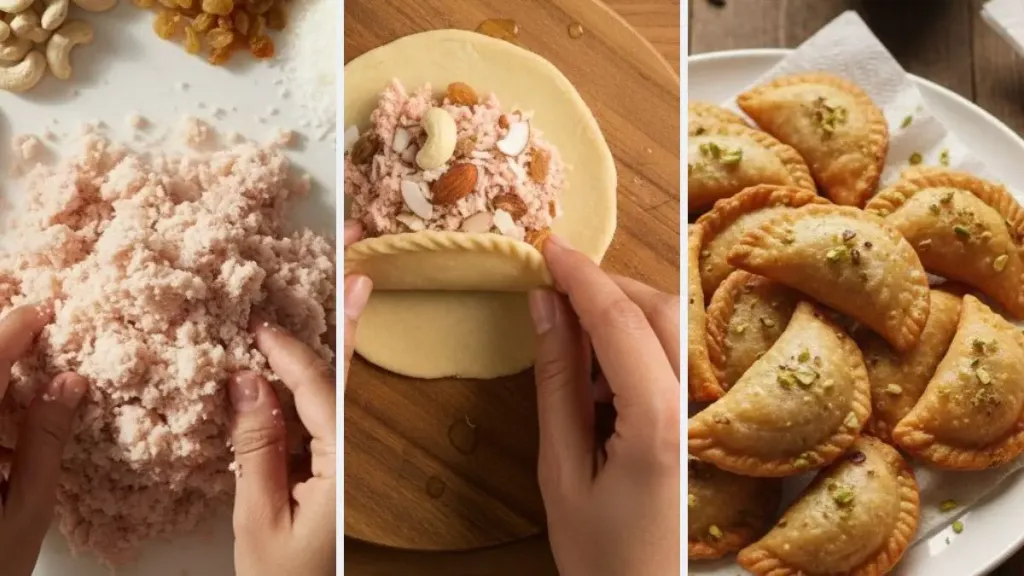

Gujia Recipe: Gujiya is a traditional Indian sweet made on special occasions and festivals, especially Holi. It is a sweet dumpling filled with a mixture of khoya (mawa), dry fruits and coconut, and then fried until golden. Gujiya’s crisp outer shell and sweet, aromatic filling inside make it a delicious dish. It may be a little time consuming to make, but the result is definitely worth the effort. It is a sweet that has been passed down for generations and is loved in every Indian household. So, roll up your sleeves and get ready to make this classic Indian dessert.

Gujia Recipe
Ingredients
For cover:
- 2 cup Fine flour
- 1/4 cup cup Ghee/Oil: for moyan
- Water to knead the dough as required
- 1 Pinch Salt
For the filling:
- 1 cup khoya/mawa grated or mashed
- 1/2 cup Castor sugar adjust as per your preference
- 1/4 cup desiccated coconut grated
- 2 tablespoons Cashew finely chopped
- 2 tablespoons Almond finely chopped
- 1 big spoon Raisin
- 1/2 spoon Green Cardamom Powder:
For frying:
- ghee/oil as per requirement
Instructions
Step 1: Making the dough for Gujiya
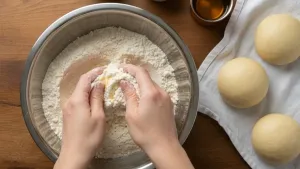
- Mix flour and a pinch of salt in a large bowl. Add ghee or oil (moin) and mix well with your fingers, until the dough looks like bread crumbs. It should bind when you clench it into a fist. Now, gradually adding water, knead a stiff dough. Cover the dough and keep it aside for at least 20-30 minutes.
![Rolling dough balls on board]()
Step 2: Preparing the Filling
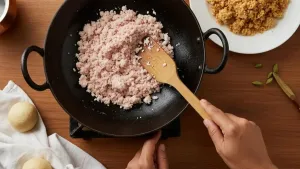
- In a pan, fry the khoya (mawa) on low flame till it turns light pink. Keep stirring it continuously so that it does not burn. Once the khoya is roasted, take it out in a plate and let it cool completely.
![Cooking coconut mixture in wok]()
Step 3: Completing the Filling Mixture
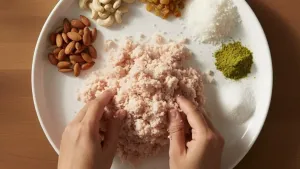
- When the khoya cools down, add powdered sugar, grated dry coconut, finely chopped cashews, almonds, raisins and cardamom powder. Mix all the ingredients well.
![Mixing coconut and dry fruits filling]()
Step 4: Making Gujiya
- Knead the dough once again. Divide it into small parts and shape each part into a small ball. Roll each dough into a thin round puri of approximately 3-4 inches diameter.
![Rolling dough and filling gujiya]()
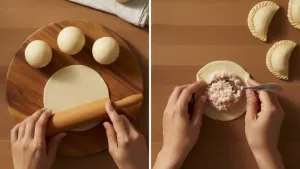
Step 5: Filling and Shaping the Gujiya
- Place a spoonful of filling in the center of the rolled puri. Apply water on the edges of the puri. Fold half the puri and place it over the filling and seal the edges well. You can create attractive designs by rolling the edges with your fingers or using a gujiya mould.
![Shaping stuffed gujiya pastry]()

Step 6: Fry the Gujiya
- Heat ghee or oil in a kadai or deep pan on medium flame. When the oil is hot enough (not too hot), reduce the flame and gently drop a few gujiyas into the oil at a time. Fry the gujiyas on low flame till they become golden brown and crisp, keep turning them so that they cook evenly from all sides.
![Frying golden gujiyas in oil]()
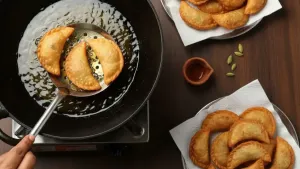
Step 7: Taking out and serving the Gujiya
- Take out the fried Gujiya on kitchen paper to remove excess oil. Let the gujiya cool and then serve hot or at room temperature. You can store them in an airtight container and enjoy them for several days.
![Plate of crispy gujiyas]()

Notes
Hard Dough: Make sure the gujiya dough is kneaded tightly. Soft flour may form bubbles when fried or cause the gujiya to burst.
Right Moyan: Adding the right amount of Moyan (ghee or oil) to the dough makes Gujiya crispy. If you wrap it around your fist it should come together easily.
Simmer: Always fry Gujiya on low to medium flame. This cooks them from inside and becomes golden and crisp from outside. Frying on high flame can cause them to burn quickly from outside and remain raw from inside.
Sealing well: It is very important to seal the edges of the gujiya well. If they are not sealed properly, the fillings may spill out while frying. Use water to seal the edges and then press with your fingers or a gujiya mold.
Let the filling cool: After roasting the khoya, let it cool completely and only then add sugar and other ingredients to it. Adding sugar to hot khoya will melt it and make the filling soggy, making it difficult to make gujiyas.
The post How to make Gujiya at home which is tastier than the market? Know the easy way appeared first on NewsUpdate.

Comments are closed.