
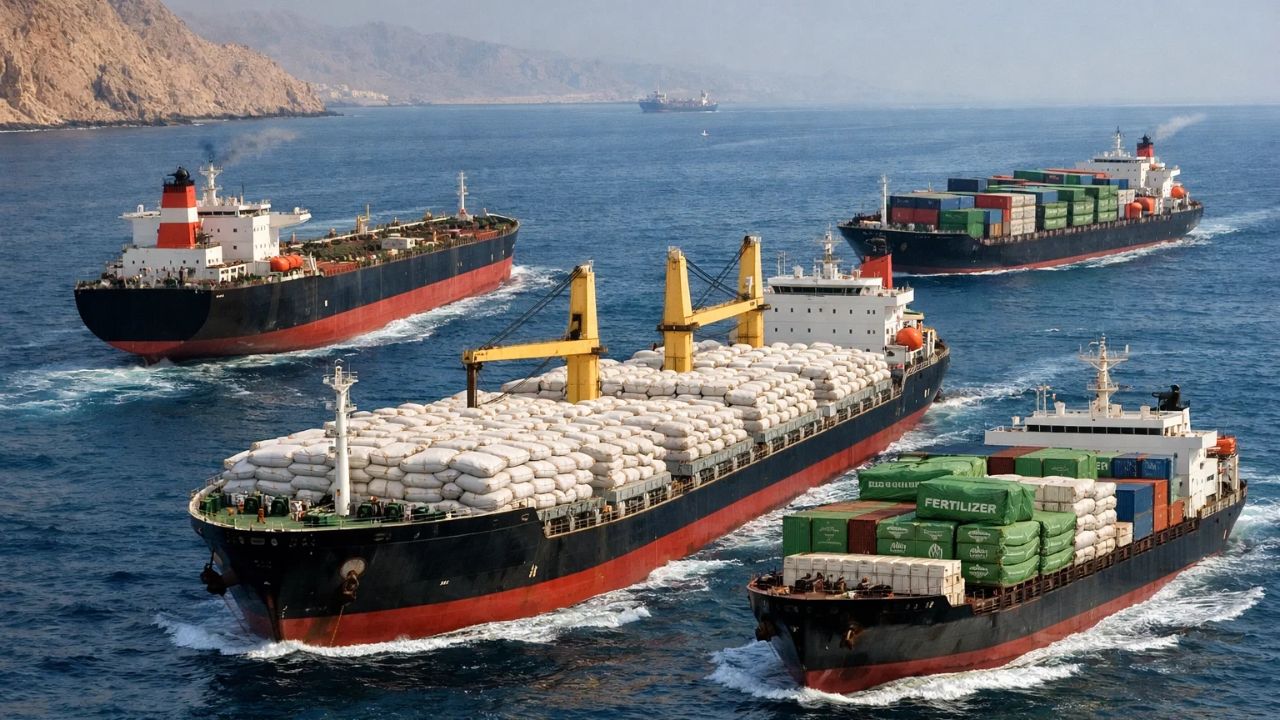
Rice, fertilizer, oil everything will be affected, if Hormuz is closed then India’s progress will stop.

The tension between Iran and Israel is now going to affect countries around the world. Many Asian countries including India are dependent on Western countries for many essential things and the goods coming from here come through the Strait of Hormuz. Due to tension and conflict situation, Iran has closed the Strait of Hormuz. The effect of this is that the prices of crude oil are increasing rapidly. Basmati rice going from India to the countries of the world is also stuck on the way and India, which is dependent on the countries of the world for fertilizer, now seems to be in trouble. Apart from all this, there are many other things whose import and export are being affected due to the closure of Hormuz.
Dependent on other countries for all the essential things, India is dependent on the Strait of Hormuz for its energy needs. In such a situation, this conflict has increased India’s concerns. This is the reason why India’s Commerce Ministry has called a meeting on Monday. Representatives of exporters, ship companies, freight forwarders and many other ministries will also attend this meeting. In fact, after such a situation has arisen, the country’s exports have expressed concern because their business is being affected due to the closure of the Bab el-Mandeb Strait along with Hormuz.
Also read: Impact of Middle East crisis, 100 flights canceled at Delhi Airport
The Strait of Hormuz has a large share in world exports. Things like fertilizer, methanol, crude oil, minerals, gas and petcoke are exported from Arab countries to countries around the world. In many things this share is equal to one third. In such a situation, the prices of these things are going to increase in many countries including India.
Why is Hormuz so important?
In fact, the 33 kilometer wide passage through which ships coming out of the Persian Gulf pass is called the Strait of Hormuz. This narrow passage connecting the Arabian Sea and the Persian Gulf is owned by Iran, Oman and the United Arab Emirates. In fact, Iran has a kind of control over it and it can easily stop the ships passing through here at any time. Apart from Iran, ships going to the world from countries like Iraq, Kuwait, Bahrain, Qatar and Saudi Arabia and ships coming from the world to these countries pass through this route.
In the matter of oil, India has been dependent on Arab countries, Russia, Venezuela and western countries. The oil needs in India are so high that stopping the supply can slow down the country’s economic growth. India needs oil for everything from generating electricity to running vehicles, engines and factories. Apart from this, there are dozens of refineries in India which process crude oil and send it to other countries. This means that if the import of oil in India decreases, then the petroleum products received by many other countries will also decrease and its global impact will be seen.
Also read: 8 countries, 2 superpowers are enemies, yet Iran is bringing everyone to their knees? understand strength
Apart from oil, what else will be expensive?
Dependent on imports for fertiliser, India buys large quantities of fertilizer every year from countries like Saudi Arabia and Oman. Now the effect of closure of Hormuz will be that it will have to import fertilizer through other routes. These alternative routes will be costly for India and the price of fertilizer will increase drastically. At present, the wheat crop is about to be ready and immediately after this the paddy crop will be planted in India. In such a situation, the increase in fertilizer prices will affect the country’s agriculture and will create dissatisfaction among the farmers.
Apart from imports, many agricultural products are also exported from India. According to the Global Trade Research Initiative (GTRI), India sold rice worth $747 million, bananas worth $61 million and tea worth $51 million to Iran in the year 2025 alone. In addition, large quantities of petroleum coke, apples and dates were also imported from Iran. In such a situation, the closure of Hormuz is going to affect the mutual trade between these two countries.
Also read: ‘I am ready to talk’, did Trump lay down his arms after Iran’s attack?
India, which is among the top rice exporting countries, exports millions of tonnes of rice every year to countries like Saudi Arabia, Iran, Iraq, UAE and Yemen, which is worth more than Rs 50 thousand crores. India’s rice exporters are worried that they will lose their huge market if this tension does not end soon.
Oil prices have already increased from 70 to 73 dollars per barrel. If this tension does not subside and oil has to be imported through alternative routes, then oil prices may go up to 85 to 90 dollars per barrel. The result of this will be that not only diesel and petrol will become expensive in India, the prices of gases and other petroleum products for domestic and commercial use will also start skyrocketing.

Comments are closed.