

18
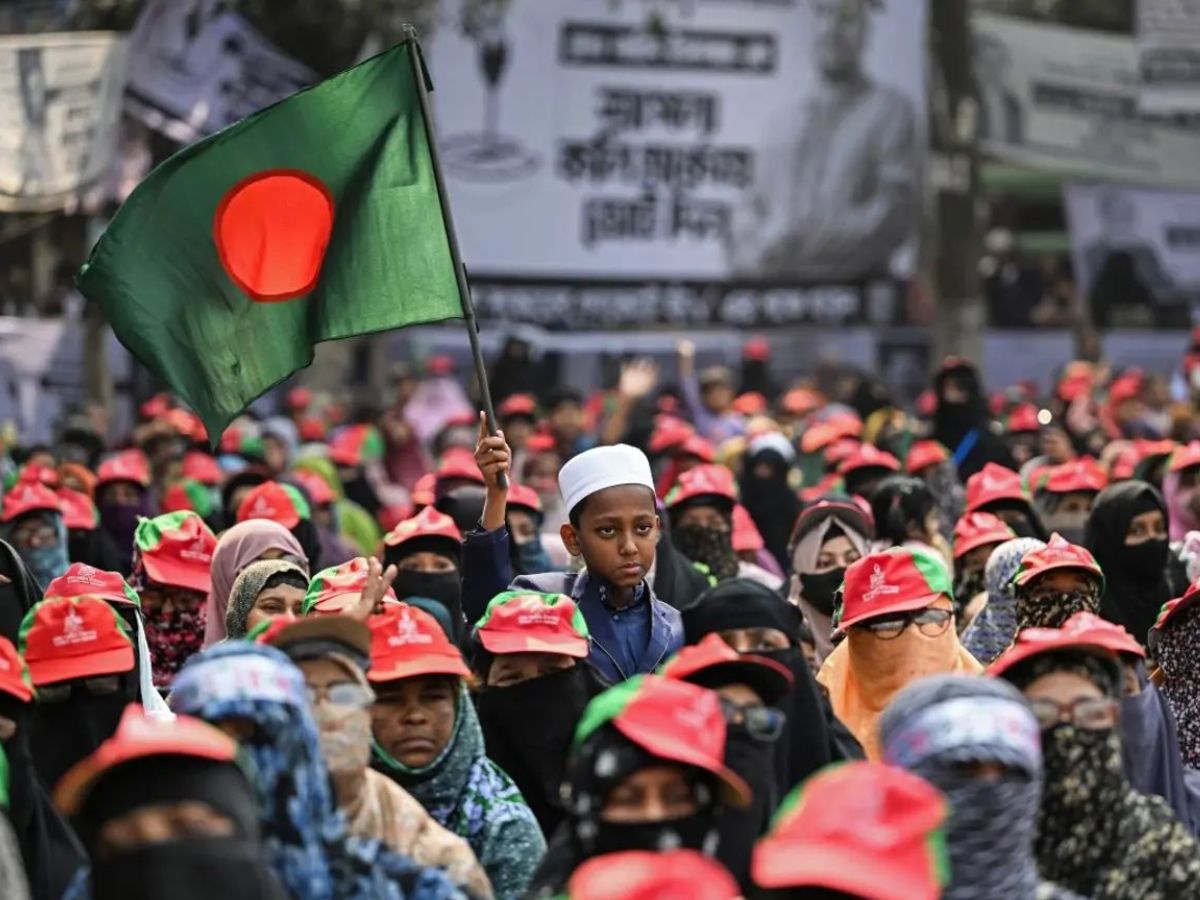
After the mass, violent uprising of 2024 that ended the dominant Sheikh Hasina’s 15-year plus rule, the general elections of 2026 under the caretaker government became a turning point in the political timeline of Bangladesh. For the Bangladesh Nationalist Party (BNP) under leadership of Tarique Rahman, it was a decisive victory as it won 209 seats out of 300. Make no mistake, it was also a massive victory for the Islamist forces and coalition led by Jamaat-e-Islami as it emerged as the main opposition party with 68 seats whereas in the past it was a fringe element. The ultimate loser was the newly created National Citizens Party by the so-called students’ movement as it was limited to only single digit, with six seats only.
While the elections were relatively peaceful with some outbreaks of targeted violence against the minority community and yielded a clear mandate, they were also shaped by an exceptional political context, most notably the ban on the Awami League. The elections were also conspicuous by the absence of the long-dominant “Battles of the Begums politics” that had defined Bangladeshi electoral contest for decades. This created a contradiction: stability in the short term but many unsolved questions in the long run, mainly about inclusivity, institutional balance, and democratic consolidation. Already, there are complaints of rigging and electoral fraud by the opposition nine-party alliance led by Jamaat. Even the constitutional head of state, the President Mohammad Sahabuddin has levelled serious allegations of wrongdoing against the former care-taker Mohammad Yunus administration. There was evidence of external meddling especially by the US whose diplomat was caught in a recorded conversation released by the Washington Post with a pro-Jamaat Bangladeshi journalist praising Mohammad Yunus for his political acumen while the role of Jamaat-e-Islami and rooting for its victory.
THE ELECTIONS AND THE TRANSITION
The election was conducted under a caretaker administration led by Muhammad Yunus which did not have any political or constitutional legitimacy. During its extended tenure Yunus regime had openly flirted with Pakistan and China, denounced the liberation struggle of 1971, indulged in very overt anti-India rhetoric, talked about the country being gateway to India’s Northeast with repeated references to the Seven Sisters. It had introduced some reforms, oversaw the July Charter, and ostensibly sought to restore public trust in electoral institutions. A strong parliamentary majority for the BNP has reduced immediate political uncertainty and may support policy continuity and macroeconomic stability. BNP members of parliament and some independents have refused to take oath for the electoral reform council as they consider the recently held referendum on constitutional reforms as illegal and unconstitutional. On the other hand, Jamaat and NCP members took oath of office both for the parliament and the reform council.
Critically speaking, this election was not a fully free and fair, as indicated by the exclusion of a major political party, the Awami League. The election highlighted representational limitations, and risks institutionalising a first-past the post, winner-takes-all political order, a pattern that has historically fuelled cycles of repression and retaliation in Bangladesh. Furthermore, Yunus administration failed to provide adequate security to the minority Hindu, Buddhists, Tribals, Christians and other groups during the electoral process. There was whipping up of a vicious anti-India hysteria orchestrated by Mohammad Yunus and his political cronies and acolytes till the last moment even while submitting the resignation.
REALITY CHECK: REFORMS VS CAPACITY
Even though the proposed constitutional reforms reflect a changing scenario, Bangladesh continues to face enormous challenges in the face of a weak and declining economy, poor governance, lack of law and order, financial burdens with rising loans, political disturbances, targeted religious violence against minorities etc. All these challenges cannot be addressed through electoral reforms alone. This is the real test that Bangladesh faces. Constitutional referendum reflects a popular support for some reforms that changes the entire system and curb the political dominance that existed earlier, but this is clearly not sufficient.
Additionally, the political majority received in the recent elections may initiate some reforms, but there is also a risk of concentration of power that was itself the reason of the popular uprising held to bring down the previous government. Therefore, it is evident that independent institutions like the Election Commission, Judiciary, and other institutional bodies should be separated from the Executive control, which will help in bringing some wanted changes.
RECONFIGURATIONS AND SOLUTIONS
The decline of the traditional rivalry between the Awami League and BNP, the re-emergence of Jamaat-e-Islami, and the entry of youth driven parties signal a shift from traditional concentrated politics to a more fragmented but ideologically diverse one, indicating a structural change taking place. The son of Sheikh Hasina Wazed, the deposed Prime Minister, has already announced that she will never return to Bangladesh, and their family will no longer rescue the country as they have done in past. Banning of the Awami League has deprived the nation of a secular party leading to Islamization of Bangladeshi polity with no concern for minority rights.
This pluralisation will definitely enhance democratic participation, but simultaneously will also enhance the associated risks, including secularism, polarization, and religion-based politics, renewing tensions and mobilizations, as can be seen in the history of electoral cycles. Thus, dialogue and reconciliation is a must to protect this new attempt of democratic engagement.
For anything positive, stability is required as the first step. This is what is Bangladesh’s need of the hour—a stable government. This will enhance the country’s position on the global stage, and may even attract investment. Here, a strong and independent foreign policy devoid of anti-India hysteria and without ganging up with anti-India regional powers will play the major role, as it will help the country not over-depend on a single country or super-power, but diversify its alignments. For India, political stability and shared economic prosperity is paramount for strengthening bilateral relations, as Bangladesh is an important partner when it comes to connectivity, border management, and regional cooperation. Nevertheless, not only electoral outcomes, but also the credibility of the political institutions of that country will be responsible for long term stability, strong global presence, and alignment with not only India, but other major powers as well, like United States, China, France, etc.
CONCLUSION
Bangladesh’s 2026 election has produced a carefully managed transition orchestrated by a hyperpower rather than a fully consolidated democratic breakthrough. It has delivered short-term order, a reform mandate, and a new leadership configuration, but it has not yet resolved deeper structural issues of political and religious exclusion, institutional weakness, Islamic fundamentalism, and economic governance.
The country now stands at a critical point. The elections can become a game changer, if the new government highlights checks and balances, widens political participation, and introduce economic reforms. Unfortunately, if it fails, there is a major risk of Bangladesh returning back to its familiar cycle of dominant-party rule, polarisation, fundamentalist violence against minorities, anarchy, and contested legitimacy, leaving its future uncertain, despite the appearance of electoral stability.
* Shubhi Malhotra is a Training Fellow at the Council for Strategic Affairs and is based in Kanpur, UP, India and Dr Adityanjee is the President of the Council for Strategic Affairs and is based in the USA.

Comments are closed.