
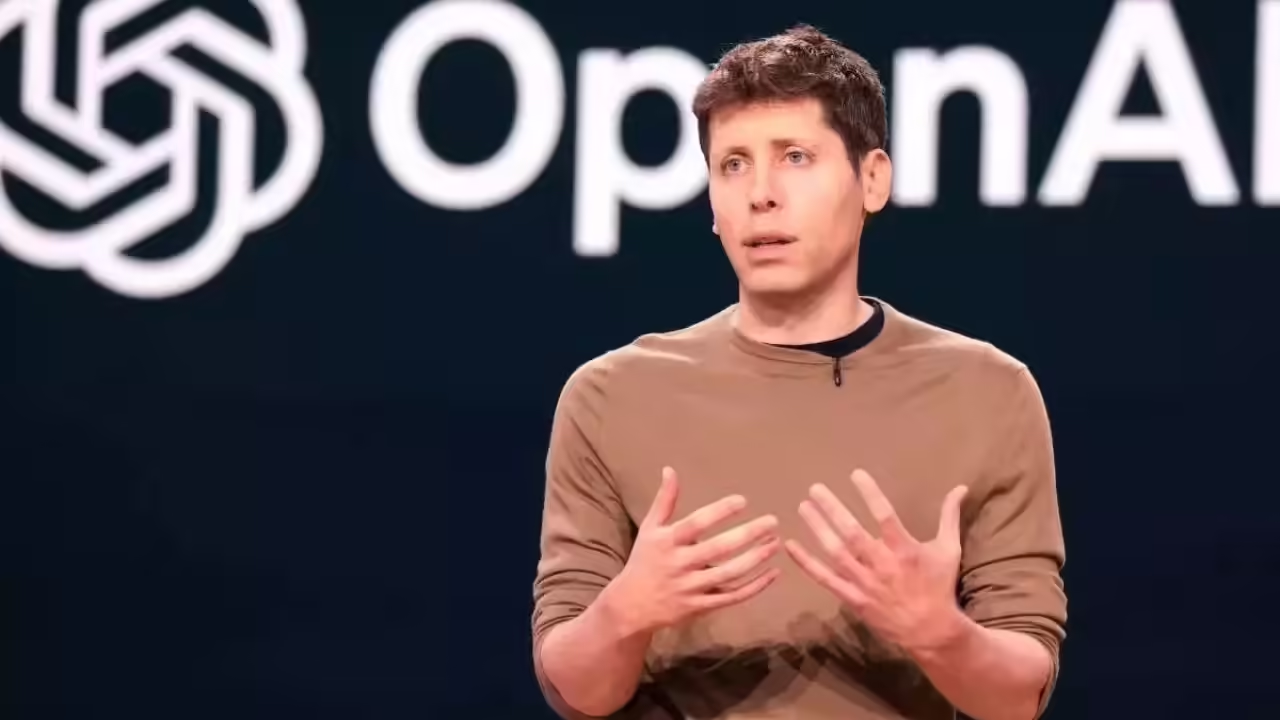

The discussion on artificial intelligence and national security has just escalated with the declaration by Sam Altman, the head of OpenAI, that the organization has struck a deal with the United States Department of Defense to utilize the organization’s artificial intelligence systems inside the military’s classified network.
This deal positions OpenAI at the heart of an increasingly contentious discussion on the role that sophisticated artificial intelligence systems can and ought to play in defense operations while adhering to the law and ethics.
This comes at a time when relations between the White House and the artificial intelligence sector are strained. President Donald Trump has ordered the phasing out of artificial intelligence systems designed by Anthropic, a competitor of OpenAI, citing the potential for disputes over usage guidelines that could impact the national security of the United States.
Essentially, the controversy stems from a larger debate: how far governments should extend their efforts in the development and use of artificial intelligence in national defense, intelligence, and surveillance activities. Military institutions believe that artificial intelligence can assist in the analysis of data, logistics, and decision-making in emergency situations.
Altman presented his company’s new partnership as a way to strike a balance between innovation and restraint in the development of artificial intelligence in national defense, intelligence, and surveillance activities.
Sam Altman and the Department of War, Redefining the AI Defense Frontier
According to his statements, the partnership has set boundaries on the use of artificial intelligence technology. His company has stated that the technology cannot be used in domestic mass surveillance and must maintain human responsibility in any decision to use force, including in autonomous weapons systems. These are already established in law and military policy, he said.
The deployment also includes operational controls. For instance, the deployment plans include the use of only approved cloud services. The company plans to deploy its engineers who will work directly with the defense. Their main work is to ensure the systems are being monitored.
This is an indication of the new approach being taken by artificial intelligence companies. The new approach is about oversight instead of an open approach.
Supporters of the deal claim that the collaboration between technology companies and the defense is unavoidable. The current military operations require the use of software. The use of artificial intelligence is essential in the analysis of data. The systems can process satellite images.
The systems can also help analysts who are bombarded by data. The supporters claim that if the deal is not signed, democratic nations risk being left behind by those who are not concerned about the potential dangers.
The High-Stakes Collision of AI Innovation and National Security
On the other hand, opponents of the deal express other concerns. Some researchers are concerned that once AI systems are allowed into classified areas, public control will not be possible. Other opponents, such as civil liberties groups, express concerns that the terms of contract may not hold up to stress in conflict situations or emergencies.
The issue of Trump’s complaint against Anthropic reveals another aspect of the issue: control of terms of service. The administration claims that companies should not impose terms of service that go against government authority in defense situations. Companies, however, believe that terms of service are necessary to prevent abuse and maintain public trust.
The issue of AI governance has thus reached a point where corporate policies, national laws, and geopolitical tensions intersect.
Sam Altman has also called for consistency in the rules. Sam Altman has asked the Defense Department to offer the same terms for safety for all providers of AI, which he thinks might help reduce legal disputes and develop common expectations. This might shape the future use of AI in the military, particularly as other countries around the world compete to advance the use of machine learning in defense strategies.
The future will be determined by how it is implemented. The Pentagon has to translate its policy into practice, and lawmakers and the public will probably want to know how it works. The other AI developers will also be interested in seeing whether it is the standard for working with the government.
The agreement marks a new chapter. Artificial intelligence has gone from being a research project to a vital part of national security. The question now is how it will be managed, so that speed and capability do not get ahead of responsibility.

Comments are closed.