
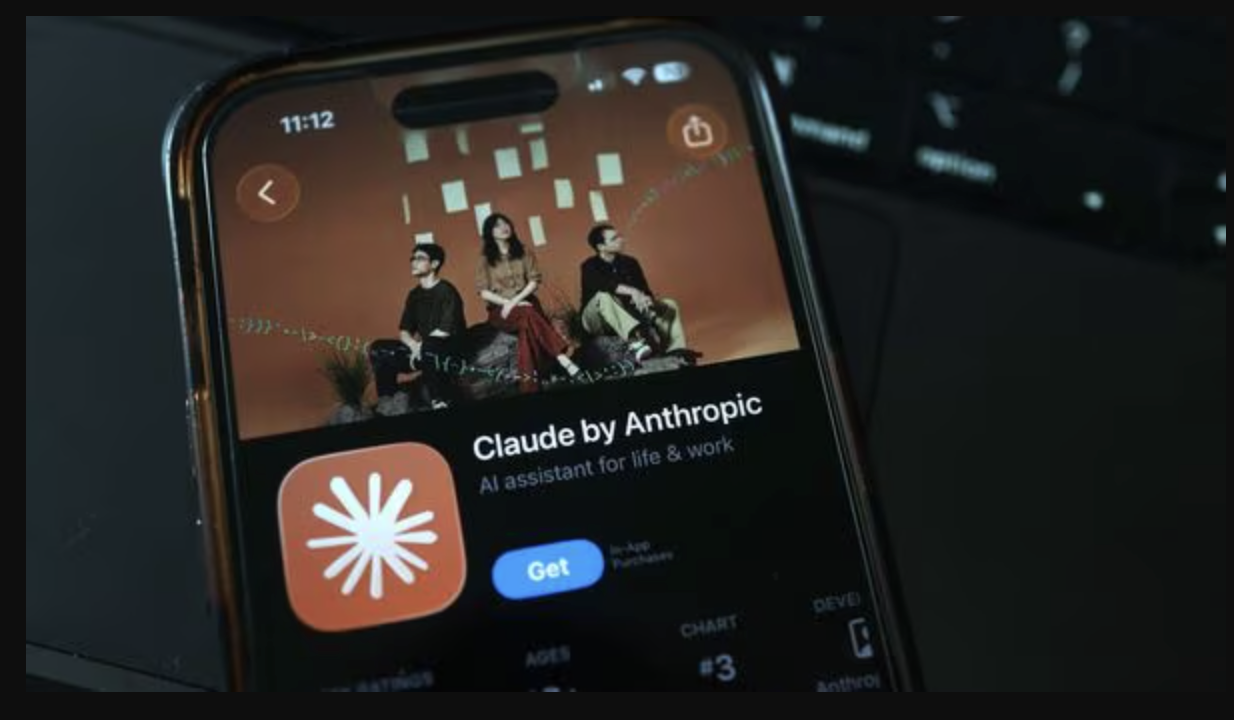

Anthropic’s AI assistant Claude has reached the number one position in the Apple App Store’s free apps category in the United States, marking a significant moment in the competitive generative AI landscape. The surge in downloads comes in the wake of mounting controversy around OpenAI’s recent agreement with the U.S. Department of Defence, which has prompted some users to reassess their choice of AI tools.
Pentagon Deal Backlash Fuels Shifts
The App Store ranking shift was driven in part by an online backlash over OpenAI’s Pentagon agreementunder which OpenAI agreed to provide its AI models for use on certain U.S. defence and classified networks. Critics on social media platforms and forums have characterised the deal as a compromise on ethical principles, leading many users to publicly discuss migration to competitor platforms like Claude. This sentiment has been reflected in trending campaigns urging users to cancel ChatGPT subscriptions and try alternatives.
Some community movements and social media posts have explicitly encouraged users to defect from ChatGPT in favour of Claude, citing concerns about AI ethics, mass surveillance potential, and OpenAI’s direction following the Pentagon agreement. These user-driven narratives have contributed to Claude’s rapid climb in app rankings, signaling shifting user sentiment in a highly competitive AI space.
Broader AI Industry Context
Anthropic has positioned itself as a more safety-focused AI developer, emphasising robust guardrails and limitations on certain types of uses — including policies related to surveillance and autonomous weapons. Tensions between Anthropic and U.S. defence officials escalated earlier as the company resisted requests to relax some operational safeguards for military applications; this eventually led to political fallout and restrictions on government adoption of its models. Meanwhile, OpenAI has defended its deal, stating that its deployment adheres to safety principles while meeting the government’s requirements.
The rivalry has spilled into the public sphere, with heated debates among AI users, developers, and industry observers over the ethics of defence partnerships, the role of generative AI in sensitive applications, and what expectations users should have of leading AI platforms.
What This Means for AI Users
Claude’s rise suggests that user preferences in AI aren’t just driven by features and performancebut also by perceptions of corporate values and ethical stance. As AI systems become more embedded in daily life, factors such as transparency, governance, and partnerships with powerful institutions are increasingly influencing user choices — not just technical metrics.
The unfolding situation highlights how public sentiment, industry competition, and geopolitical dynamics can intersect to reshape the generative AI ecosystem, with potential implications for future adoption and innovation paths.

Comments are closed.