
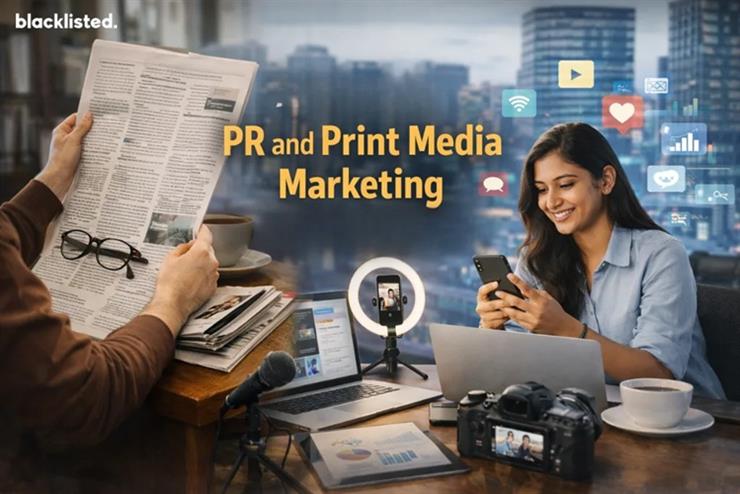

The ever-changing landscape of public relations is moving at a faster pace than ever before. As India embarks on this digital journey, businesses cannot rely solely on traditional press releases or media mentions. Instead, audiences now consume content on smartphones, social platforms, and news portals, so digital PR strategies now carry more weight than ever.
Moreover, print media marketing continues to have serious value in Tier 2 and Tier 3 cities, where newspapers and magazines continue to have an impact on consumer trust and purchasing decision-making.
These rapid changes now have the role that a public relations creative agency plays in both local and national contexts more important than ever.
PR services in India must ensure that they also balance the demands of a digitally first yet culturally diverse market.
The Evolving Role of PR in a Digital-First World
Public relations is no longer just about sending press releases or engaging with legacy media. The digital transformation has altered the way we conduct our discipline. Public relations has changed to embrace new channels of communication and ultimately become a dynamic and data-driven discipline that is versatile across platforms.
PR practitioners work with influencers and podcasts and blogs, not just journalists, and campaigns are built on AI-based analytics to ensure messages are landing with the right audiences. Crisis communications require immediacy and reactionary responses from cause-based brands. Authentic messaging now takes place, where storytelling replaces generic communication and fosters deeper audience trust.
In other words, PR is now about creating narratives that are personal, agile, and authentic; things that are invaluable in today’s overcrowded digital environment.
Why PR Services in India Are Adapting to Digital Transformation
In India, we face the conundrum of communicating with millions of people who are coming online every year, while still maintaining the needs of urban centres, making sure the messages also reach regional demographics.
In particular, agencies have adapted by:
- Combining traditional press, social, and stakeholder communications engagement into storytelling through social media channels.
- Using AI-powered tools to listen to conversations, monitor moods in the moment, and track sentiment with real-time analytics.
- Creating hyperlocal and vernacular content for provincial markets.
- Partnering with organizations and influencers that have an established connection to the local community.
This hybrid approach allows businesses to stay visible and credible, whether they’re targeting metro audiences or Tier 3 cities.
Print Media Marketing: Is There Still a Place in Today’s Landscape?
While digital media may be in the spotlight, print media still has a significant role to play, particularly in India, where newspapers enjoy solid readership in Tier 2 and Tier 3 cities.
- Luxury brands often use print simply because of the prestige and credibility it holds.
- Certifications, awards, and official announcements are often regarded as more substantial when forged in print.
- Print campaigns are also a great way to lend tangible depth, as readers often skim through fast content on digital.
If anything, print isn’t extinct; it flourishes in the role of support because of larger PR campaigns that gave brands enhanced credibility as their digital efforts provided speed and coverage.
Building a Strong Digital PR Strategy for Modern Businesses
An example of a successful digital PR strategy is more than just updates on social media. It is often a framework that requires strategy and insight, as well as a blend of creativity and analysis.
They represent pillars, and examples may include:
- Data-driven storytelling: creating reports or insights that journalists want to share.
- Influencer partnerships: leveraging trusted voices to assist in building authentic storytelling.
- AI and sentiment analysis: monitoring how your brand is perceived in real time.
- Crisis management: designed to help create frameworks for working through misinformation and disinformation quickly and effectively.
- Immersive technology: using AR / VR to create memorable/engaging campaigns.
Businesses that can implement such strategies will ensure they are not just visible but also credible and ready to weather uncertain situations.
How Online PR Agencies Are Shaping Brand Narratives
An online PR branding agency does not simply upload stories into digital spaces. These agencies create campaigns that resonate, engage, and adapt.
They rely on:
- Tools for social listening to capture ongoing conversations.
- Content Marketing and SEO to increase visibility and traffic.
- Multimedia storytelling through video, graphics, and interactive formats.
- Real-time conversations on platforms where audiences are most engaging.
By mixing creativity with analytics, agencies are able to create a narrative that holds its steadiness and adaptability, and adds emotional bonds that go beyond reputation and cause loyalty.
The Balance Between Traditional and Digital Public Relations
The future of PR will not be switching from one channel to the next. There will be harmony between both channels.
- Traditional PR builds trust and authority: print, radio, and television.
- Digital PR offers speed, interaction, and target practice: social media, podcasts, and digital press.
Together they exist in a hybrid model, and each channel complements the other.
This dual approach is most pertinent for Indian brands that, in addition to digital media, rely on print media for legacy trust and digital platforms for modern agility.
Why Partnering with a Public Relations Marketing Agency Ensures Long-Term Visibility
Partnering with a creative agency offers brands access to expertise and networks that they might find harder to develop on their own.
Being represented by a professional PR marketing agency provides:
- Well-designed strategic campaigns that are aligned with brand objectives.
- Established relationships with the media, thereby enhancing credibility.
- Support in crisis management and protection of reputation.
- Integrated storytelling on traditional and digital media.
This relationship is a long-term investment that builds not only visibility but also trust and reputation, which are two elements that no business can afford to ignore.
The Future Outlook for PR and Print Media Integration
In the foreseeable future, PR in India will combine print credibility with digital storytelling at a faster pace.
Emerging trends and tools will help to accelerate this evolution in PR:
- AI-driven content personalization with hyper-targeted campaigns.
- Blockchain will enable brands to verify media transparently.
- AR/VR storytelling will help build immersive brand experiences.
- Regional and Environmental, Social and Governance (ESG)-focused content will emerge as sustainability and local voices become more prominent.
Brands that embrace the integration of PR and print will not only survive but thrive in a digital-first world by building lasting relationships.
Conclusion
The future of PR is not about choosing between print and digital, but about using both strategically. In India’s diverse media environment, where digital growth is rapid, yet print still carries influence, businesses need PR services that combine the two worlds seamlessly. By partnering with an adaptive branding agency, brands can secure long-term visibility, credibility, and audience trust, which are the essential ingredients for thriving in an ever-evolving, digital-first landscape.

Comments are closed.