
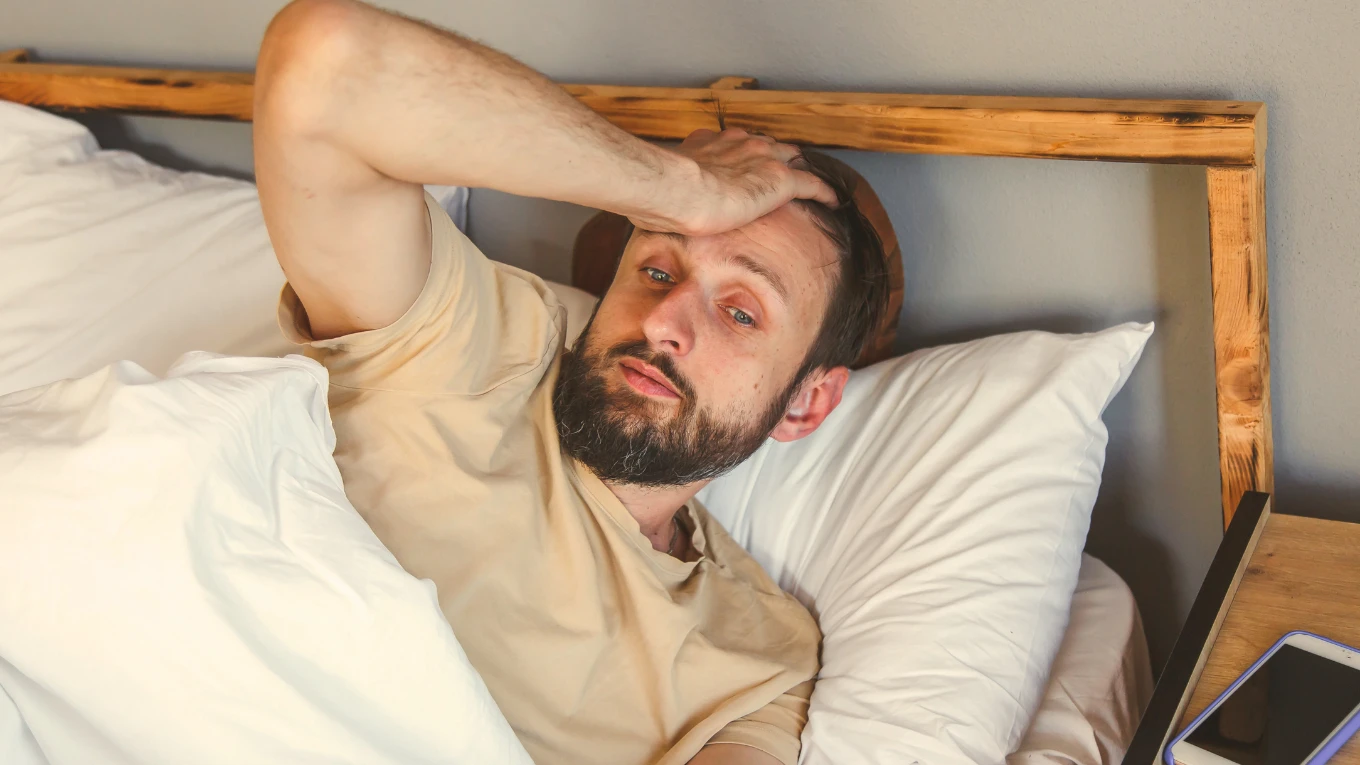

For years, we’ve treated sleep like a simple equation: more hours in bed means more energy the next day. However, new research found that it’s less about how long you sleep, but rather your perspective on waking up.
Turns out, simply believing that you have gotten enough rest can give you all the physical and mental benefits of actually getting a good night’s sleep.
One study suggests that your perception of sleep can affect how tired you actually feel.
The idea of a positive mindset leading to improved health and performance has been studied for decades, and it’s not just a theory. A well-known example is the placebo effect, a phenomenon in which a person experiences measurable physiological changes after receiving an inactive treatment, such as a sugar pill or a saline injection.
KieferPix | Shutterstock
With this existing evidence in mind, researchers have now shifted to explore the potential effects of mindset on sleep, including Nicole Tang, a psychology professor at the University of Warwick, UK. She explained, “When you talk to people about sleep quality, everybody thinks they know exactly what they are talking about. It’s something so familiar, and yet we often have different ideas and different definitions of it.”
Tang and her colleagues conducted a study of 100 good and bad sleepers to compare different sleep scenarios. The participants were asked to share which factors presented in these scenarios they associated with the best night’s sleep.
The results showed that we feel our sleep quality isn’t just determined by how well we sleep.
Participants also mentioned “level of physical activity, their mood, their social ability, whether or not they can think straight” when discussing the sleep scenarios. This made Tang wonder if a person’s feelings about their sleep quality might change throughout the day.
She then decided to conduct a follow-up study. 119 adults were asked to rate their previous night’s sleep every 2 hours from 8 am to 10 pm, including sharing information about their mood, physical and social activity, and any pain or discomfort they were experiencing.
Over 90% of participants changed their sleep quality ratings at least once throughout the following day. They didn’t forget their initial ratings, so what prompted these changes? According to Tang, “When people were engaged in more positive physical activity, their sleep-quality rating tended to go up.”
Being active can help reshape your perceptions about the previous night’s sleep.
If you think about it, it makes sense. When people sleep poorly, they tend to cancel appointments, skip the gym, and bail on social plans. However, if you force yourself to get some movement or have a productive day, you may come to perceive your sleep differently.
 Prostock-studio | Shutterstock
These findings are still relatively new, and they’re definitely not guaranteed to remedy every sleep problem. But Tang said that it’s possible that beliefs about poor sleep can be self-fulfilling and lead to short-term sleep loss and insomnia.
You’ll also benefit from engaging in good sleep hygiene practices, like avoiding screens before bed, eating well, and getting sunlight first thing in the morning. Even after going to bed late or rising early, something as simple as changing your mindset can give you an energy boost to help you get through the day.
Kayla Asbach is a writer currently working on her bachelor’s degree at the University of Central Florida. She covers relationships, psychology, self-help, pop culture, and human interest topics.

Comments are closed.