
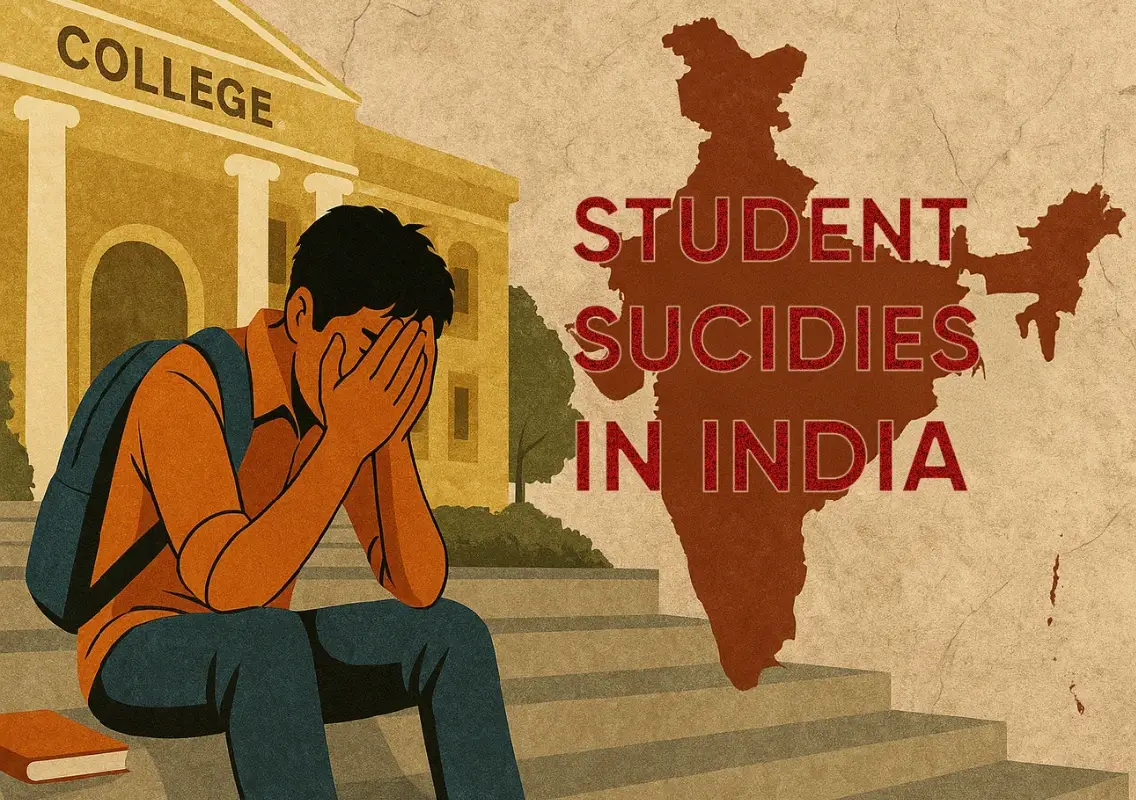

A disturbing pattern of student suicides across India’s premier National Law Universities (NLUs) has triggered serious questions about mental health safeguards, institutional culture and accountability within these elite public law schools.
From Hidayatullah National Law University in Raipur to National Law University Delhi and National Law School of India University, multiple student deaths between 2023 and 2025 have revealed a troubling pattern of academic pressure, alleged administrative apathy and inadequate support systems.
A culture of pressure and exclusion
Students recount experiences of toxic competitiveness, caste discrimination, bullying and social isolation. With annual fees ranging from ₹2 lakh to ₹3.2 lakh, critics argue that NLUs often remain accessible primarily to privileged sections, creating skewed representation and deepening exclusion.
Data from independent surveys have previously highlighted under-representation of marginalised communities and rural students within these institutions. Students say this imbalance contributes to a sense of alienation for many who struggle to “belong” in what are often described as hyper-competitive environments.
Mental health systems under strain
At National Academy of Legal Studies and Research and Gujarat National Law University, allegations of inadequate emergency response, limited counselling staff and absence of academic relaxations following student deaths have surfaced.
Although some universities claim to have health centres, counsellors and ambulances in place, students argue that structural issues persist — including overwhelming academic schedules and fear of retaliation for raising concerns.
The Supreme Court’s Sukdeb Saha guidelines in 2024 mandated safeguards such as optimal student-to-counsellor ratios and formal mental health policies in higher education institutions. However, implementation remains uneven.
Calls for reform and collective action
In the aftermath of these tragedies, student-led mental health groups have emerged in some campuses, seeking institutional reform. Yet, activists argue that measures often remain reactive — limited to condolence notices, temporary suspension of classes or increased surveillance.
Education experts stress that lasting reform requires transparent grievance mechanisms, inclusive policies, reduced academic pressure and meaningful dialogue between administrations and students.
As conversations around institutional responsibility intensify, the spotlight remains firmly on whether India’s “islands of excellence” can ensure safe and equitable spaces for the young minds they nurture.

Comments are closed.