
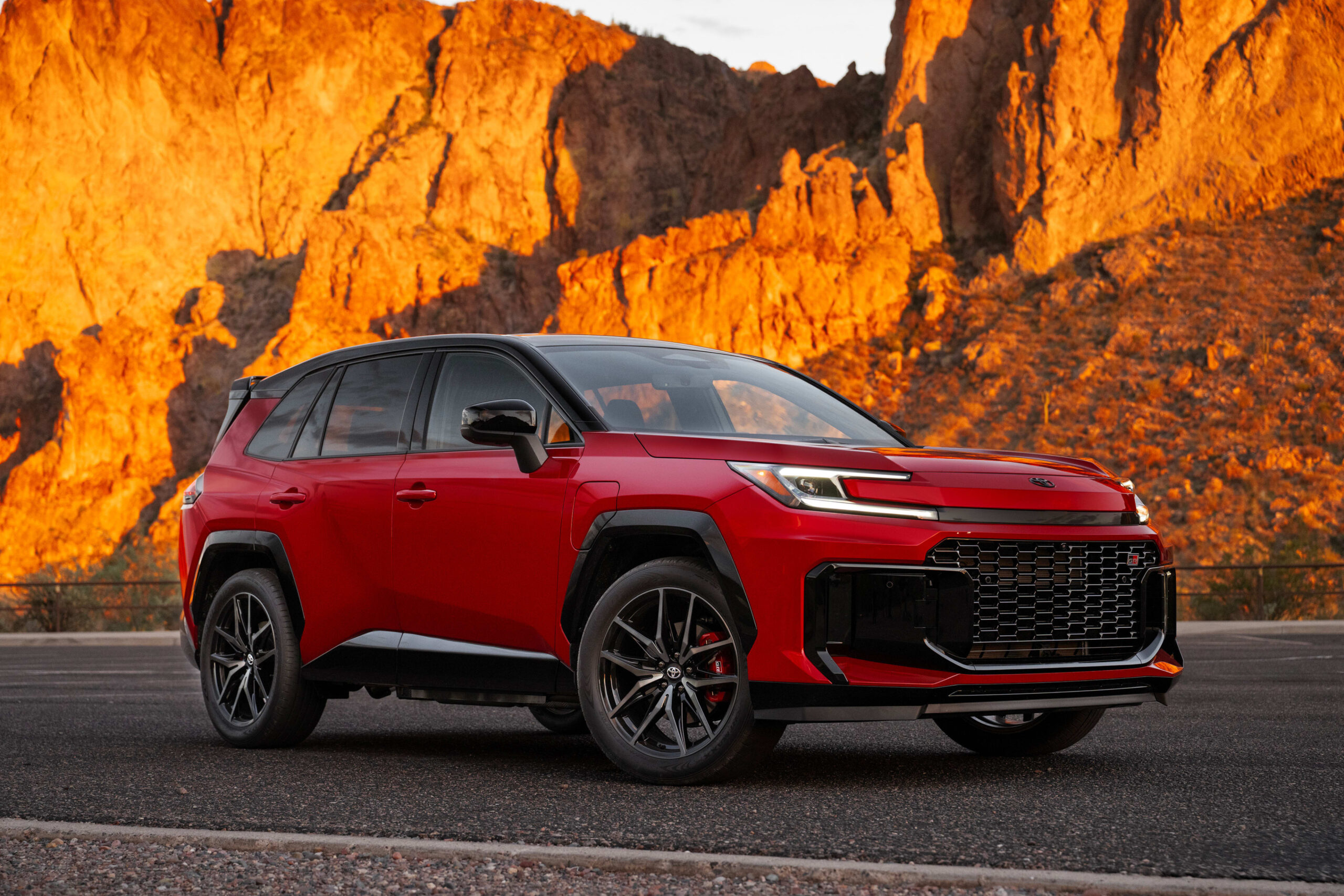

Toyota has made a bold move with the 2026 RAV4 Plug-in Hybrid. More power. Lower price. No loud announcement just a quiet update that changes the value equation in the compact SUV segment.
The latest RAV4 PHEV now produces 324 horsepower, up from the outgoing version, making it one of the most powerful options in the RAV4 lineup. At the same time, Toyota has reduced the starting price by roughly $3,000, narrowing the gap between the plug-in model and conventional hybrids.
That combination is hard to ignore.
More Muscle, Same Practical DNA
Under the hood, the RAV4 PHEV continues to pair a gasoline engine with dual electric motors and standard all-wheel drive. The updated system now pushes total output to 324 horsepower, giving it noticeably stronger acceleration than before.
What this really means is that the plug-in hybrid no longer feels like the “efficient” alternative. It feels quick. Responsive. Confident when merging or overtaking.
And it does all this while maintaining its everyday usability five seats, generous cargo space, and the same practical layout that made the RAV4 a global bestseller.
A Strategic Price Adjustment
Here’s where things get interesting.
Plug-in hybrids have traditionally carried a price premium that made buyers hesitate. Toyota appears to be addressing that head-on. By trimming around $3,000 from the base price, the 2026 model undercuts its predecessor and edges closer to the pricing of well-equipped conventional hybrids.
That shift could attract buyers who were previously on the fence especially those weighing fuel savings against upfront cost.
In a market where incentives fluctuate and EV competition is heating up, pricing discipline matters. Toyota seems to understand that.
Electric Range Still a Key Strength
The RAV4 PHEV retains its usable electric-only driving range, making it practical for daily commuting without burning fuel. For many drivers, short city runs, office commutes, and school drop-offs can be handled purely on battery power.
When the charge runs out, the system seamlessly transitions to hybrid mode. No range anxiety. No charging panic.
It’s a flexible setup that works particularly well for buyers not ready to commit to a fully electric vehicle but eager to reduce fuel consumption.
Where It Sits in the Lineup
Within the broader RAV4 family, the plug-in hybrid now feels less like a niche variant and more like the sweet spot.
You get:
That’s a compelling package in a segment crowded with traditional hybrids and emerging EV crossovers.
The Bigger Picture
Toyota didn’t reinvent the RAV4 PHEV for 2026. It refined it. More power. Smarter pricing. Same reliability reputation.
In today’s compact SUV market, that might be exactly what buyers are looking for.
Sometimes, the smartest updates aren’t flashy. They’re strategic.

Comments are closed.