
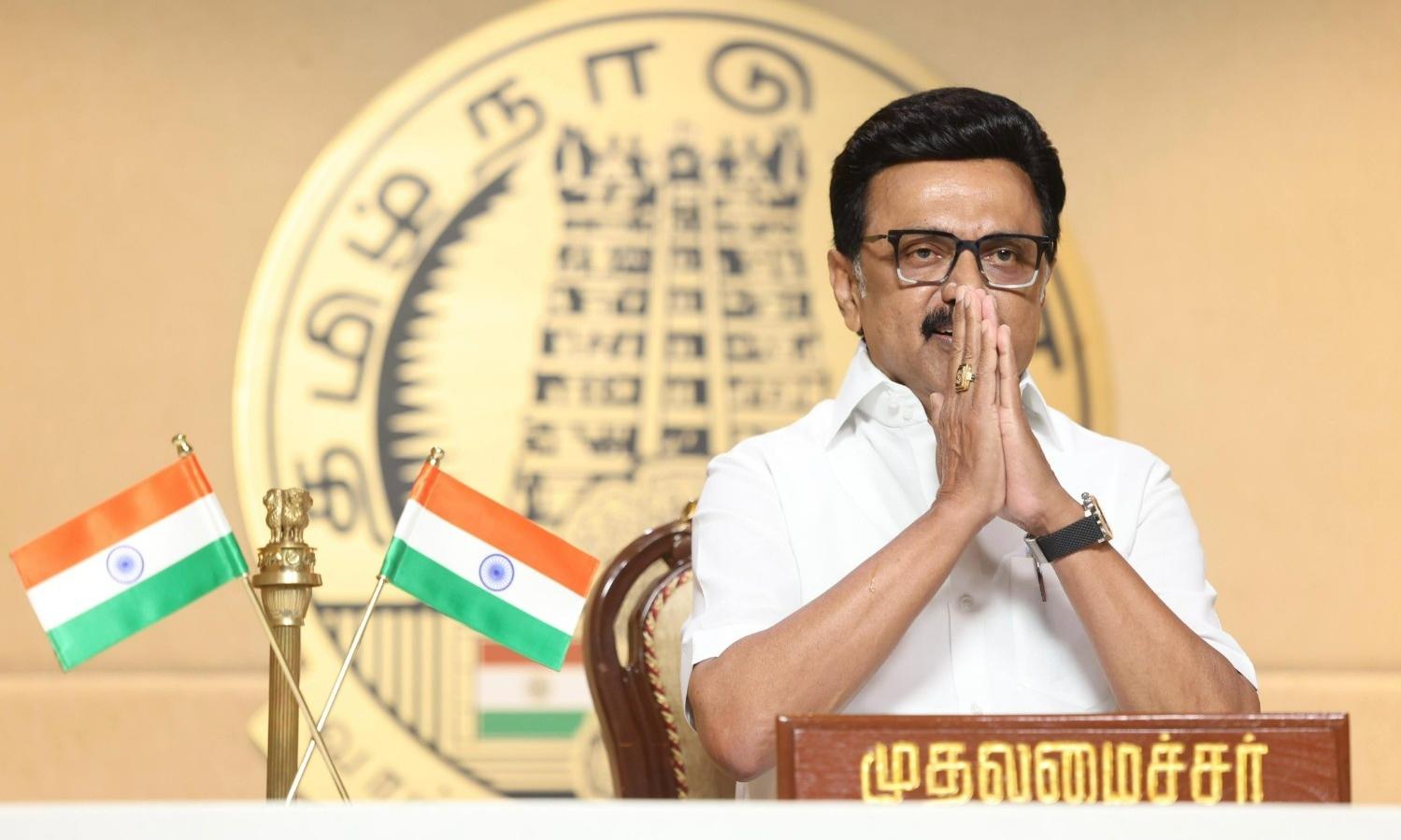

Tamil Nadu Chief Minister MK Stalin on Tuesday (March 3) thanked his Karnataka counterpart Siddaramaiah for his warm response to the state’s initiative on improving Union-State relations.
Stalin, in a post on X (formerly Twitter), said he deeply appreciated Siddaramaiah’s ‘thoughtful endorsement’ of Tamil Nadu’s initiative and recognition that federal renewal must be a collective effort.
What Stalin said
‘Thank you’, the Chief Minister conveyed to Siddaramaiah for his warm response to Part I of the Report of the High Level Committee on Union-State Relations constituted by the government of Tamil Nadu.
Also read: Siddaramaiah writes to Stalin backing renewed Centre-State relations debate
“As you rightly observed, Unity in a diverse republic like India is sustained not through uniformity, but through constitutional trust,” Stalin said.
Part I of the Report of the High-Level Committee on Union-State Relations – in Tamil and English – was tabled in the Tamil Nadu Legislative Assembly on February 16, 2026.
Part-I of the report covers ten key topics ranging from language policy to the Governor, education, health, delimitation, elections, and GST, among others.
‘Federalism is not a political demand’
Siddaramaiah wrote to Stalin saying, “Federalism is not a political demand – it is part of the basic structure of our Constitution. Over the years, increasing centralisation in fiscal and legislative matters has disturbed the delicate balance envisioned by our Constitution makers.”
Further, the Karnataka Chief Minister had said: “Karnataka stands ready to engage constructively in strengthening India’s democratic and federal framework.”
The High-Level Committee on Union-State Relations met in New Delhi on February 22, 2026, to deliberate on Part II of its Report.
The meeting was attended by the Chairperson, Justice Kurian Joseph, former Judge of the Supreme Court, and the members, K Ashok Vardhan Shetty and M Naganathan. The committee discussed various topics to be included in the Part-II of its report, covering 10 chapters.

Comments are closed.