
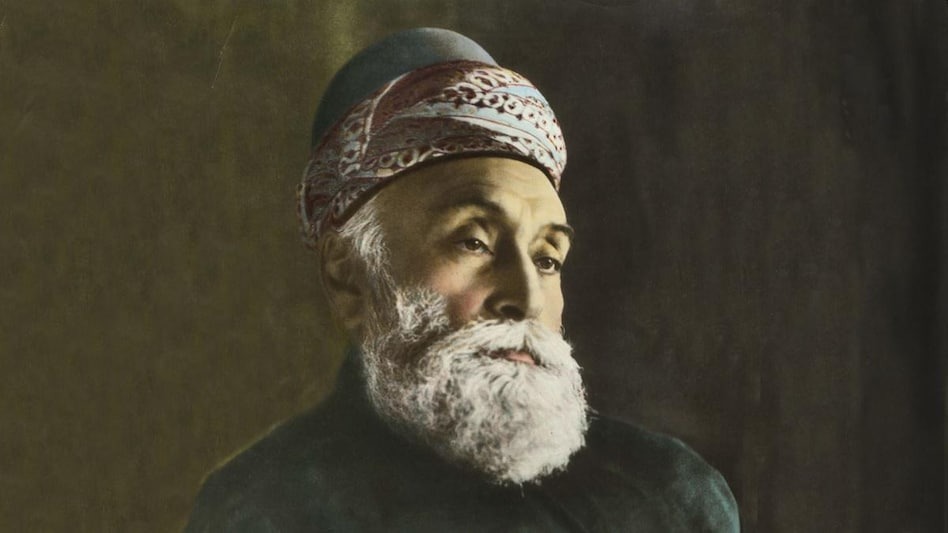
Let’s learn about Jamshedji Tata, the visionary industrialist who dreamed of a self-reliant India

Jamsetji Nusserwanji Tata: Today we celebrate the 187th birth anniversary of Jamshedji Nuserwanji Tata, the father of Indian industry, who dreamed of modern India. Born on March 3, 1839 in Navsari, Gujarat, he led the country towards industrial self-reliance in his vision. Jamshedji believed that just doing business was not enough; The most important task is to actively contribute to nation building.
Jamshedji came to Mumbai at the age of 14, completed his education from Elphinstone College and later joined his father’s business. In 1868, he started his own trading company with a capital of Rs 21,000 and soon ventured into the textile industry. He purchased an old mill in Chinchpokli and converted it into Alexandra Mill, demonstrating his business acumen and making substantial profits.
Jamshedji had four primary goals in life: an iron and steel company, a world-class educational institution, a unique hotel, and a hydroelectric project. However, he only saw the inauguration of the Taj Mahal Hotel in his lifetime, which opened on 3 December 1903 on Mumbai’s Colaba waterfront. At that time, the Taj Hotel was the only hotel in India with electricity and became a symbol of Indian pride.
Jamshedji Tata was not only a businessman, but also a person deeply concerned and sensitive about labor welfare and social reforms. He strongly advocated for benefits such as shorter working hours and provident funds for workers even before modern labor laws. His vision for the city of Jamshedpur included schools, hospitals and lush greenery, a legacy that is still exemplified today.
His contribution to the field of education is immeasurable; He made J.N. to enable Indian students to pursue higher education abroad. Tata Endowment was established. He donated ₹3 million for the establishment of the Indian Institute of Science (IISC) to promote scientific research and progress in the country. Jamshedji died in 1904, but the seed he sowed continues to blossom into the Tata Group and modern India.

Comments are closed.