
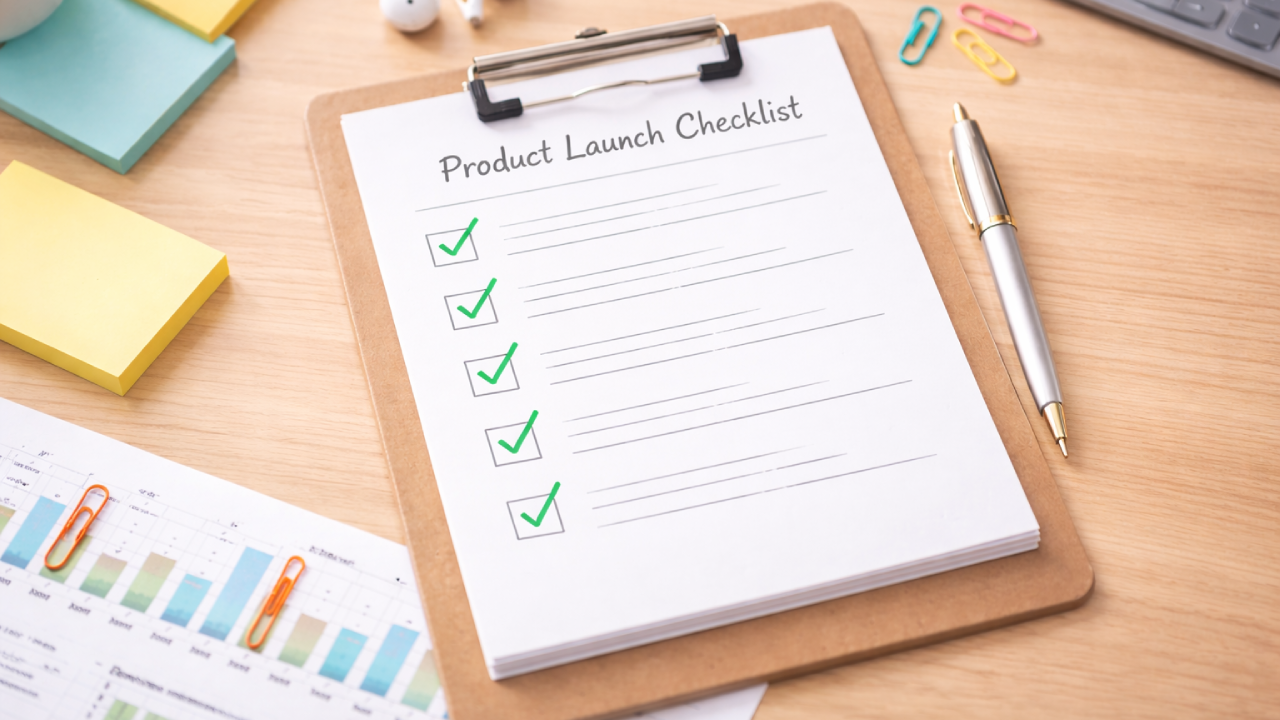

A product launch rarely fails because the product is bad. Most of the time, the failure occurs because the teams working on the project do not maintain proper alignment. The team receives assets after the scheduled time. Different channels display conflicting messages to their audiences. The demos have stopped functioning. The support teams do not have the necessary knowledge to assist customers. The team gathers feedback but fails to analyze it. The result is a launch that feels scattered, even when the product is strong.
In 2026, product launches happen across more channels than ever: social platforms, email, livestreams, community forums, press briefings, and in-app announcements. Different audiences are reached through the various channels which operate at different tempos. The team needs a structured product launch checklist because they will experience difficulty maintaining their work when they lack this system.
The most effective launches are not improvised events. The staging process includes all teams who will perform their tasks before and during and after the launch day.
Why Product Launch Checklists Matter
A checklist is not bureaucracy. The operational map provides all team members with their necessary work directions. The system guarantees that all essential tasks will be completed before the product launch.
Launch checklists help teams:
You need to execute unified communications throughout all your distribution platforms.
You need to verify that all assets are prepared for use.
You need to establish the schedule for upcoming events.
You need to prepare the answers for customer support inquiries.
The organization needs to record all customer feedback through a standardized process.
The team needs to memorize details and use improvised communication methods because they lack a checklist.
Phase 1: Pre-Launch Alignment
The team must finish internal alignment work before they can proceed to external communication. This phase determines whether the launch feels coherent or fragmented.
Key pre-launch tasks include:
•Finalising positioning and messaging
•Defining target audiences
•Confirming feature scope
•Preparing FAQs and support documentation
•Training internal teams
Every stakeholder must comprehend the product launch details together with its significance.
The present misalignment will create different public stories about the future.
Phase 2: Asset Preparation
Assets function as the public presentation of a launch. The absence or inconsistency of assets leads to immediate confusion.
Core launch assets typically include:
•Press release or announcement blog
•Product demo video or screenshots
•Landing pages
•Email campaigns
•Social media posts
•FAQ documentation
•Media kits
The organization requires all assets to comply with one messaging framework. The different channel systems decrease your organization’s reputation.
The organization needs to give special attention to visual assets. The product design requires the demonstration of actual product aspects through screenshots and product UI and demo flows which must show complete product details.
Phase 3: PR and Media Coordination
Public relations serves as a strong launch booster but needs professional control for maximum effectiveness. Journalists and influencers need sufficient time to inspect materials and establish inquiries before they start their coverage process.
Companies should use these practices for their operations:
•Sharing embargoed briefings ahead of launch
•Providing clear product explanations
•Offering access to demos or spokespersons
•Preparing concise media kits
The planning of global product launches needs to account for both the local time zones and the media schedules that operate in different regions. The press needs to be scheduled according to specific time points when their activities will occur throughout the world.
Public relations work should not be viewed as a single moment when an announcement is made. It develops into a continuous dialogue that starts before the product launch and extends beyond that date.
Phase 4: Email and Direct Communication
The email channel operates as a dependable method for product launches. The channel delivers messages that target existing users of the platform with customized content.
Effective launch email strategies include:
•Audience segmentation should be based on their connection to the product.
•The messaging should be customized according to user needs.
•The launch time should be synchronized with the product announcement schedule.
•The content needs to connect users with the subsequent actions they must take.
The purpose of emails goes beyond announcing new features. The emails must demonstrate to the recipients how the new features will benefit them.
For enterprise products, targeted outreach from account managers often matters more than mass email campaigns.
Phase 5: Community Engagement
Online communities that exist on social platforms and forums and messaging applications serve as essential components for current product launches. Communities provide early product feedback while they help spread brand messages and identify product defects.
Launch checklists should include:
•The community moderators need to be prepared.
•Official channels should be used to distribute announcements.
•The team needs to track all user responses who ask questions.
•The team must handle all user inquiries in a timely manner.
The failure to respond to community feedback makes people think that the organization has cut off its contact with the public. Trust and progress develop through active participation.

Phase 6: Demo Readiness
The process of executing phase 6 demonstrates the system’s operational state. The product demonstration of a product through either a live show or a recorded video presentation functions as the most effective component of a product launch. The demonstration creates potential dangers whereas it helps show the product to customers. The demonstration of products must use actual customer scenarios instead of displaying their complete range of capabilities. The demonstration of product functionality through actual problem solving creates stronger customer impact than demonstrating all available features.
The process of executing the launch starts on launch day which continues until actual operational work begins. The organization needs to build precise connections between different operational channels.
Phase 7: Launch Day Execution
The typical launch-day checklist contains these elements:
•The organization needs to announce its products through multiple platforms at once.
•The organization needs to start its email marketing campaigns.
•The organization should share information through its social media platforms.
•The organization needs to provide training to its support teams.
•The organization needs to track its performance indicators.
• The organization needs to answer questions from both media representatives and users.
•The teams need to work on a unified schedule because multiple timelines create confusion.
Teams should operate from a shared timeline to avoid confusion.
Phase 8: Post-Launch Feedback Loops
The post-launch stage exists as the most neglected aspect of product launches. The teams require structured feedback collection systems to measure their success.
•The organization needs to track its analytics together with user adoption data.
•The organization needs to collect user opinions about its product.
•The organization needs to monitor the progress of customer service requests.
• The organization needs to examine its media coverage.
•The organization needs to conduct internal debriefing sessions.
The organization will use customer feedback to create product updates together with bug fixes and new advertising content. The launch process requires the entire team to record all acquired knowledge. The documentation of learned lessons remains unfinished until all elements have been documented.
The process of launching products in multiple countries becomes more challenging because of their international nature. The organization must adapt its messaging to local markets through complete content transformation. The organization needs to understand how different areas develop their own distinct cultural standards and regulations and customer practices.
Global Launch Considerations
Global launches create extra difficulties because they require businesses to create their marketing content through localised messaging instead of direct translation. The three components of regional differences which include cultural expectations and regulatory requirements together with user behaviour must be studied in combination.
The various factors which need assessment include:
The different time zones which need to be coordinated
The different prices which apply to each area
The necessary rules which must be followed in order to achieve compliance
The different languages which need to be used for translation
The press outreach which needs to be done through local channels that serve particular markets
A single global announcement fails to reach all audiences because it lacks effective communication methods. Regional strategies ensure broader impact.

Common Launch Mistakes
Even experienced teams repeat certain errors:
•They start their product launch before their support team has completed its training.
•They publish their product documentation before it is fully finished.
•They present too many product features to their audience through their messaging.
•They stop taking feedback from users during the initial stages of a product launch.
•They bring their product to market through a single day launch process.
A discipline-based planning process helps people to avoid these mistakes.
Building a Repeatable Launch System
The best organisations treat launch checklists as living documents. The company needs to improve its operational processes after each release by evaluating which elements were successful and which ones failed.
A strong launch system includes:
•The use of templates which all users must follow
•The assignment of task responsibilities to specific team members
•The team members who need to complete their work at particular times
•The assessment process which begins after a product launch
•The process of work creates stable results which decrease tensions.
Conclusion: Launches Are Coordination, Not Celebration
Product launches seem attractive to outsiders who watch them unfold. Actual events require precise operational control and systematic work processes. A checklist helps teams to follow all necessary steps while working together through their tasks.
The 2026 global market needs multiple communication channels for its product launches to succeed through thorough operational processes instead of major product releases. The three elements of messaging and assets together with support and feedback alignment create a launch which lasts beyond its first moment.

Comments are closed.