

Summary
- This helps audiences connect and understand each other.”
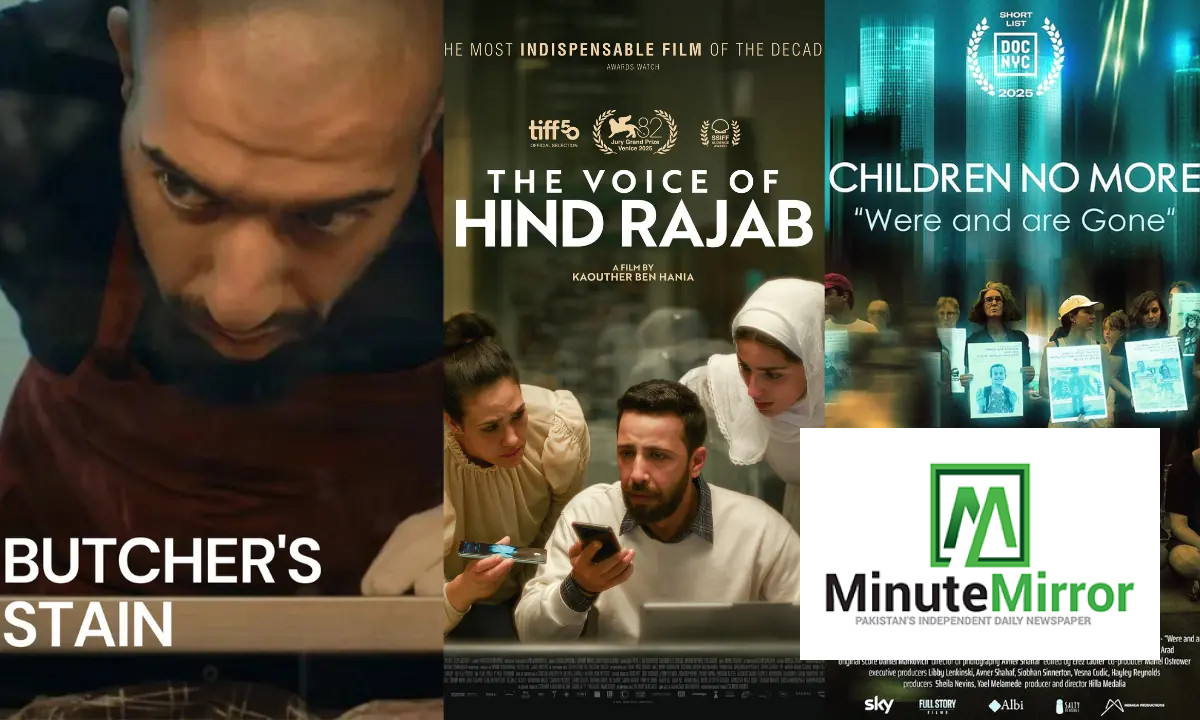
The short documentary Children No More: Were and Are Gone shows Israeli citizens holding silent vigils with photos of Palestinian children killed in the conflict. - According to executive producer Libby Lenkinski, an Israeli American activist, the film highlights perspectives that media often ignores.
- In addition, she said, “It shows the commitment of some Israelis to speak against violence caused by their own government.”
Butcher’s Stain, written and directed by Meyer Levinson-Blount, explores daily tensions faced by Arab citizens in Israel.
AI Generated Summary
Amid ongoing violence in Gaza, three films are bringing Palestinian human stories to the Academy Awards. Specifically, the works focus on individuals often lost in the broader statistics of war.
The conflict in Gaza has caused massive losses. Gaza health authorities report that over 72,000 Palestinians have died. Furthermore, rubble from 28 months of Israeli airstrikes and ground attacks still traps many more people. Meanwhile, Israel disputes these figures. A senior military officer described them as “broadly accurate,” but the army clarified that it does not reflect official data. Nevertheless, the UN has long verified the figures as reliable.
Tunisian director Kaouther Ben Hania’s docudrama The Voice of Hind Rajab, nominated for Best International Feature, follows a six-year-old girl trapped in a car as Israeli tanks fire nearby. Notably, the film incorporates real audio from Hind’s emergency call to the Red Crescent.
“Palestinian voices are not heard, especially in the West,” Ben Hania told Reuters. She explained that the media often portrays them as victims, terrorists, or mere numbers, rather than as individual people. Moreover, she added, “When you watch the film, you experience the first aid workers’ struggle. You see their humanity. This helps audiences connect and understand each other.”
The short documentary Children No More: Were and Are Gone shows Israeli citizens holding silent vigils with photos of Palestinian children killed in the conflict. According to executive producer Libby Lenkinski, an Israeli American activist, the film highlights perspectives that media often ignores. In addition, she said, “It shows the commitment of some Israelis to speak against violence caused by their own government.”
Butcher’s Stain, written and directed by Meyer Levinson-Blount, explores daily tensions faced by Arab citizens in Israel. For instance, the story follows Samir, a butcher and the only Arab employee in an Israeli supermarket, whose colleagues falsely accuse him of tearing down posters in a staff room. Levinson-Blount emphasizes cinema’s power to spark conversation. “I don’t believe cinema alone can change the world, but it provokes dialogue,” he said. “It inspires people to act and engage in society.” The film competes in the live-action short category.
Overall, these three films offer audiences a rare glimpse into individual lives affected by the conflict. By doing so, they humanize the statistics, showing personal courage, grief, and resilience. Ultimately, by highlighting these stories, the filmmakers encourage understanding and dialogue across borders.
We welcome your contributions! Submit your blogs, opinion pieces, press releases, news story pitches, and news features to opinion@minutemirror.com.pk and minutemirrormail@gmail.com

Comments are closed.