
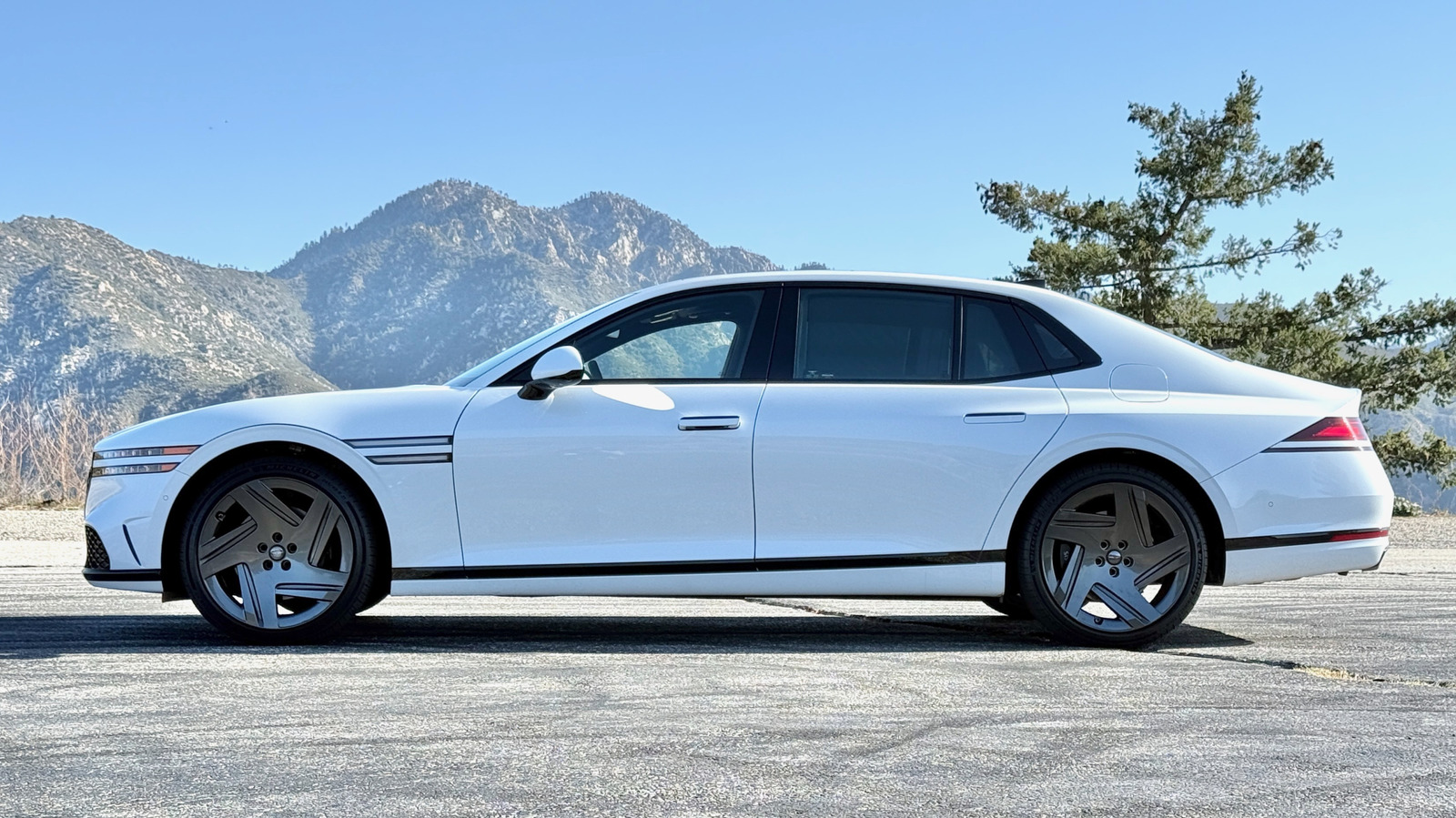

Some cars are designed to thrill the driver. They offer engagement from behind the wheel and raucous performance. Lots of luxury sedans, especially, offer tire-shredding performance and premium appointments all in the same package. And while the latest Genesis G90 is certainly enjoyable to drive, where it really shines is at cosseting and comforting passengers, specifically in the back seat.
 Travis Langness/Read
Given the chance, I’d love to be driven around in a Genesis G90 on a regular basis, rather than spend my time behind the wheel. In this lottery-winning dream world, I’d be taken to fancy restaurants, and dropped off at the most expensive resorts. I’d work, sure, but my laptop would be permanently housed in the back seat of my four-wheeled luxury Genesis abode. Alas, my lifestyle doesn’t quite offer the budget for a driver or line-item space for dining at Michelin-rated establishments.
 Travis Langness/Read
Instead of that kind of lofty and admittedly unrealistic experience, I drove the latest G90 myself, and it was pretty rewarding in its own right. The 2026 G90 is mostly the same as it was last year, with no big changes to powertrain or sheet metal, but it gets additional equipment by way of the new Prestige Black trim, which sits right at the top of the lineup. So, the fanciest and most expensive vehicle in the Genesis lineup just got fancier and more expensive.
A complicated but enjoyable source of power
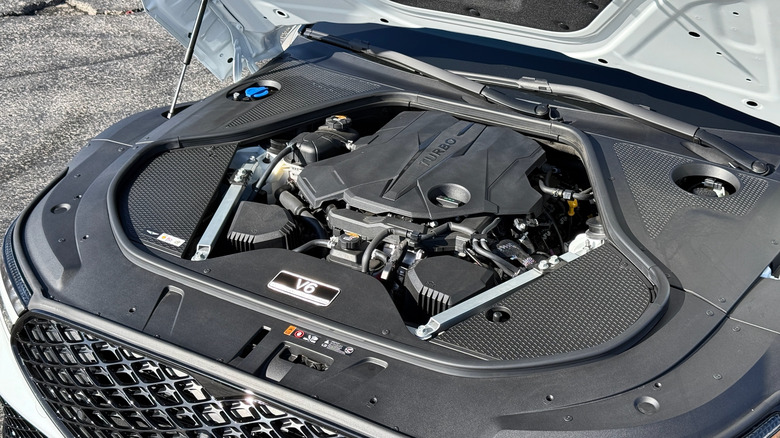
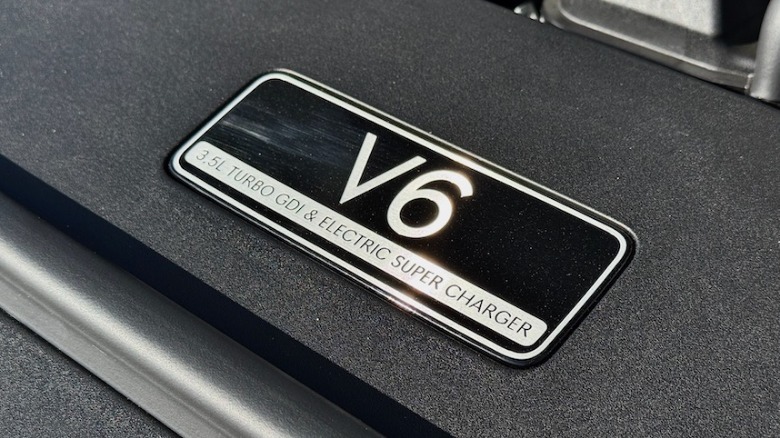
Powering the G90 Prestige Black is a rather complicated engine. It starts off as a twin-turbocharged 3.5-liter V6 that makes 375 horsepower and 391 lb-ft of torque. It’s paired with an 8-speed automatic transmission, and all-wheel drive is standard. The top trim levels, like the Prestige Black I tested, get an additional boost of power from a 48-volt electric supercharger added to the mix, making the total output 409 hp and 405 lb-ft of torque.
 Travis Langness/Read
From the driver’s seat, though, there’s not much to make you aware of the fancy dance of forced induction happening under the hood. There are no turbo or supercharger noises to spice things up, nor are there particularly dramatic surges of power at any point in the powerband, but that’s no complaint. All you get from the G90 is smooth, purposeful power. Upshifts and downshifts from the 8-speed automatic are equally smooth — just what you want from such a stately sedan.
 Travis Langness/Read
There’s a slight difference worth noting in braking performance between the standard model and the top trims (e-S/C, as Genesis calls them): The e-S/C gets larger rear brakes to help with stopping power. It uses 14.2-inch rotors instead of 13.6-inch rotors. I’d have to test the two different versions back to back to see if it changes the way each G90 trim drives, but it’s likely a small difference if there’s one at all. With that much rotor, the e-S/C’s brakes are big on stopping power, with a smooth but responsive pedal feel.
The cost to be the boss
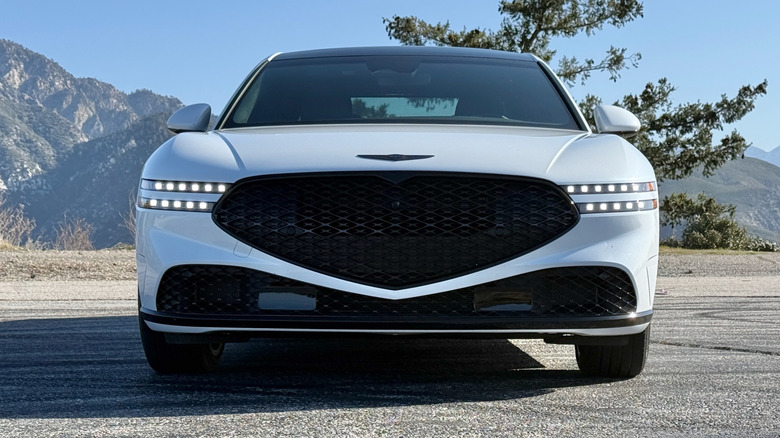
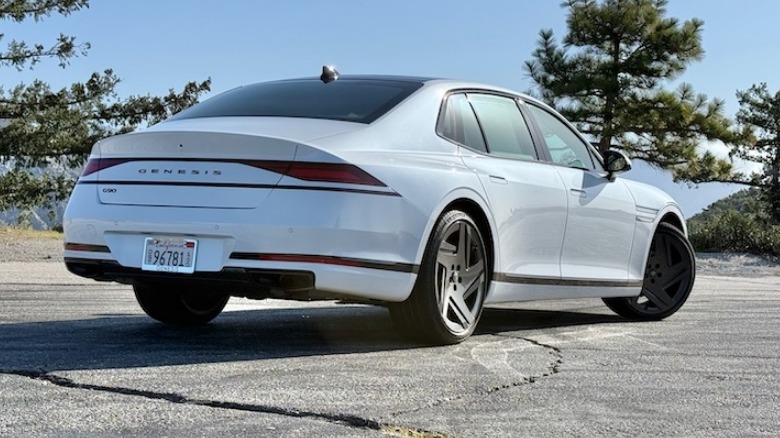
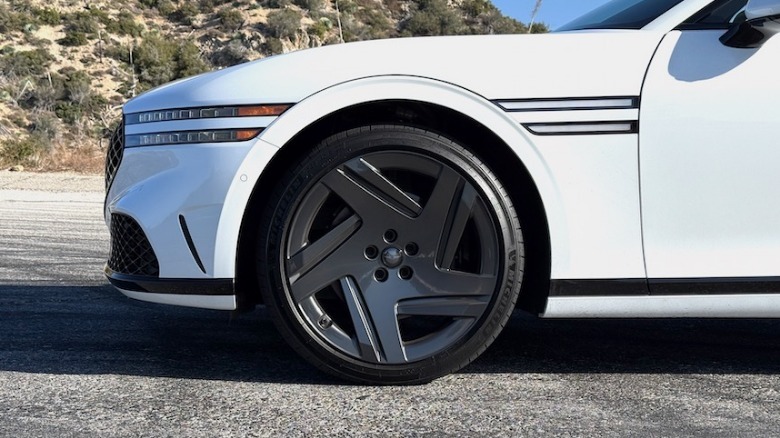
There are a lot of high-end luxury experiences that can be had when you stray into six-figure territory. The G90’s price tag, at least on this particular trim, is $107,895, which puts it up against heavyweights from Mercedes, BMW, and Lexus. But as part of that price tag, the Prestige Black gets features like dark headlight bezels and exterior trim, black Ash wood trim on the inside, and special 21-inch wheels with floating center caps.
Much like ultra-luxury sedans from manufacturers such as Bentley, the Genesis’ wheel caps stay upright, always displaying the Genesis logo as the car is in motion. Unfortunately, it looks like Genesis needs to do a bit of work on sealing these caps to be water-tight – they developed a bit of an interior foggy haze during my time with the car.
 Travis Langness/Read
Looking at things up close, spending a week with the G90, the foggy center caps were the only real flaw in build quality I could find. The interior stitching, the exterior panel gaps, and the materials used to put it all together were excellent otherwise. It matches or exceeds the quality standards I expect from this six-figure class of sedans. Base trims of the G90 will likely feel just as well constructed, and they’ll cost significantly less if you’re looking for a relative bargain. The standard 3.5T model, for example, has an MSRP of $94,195, and it comes with most of the same equipment that the Prestige Black does.
Only the tiniest impacts
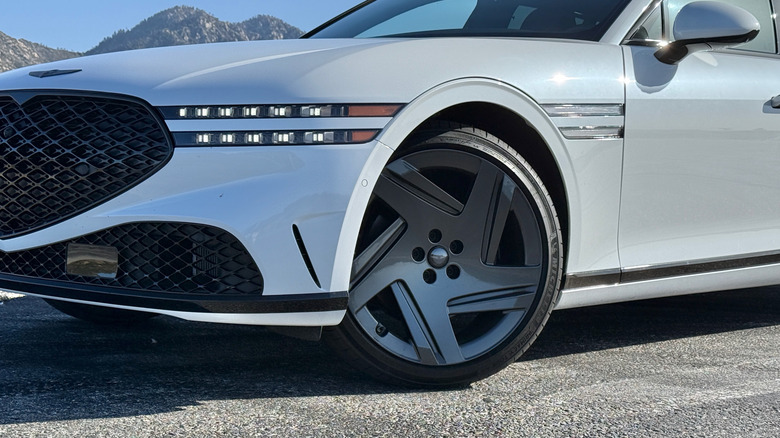
Over every large pothole, big road imperfection, and crack in the asphalt, the G90’s serene nature is nearly unassailable. And while the lower trim likely provides a lot of the same comfort, there is something missing: air suspension. E-Supercharged versions of the G90 get the air springs that makes the ride that much better in both dynamic and regular scenarios. The large wheels on the Prestige Black allow for some small road imperfections to make their way into the cabin, but gliding over speed bumps without slowing down doesn’t affect the experience at all.
 Travis Langness/Read
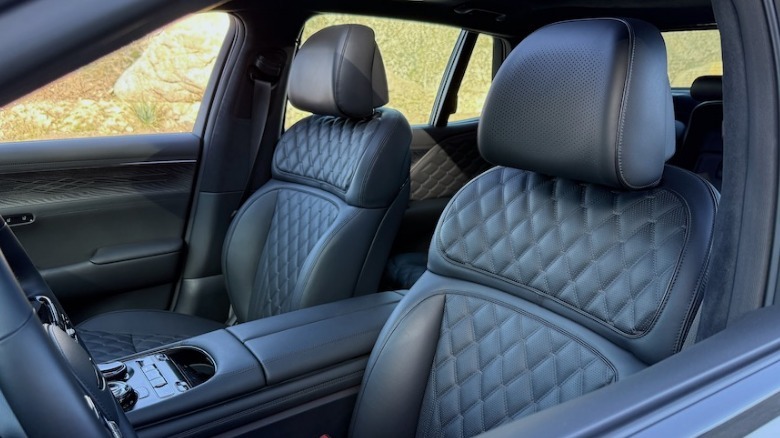
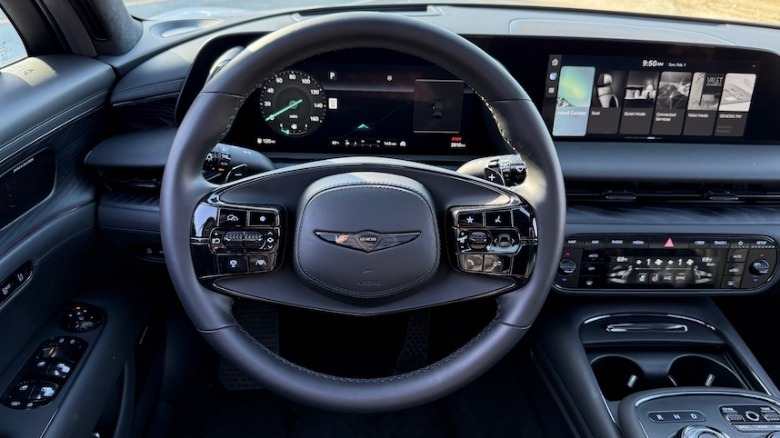
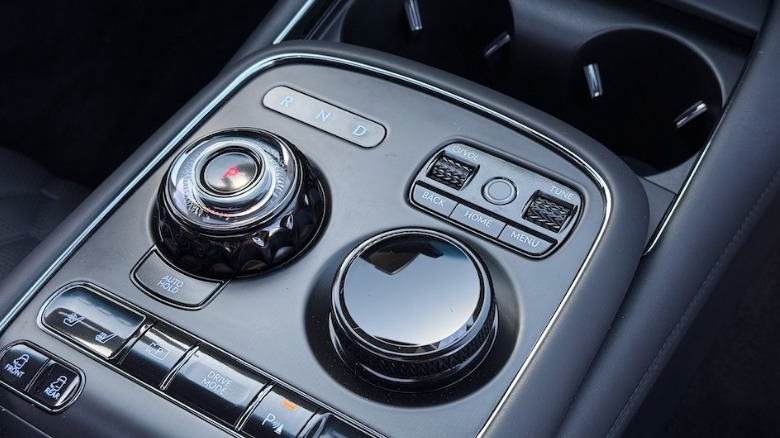
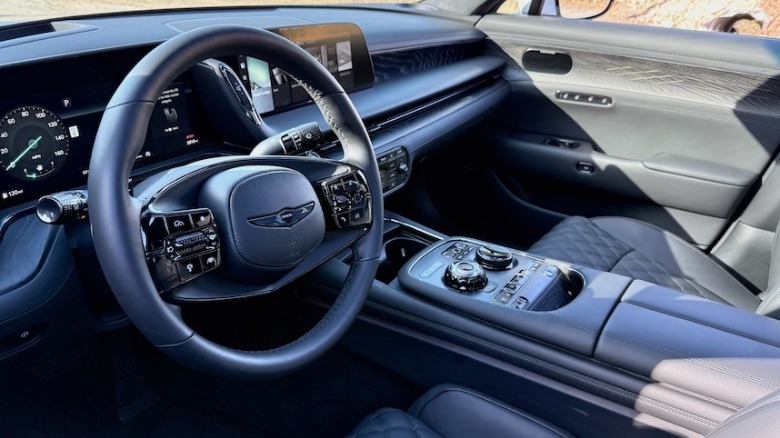
Handling corners is a surprising talent that the G90 possesses, too. It’s no darty sports car, but it makes its way through the mountains with ease. Steering is well weighted in the right driving mode, and the steering wheel itself feels substantial in your hands. There are a number of buttons and controls to learn on the steering wheel, but most of those controls are duplicated on the center console or on the dashboard, so it won’t take long to master them. The front seats are well-bolstered and extremely comfortable over long distances, a set of virtues I imagine the rear seats possess as well (still waiting on that driver budget).
A nice place to set up shop
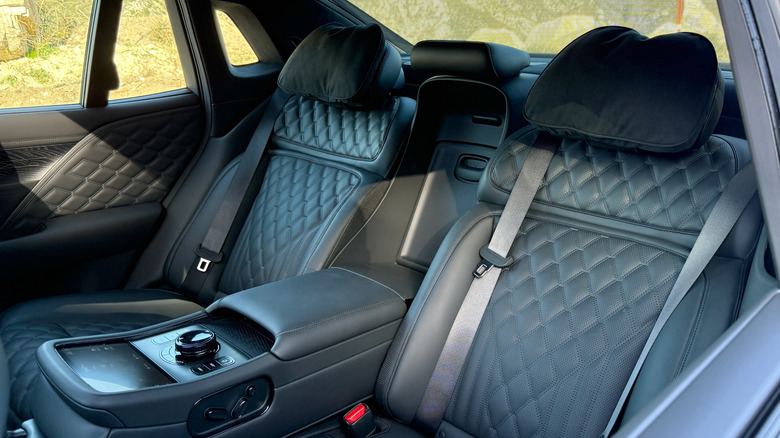
One of the strongest statements that the G90 makes is that it cares just as much (if not more) about rear passengers than it does about the driver or the front passenger. Yes, there’s plenty of high-end materials, excellent screens, and top-notch build quality up front, but none of that changes in the rear.
 Travis Langness/Read
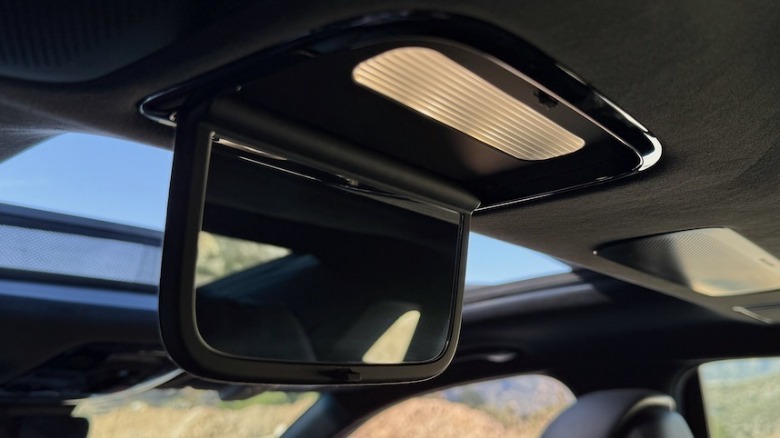
There are plenty of thoughtful little touches for the rear passengers, like easily accessible coat hooks near the b-pillar instead of near the c-pillar, where hung-up clothing items would block the view out the side window. The rear passengers get overhead vanity mirrors with lights, too — because nobody wants to go to the ball without making sure their makeup is properly applied.
 Travis Langness/Read
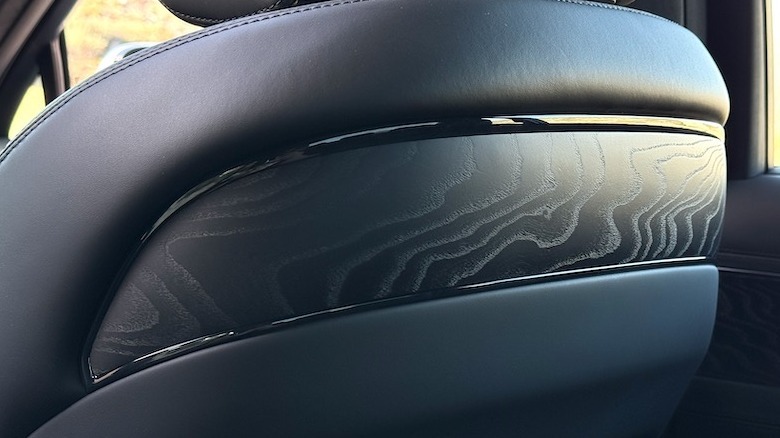
The open-pore wood is just as prominent and well-displayed in the back seat as it is in the front. And, of course, there are ultra-plush pillows to rest your weary head on, should you need a nap or some simple relaxation in the rear of the G90. Small-item storage is abundant, akin to what you’d expect from a large SUV, with lots of door pockets and big cupholders for all your most expensive beverages.
They’ve paid attention to the details
Doors that open and close with the push of a button are tough to get used to, but if the little be-driven-around scenario I described earlier were a reality, I’d come to depend on the power doors in a hurry. The G90 is full of these sorts of small differences between it and other regular sedans that help elevate the experience, and they reveal themselves over time.
 Travis Langness/Read
The rear window shades, for example, can be controlled from either side of the rear seats. Whether you’re sitting on the left or right side of the back seat, you can roll up both windows without leaning over to use the other side’s controls, and you can roll up the power window shades – a thoughtful touch.
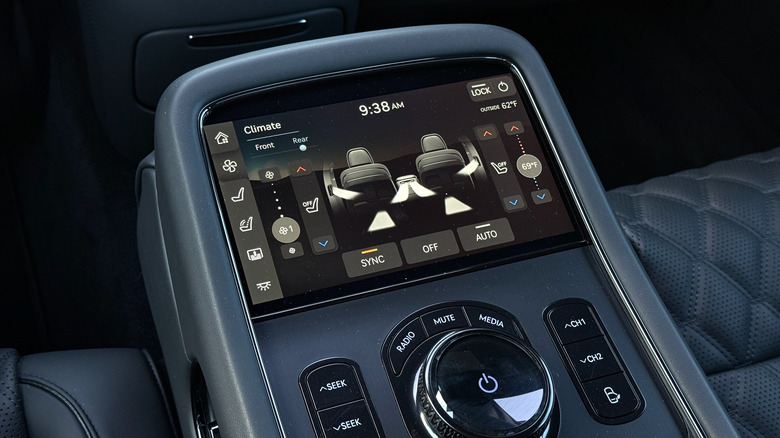
The massaging seats in the rear aren’t done via a simple- or difficult-to-understand set of controls. Instead, they’re operated via touchscreen with visual examples of where the massaging seats will be doing their work, displayed on a high-resolution touchscreen that folds down with the center armrest — a setup that easily rivals the quality of the touchscreen provided for the driver. There’s technically a middle seat in the rear, underneath the big, high-tech armrest, but it’s best to treat the G90 as a four-seater.
Tech doesn’t disappoint, but I’m still waiting on the big screen
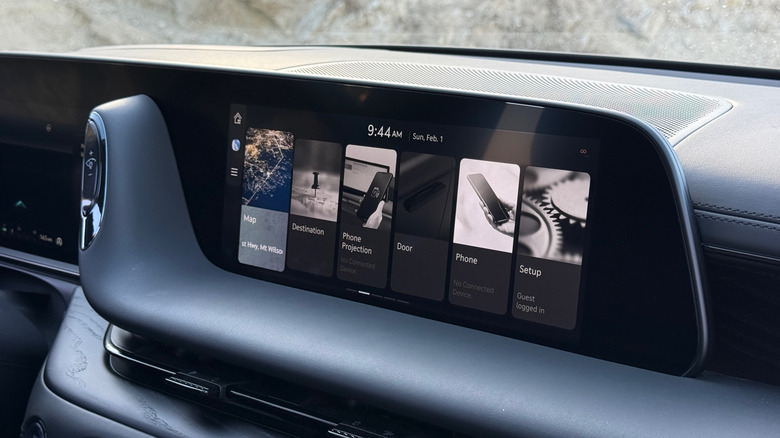
Just like I was with last year’s model, I’m still waiting on Genesis to add the big 27-inch panoramic screen that they use in the smaller G80, to the dashboard of the G90. If it’s their flagship model, it only makes sense that the flagship screen would eventually land on the dashboard of the G90. For now, there are two 12.3-inch screens – one acting as a digital gauge cluster and the other as the center touchscreen. Both are high contrast, filled with impressive graphics, and easy to see in direct sunlight.
 Travis Langness/Read
The standard stereo is a 15-speaker Bang & Olufsen unit, but the Prestige Black gets the upgraded 26-speaker stereo. Sound quality is, as you’d probably expect, excellent. All the little details of your favorite songs come through at low volumes, and nothing gets washed out if you crank up the knobs. On top of the multiple USB-C ports, there are also wireless charging pads for your phone in both the front seat, and in the rear.
Driver aids in the G90 are numerous. Adaptive cruise control, lane-keep assist, blind-spot monitoring, and several other aids all come standard. In practice, systems like the adaptive cruise control are a bit conservative, keeping a longer distance than I’d like, but the extra distance makes sense when you consider how large the G90 is.
Let’s pause a moment to appreciate the Wingback Concept
In case you missed it, late last year Genesis put out a few stunning concept vehicles. The first was the Magma GT Concept, which the company says will guide their performance vehicles for a decade. The mid-engine Concept has stunning looks, and we’re eager to see what sort of real-world vehicle it eventually turns into. The second concept vehicle, which might be a little bit closer to a production reality, is the G90 Wingback Concept.
Essentially, the G90 Wingback is a wagon version of the G90, built on the same platform but with a longer body and much more storage space. The Wingback goes even bigger in the wheel-wells, adding 22-inch wheels on low-profile tires, fully filling the wider stance of the Wingback. It also has a number of interior enhancements like the inclusion of Chamude upholstery (Genesis’ version of suede), and unique patterns on the seats.
If Genesis were to bring this particularly swoopy and potentially high-performance version of the G90 to life, it would do battle with class heavyweights like the powerful BMW M5 Touring wagon. It could open up an entirely new segment for the brand and, in my eyes, the more fast wagons there are in this world, the better. So, here’s to hoping that it gets made soon, and that I get to drive it around.
2026 Genesis G90 verdict
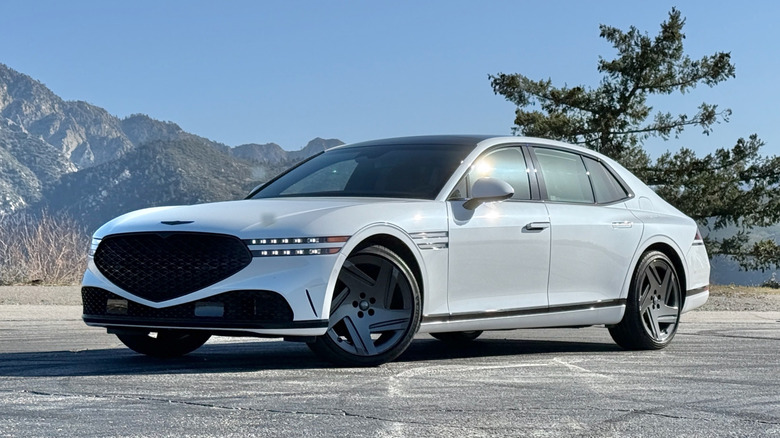
The 2026 Genesis G90 is as luxurious as it gets in the automaker’s lineup, and it doesn’t disappoint from the driver’s seat or from the back. It’s surprisingly adept in the corners for such a large sedan and has plenty of power for such a lofty mode of transportation. There are high-tech features all around you, no matter which seating position you’re in, and the isolated cabin will make for an utterly calm commute to work. Fuel economy is a bit underwhelming, with a combined EPA rating of just 20 mpg for the e-Supercharged version of the G90 (the standard model lands 1 mpg higher), but not many rivals do much better.
Speaking of rivals, one of the G90’s strongest competitors comes from inside the Genesis family, in the form of the GV80 SUV. For significantly less money, the GV80 offers similar power, more cargo room, similar interior space, all at a hefty discount. If you’re only interested in the best luxury sedans money can buy, the Lexus LS is worth a closer look, but 2026 is its final year, so you’ll need to act fast. Then, of course, there are rivals from the established German brands like Mercedes-Benz and BMW, but those are significantly more expensive on their top trims. Even with top-tier competitors like the BMW 7 Series and the Mercedes S-Class, the G90 is still properly appealing.

Comments are closed.