
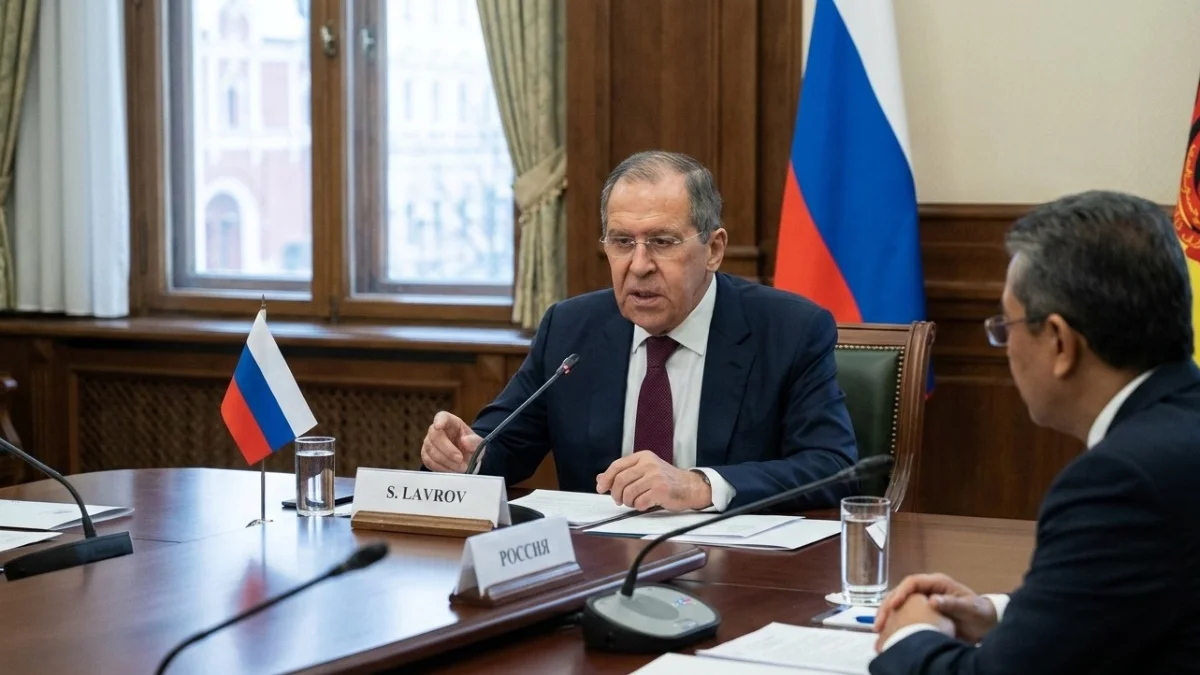

Russia has publicly stated that it has not seen any evidence that Iran was developing nuclear weapons, despite claims by the United States that this was a key reason for military action against Tehran. Russian Foreign Minister Sergei Lavrov made the remarks on Tuesday, March 3, 2026, during talks in Moscow.
Lavrov told the foreign minister of Brunei that Moscow still believes there is no solid proof of an Iranian nuclear weapons programme. He described this lack of evidence as important because it was a central justification used by the U.S. and Israel for their recent attacks on Iran.
In his comments, Lavrov said Russia has raised concerns about the broader impact of the conflict, noting that attacks are affecting countries across the region. He pointed out that Arab states are facing economic pressures and suffering from the fallout of ongoing hostilities.
Lavrov repeated Russia’s call for all sides to stop actions that cause civilian casualties. He referred to reports of a girls’ school being hit during the strikes, which Iranian media said killed many children. Russia’s foreign minister urged restraint and an immediate end to military actions that harm non-combatants.
President Vladimir Putin has also been involved in discussions about the situation, offering to help communicate regional concerns to Iranian leadership and encouraging de-escalation through diplomatic channels. Russia’s actions reflect its ongoing role in Middle East diplomacy, especially given its long-standing relationship with Tehran and its interests in regional stability.
The Russian position is that there is no clear evidence Iran was building nuclear weapons which differs from the narrative put forward by the U.S. government, which has repeatedly cited nuclear and missile programs as part of its rationale for taking military steps. This contrast highlights a significant diplomatic divide between Moscow and Washington on how to interpret Iran’s nuclear activities and the best way forward.
For markets and global energy observers, Russia’s stance comes at a time of heightened geopolitical risk. Any shifts in Middle East tensions can affect global oil prices, trade flows, and investor confidence. By maintaining its position and encouraging talks rather than escalation, Russia is signaling its continued engagement in major international discussions, even as conflict dynamics evolve.

Comments are closed.