
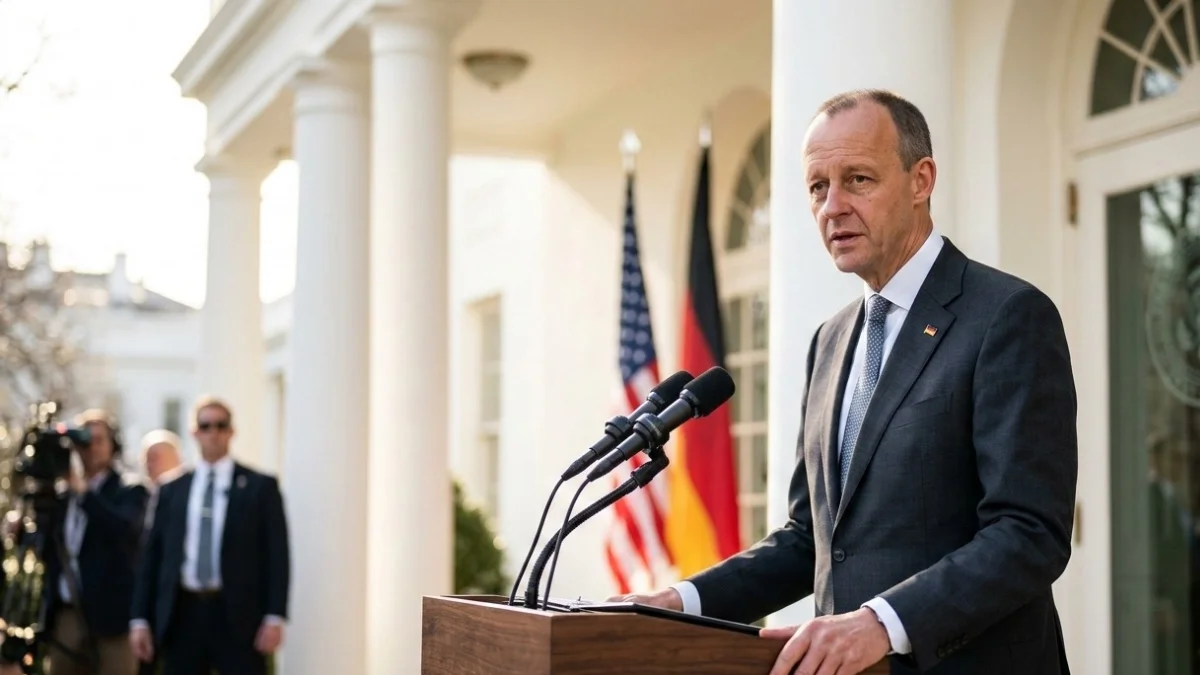

German Chancellor Friedrich Merz has said he encouraged U.S. President Donald Trump to increase pressure on Russian President Vladimir Putin over the ongoing war in Ukraine. After a meeting at the White House on March 3, 2026, Merz spoke to reporters about the need for firmer action against Moscow’s military campaign.
Merz told the press that Russia appears to be “playing for time” in the conflict, which he said runs counter to the intentions of the U.S. leadership. He described Russia’s behaviour as delaying progress and suggested that adding diplomatic and economic pressure could help push Moscow toward a settlement.
The war in Ukraine, now in its fourth year, remains at the centre of major international discussions. Merz highlighted the importance of unity among Western partners, noting that any lasting peace deal should include support from European countries as well as the United States. He warned that a proposed agreement should not be negotiated “over our heads,” underscoring his view that Europe must be directly involved in shaping the outcome.
These remarks come against the backdrop of ongoing trilateral negotiations that involve the United States, Russia, and Ukraine. While these talks aim to lay the groundwork for a potential peace arrangement, Merz stressed that support from European capitals is crucial to ensure long-term stability.
President Trump, for his part, told Merz that helping to secure an end to the conflict remains a high priority for Washington. Trump’s administration has been balancing its diplomatic efforts on Ukraine with other geopolitical challenges, including tensions in the Middle East and relations with allies. In their discussions, Trump reiterated the U.S. commitment to supporting partners while looking for paths toward a negotiated resolution.
Russia’s stance under President Putin continues to influence diplomatic dynamics. Moscow has consistently shown reluctance to make major concessions, and its actions on the battlefield and in negotiations have been closely watched by world capitals. The request from Berlin was that Washington apply stronger pressure on Putin which reflects a continuing concern among some European leaders about the pace and direction of conflict resolution efforts.
As the global community follows events, the interplay between diplomatic engagement and pressure on Russia remains a key factor shaping prospects for peace in Ukraine.

Comments are closed.