
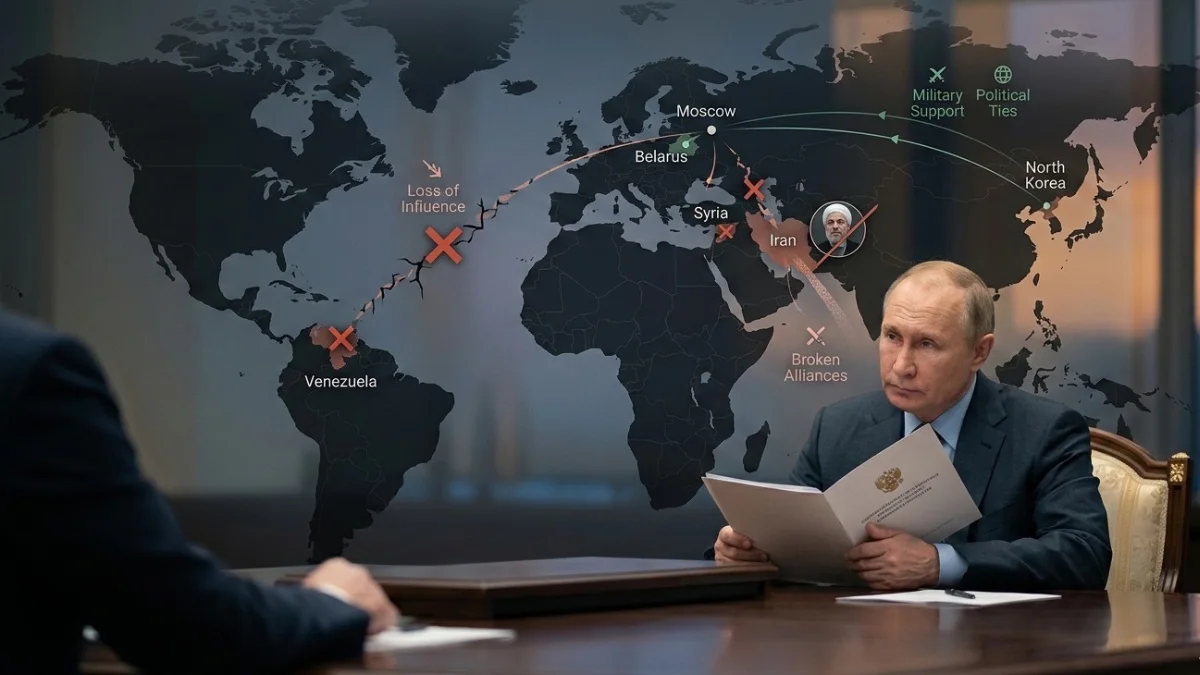

Recent events have shaken the network of alliances that Russian President Vladimir Putin has built over the years. On March 1, 2026, Iran’s Supreme Leader Ali Khamenei was killed in missile strikes by the U.S. and Israel. Iranian officials confirmed his death soon after. This loss comes on top of other blows: Syrian leader Bashar al-Assad fled to Moscow last year after rebels took Damascus, and Venezuelan President Nicolás Maduro now sits in a U.S. prison following his removal from power.
Russia’s stance remains cautious. The Kremlin has voiced concern over the strikes on Iran but stopped short of strong action. Putin has not commented directly in the past day, but officials have offered words of support to Tehran. A key deal signed in January 2025 between Russia and Iran aimed at deeper ties in trade, military tech, and arms. It included plans for Russia to sell advanced weapons like fighter jets and air defenses. However, the pact lacks any promise of mutual defense, leaving Moscow free to stay on the sidelines.
These changes highlight a shrinking circle for Putin. Once, his allies spanned the Middle East and Latin America, standing against Western influence. Now, main partners are down to Belarus and North Korea. In Belarus, President Alexander Lukashenko relies heavily on Russian support amid domestic unrest. North Korea provides troops and weapons for Russia’s efforts in Ukraine, but ties are mostly one-way.
From Russia’s view, there are upsides. The Middle East crisis has driven up oil prices, boosting Moscow’s budget. Less global focus on Ukraine gives Russia room to push its goals there. Putin sees these shifts as chances to regroup, though they dent Russia’s image as a reliable partner.
Business impacts are clear. Higher oil revenues help fund state programs and stabilize the economy. Yet, setbacks hurt Russian arms sales. Venezuelan forces used Russian gear that failed against U.S. strikes, and planned deliveries to Iran now face doubt. This could slow deals worth billions and harm trust in Russian tech.
Putin pushes for a multipolar world where Russia holds sway. He argues Western actions destabilize regions, calling for talks on equal terms. Still, with allies falling, Russia must adapt. The Kremlin eyes new links in Asia and Africa to fill gaps.
For Russian firms, this means watching energy markets closely. Oil gains offer short-term wins, but alliance losses could limit trade options. Companies in defense and resources should prepare for shifts in partnerships. Putin remains firm, focusing on national strength amid these changes.
This update shows how global events test Russia’s position. Businesses need to stay agile as alliances evolve.

Comments are closed.