
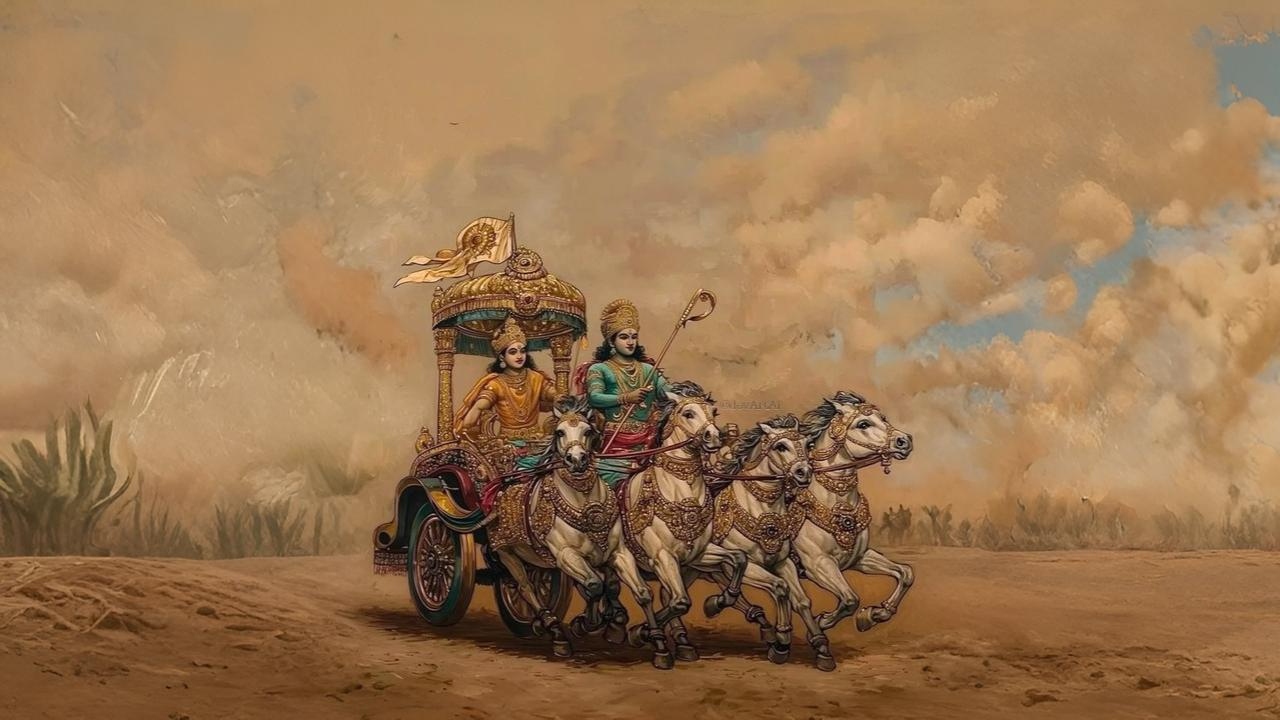
Do you know? Shalya was the charioteer of Yudhishthir, there is a big secret hidden in this unheard story of Mahabharata.

Dharmaraj Yudhishthir In Mahabharata: Many incidents related to the Mahabharata war still surprise people. The question often arises, who was the charioteer of Dharmaraja Yudhishthir? This is clearly mentioned in a famous Sanskrit verse: “Yudhishthirasya Sarathi Shalyah, Kauravapaksha Karnasya Sarathi.”
meaning of verse
The meaning of this verse is that Yudhishthir’s charioteer was Shalya, and the same Shalya also became the charioteer of Karna on behalf of the Kauravas. This line reflects an important context of the Mahabharata war, where complex equations are seen between relationships, duty and politics.
Who was Shalya?
Shalya was the king of Madra country and was also considered the maternal uncle of Pandavas. He was close to the Pandavas by relationship, but due to circumstances he supported the Kauravas. He became Karna’s charioteer in the war. What makes this incident more interesting is that the same person who was related to the Pandavas is seen standing on the Kaurava side.
Dialogue between Yudhishthir and Shalya
According to the story, before the war, Yudhishthir requested Shalya to become the charioteer and adopt a strategy that could weaken Karna’s power. Initially Shaly rejected this proposal, but later he agreed. During the war, Shalya confused Karna several times. He told Karna misleading things about Yudhishthir and tried to shake his confidence. This is considered a unique example of psychological warfare.
Karna’s end and Shalya’s repentance
Karna was finally killed in the fierce battle of Mahabharata. It is said that Shalya expressed deep grief after Karna’s death. He admitted that his aim was not to betray Karna, but to save the Pandavas from unnecessary harm.
What lesson can we learn from this story?
This incident teaches us that relationships are tested in war and politics. It also gives the message that the importance of trust and honesty is paramount in life. This story of Mahabharata is not just a historical event but also a mirror of moral values.

Comments are closed.