
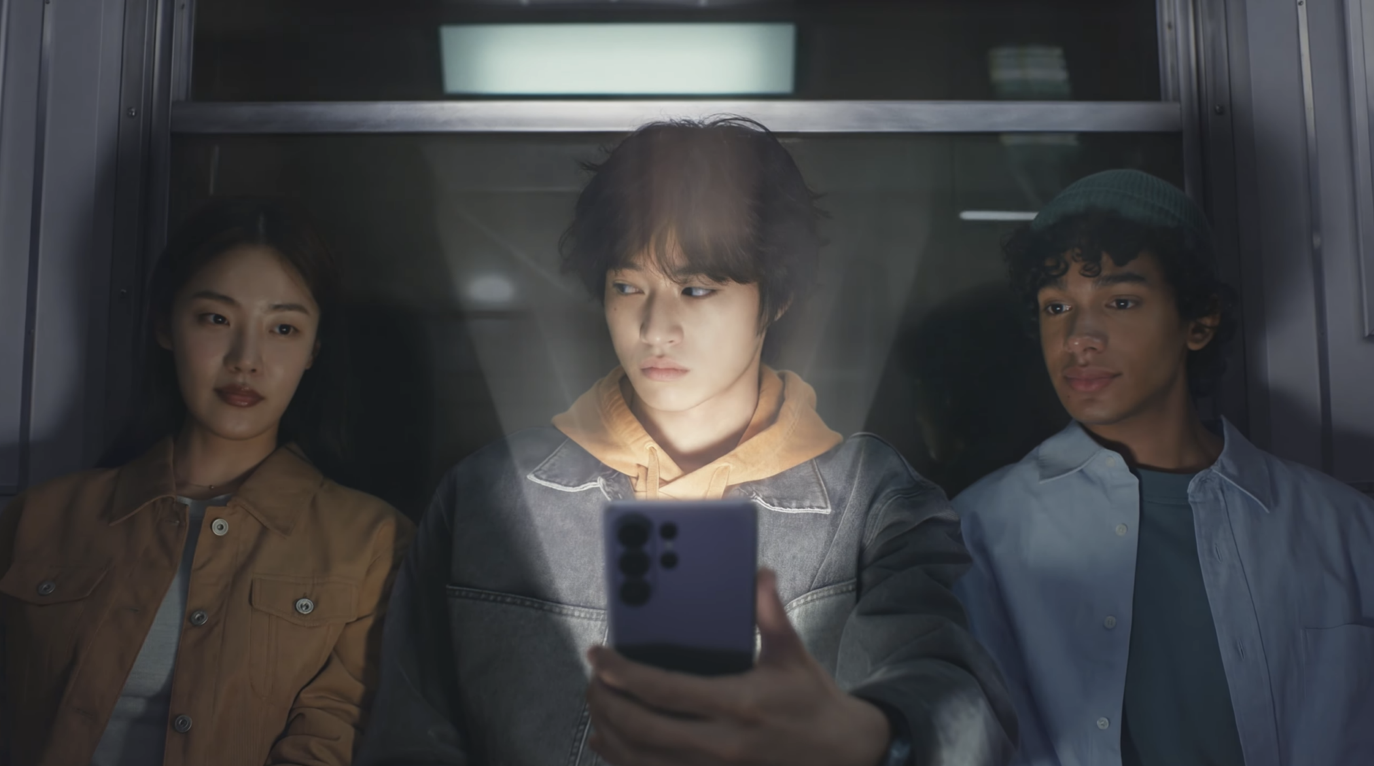

The Samsung Galaxy S26 Ultra introduces a feature designed to address a frequent issue people face in public places—keeping the information on their phone screens private from those nearby.
This feature, called the Privacy Display, uses Samsung’s Flex Magic Pixel (FMP) technology to ensure that the screen remains clearly visible to the person holding the phone while appearing hidden or unreadable to people looking from the sides.
Samsung Galaxy S26 Ultra Introduces Privacy Display to Protect Screen Content in Public Spaces
Instead of relying on external accessories or software tricks, this privacy feature is built directly into the phone’s OLED display, making it a hardware-based solution.
Because it is integrated into the screen itself, the system removes the need for stick-on privacy filters or artificial dimming methods that users previously depended on.
Samsung designed the display so that when the privacy function is turned off, the screen behaves like a normal OLED panel without sacrificing brightness, sharpness, or overall image quality.
The Privacy Display operates through Flex Magic Pixel technology, which works by controlling the direction in which light leaves the display.
The system relies on two different pixel structures: Wide Pixels and Narrow Pixels, which behave differently depending on the display mode being used.
When the phone is in its regular viewing mode, both Wide Pixels and Narrow Pixels function together to produce the wide viewing angles expected from modern smartphone screens.
When privacy mode is activated, the Wide Pixels either dim or deactivate, leaving the Narrow Pixels responsible for directing the light straight forward.
This forward-focused light path allows the user to see the screen clearly while significantly limiting what people can see from the sides.
Samsung further refined this technology by incorporating a multi-layer Black Matrix (BM) system along with an enhancement called LEAD 2.0.
The Black Matrix layers help control how light spreads across the display by separating the red, green, and blue subpixels.
LEAD 2.0 removes the need for polarizers, which are normally used in OLED displays.
Eliminating polarizers improves screen brightness while also lowering the amount of power the display consumes.
Together, these technologies produce a display that looks sharp and clear from a direct viewing angle but becomes blurred or unreadable when viewed from side angles as narrow as roughly 30 degrees.
Adjustable Privacy Modes Give Users Greater Control Over Screen Visibility
The Privacy Display offers several adjustable modes so that users can decide how much privacy they want at any given moment.
One option, Maximum Privacy Protection, hides the entire screen from anyone viewing it from the side.
This full protection mode is especially useful when handling sensitive activities such as opening confidential files or typing passwords.
Another option, called Partial Privacy, only applies the privacy effect to certain parts of the screen.
With Partial Privacy enabled, elements such as notifications or the on-screen keyboard can be hidden while the rest of the display remains visible.
Samsung also incorporated artificial intelligence to make the feature more responsive and automatic.
The phone’s front camera can detect when another person is looking toward the screen.
When this happens, the device can automatically enable privacy mode to prevent others from viewing the content.
Users can also configure certain applications to activate the privacy feature automatically.
Apps that deal with sensitive information—such as banking or email—can be set to trigger the feature whenever they are opened.
Before this technology existed, the most common method for protecting phone screens from prying eyes was the use of adhesive privacy films.
These films physically limit the screen’s viewing angles but remain attached to the display permanently.
Because of this, they reduce brightness and clarity even when privacy is not actually needed.
Samsung’s integrated system avoids these drawbacks by only applying the privacy effect when it is activated.
When the feature is disabled, the display performs the same as a typical OLED screen with full brightness and clarity.
Despite its advantages, the technology does introduce a few compromises.
When privacy mode is active, the screen may appear slightly dimmer and the colors may lose a small amount of vibrancy.
Some users might also notice a faint grainy texture caused by the Narrow Pixel structure.
According to YouTuber Arun Maini (known online as Mrwhosetheboss), the Black Matrix system slightly reduces overall viewing angles compared with older Samsung models.
This reduction in viewing angles can occur even when the privacy feature is turned off.
However, the ability to switch privacy mode on and off whenever needed makes the system much more adaptable than traditional privacy films.
The Privacy Display also reflects broader concerns about protecting personal data in everyday environments.
As smartphones are increasingly used for banking, messaging, and work-related tasks, protecting sensitive information in public settings has become more important.
By embedding privacy controls directly into the screen hardware, the S26 Ultra offers a built-in method for securing on-screen content.
This approach provides a dependable way to keep private information hidden without relying on additional accessories or third-party solutions.

Comments are closed.