
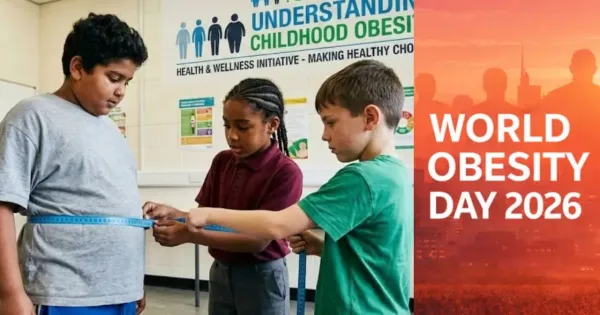
World Obesity Atlas 2026: India ranks second in the world in terms of overweight and obese children, more than 4 crore victims

Delhi. According to the latest report of ‘World Obesity Atlas 2026’, India has now overtaken America in terms of obesity in children and is at second place in the world after China. Based on the data till the year 2025, it has been estimated in this report that about 4.1 crore children aged 5 to 19 years in India are overweight, out of which 1.4 crore children fall in the category of severe obesity. China tops the list, where 62 million children are overweight or have a high body mass index (BMI).
India second and America third
In America, 27 million children are overweight or have high BMI and 13 million are living with obesity. The report warns that by the year 2040, the number of such children worldwide may exceed 50 crore. In India alone, the number of people with high body mass index is expected to increase to 56 million in the next 15 years, of which 20 million will fall into the obese category.
The report says that this situation is very worrying. Being overweight in childhood not only increases the risk of diseases in adulthood, but also increases the chances of developing serious diseases at an early age. Problems like high blood pressure, increased sugar and increased fat (triglycerides) in the blood are being seen in children aged 5 to 19 years, which later lead to diabetes and heart diseases.
According to Atlas’ estimates, the number of children suffering from high blood pressure due to high BMI may increase from 29 lakh to more than 42 lakh. Hyperglycemia cases are estimated to increase from 13 lakh to 19 lakh, while the number of children with high triglycerides may increase from 43 lakh to 60 lakh. Explaining the reason for this increasing obesity in the report, it has been said that about 74 percent of teenagers aged 11 to 17 years do not do as much physical effort or sports as is required.
Only 35.5 percent of school going children get school meals. Additionally, 32.6 percent of infants up to five months of age do not get adequate amounts of mother’s milk. Among women aged 15-49, 13.4 percent have a high BMI and 4.2 percent have type 2 diabetes, factors that can also influence childhood health outcomes.
Take concrete steps to save generations
The World Obesity Federation has warned that immediate concrete action is needed to save future generations. Decisions like promoting healthy eating in schools, banning junk food advertisements and increasing taxes on sweet beverages will have to be taken. This risk can be reduced only by timely investigation and early treatment. Although the target to prevent childhood obesity across the world has been extended to 2030, most countries including India are currently far behind this target.

Comments are closed.